Microwave - and other forms of electromagnetic - radiation are major (but conveniently disregarded, ignored, and overlooked) factors in many modern unexplained disease states. Insomnia, anxiety, vision problems, swollen lymph, headaches, extreme thirst, night sweats, fatigue, memory and concentration problems, muscle pain, weakened immunity, allergies, heart problems, and intestinal disturbances are all symptoms found in a disease process the Russians described in the 70's as Microwave Sickness.
Discusses the biological and clinical effects of Electromagnetic Fields (EMFs)
Discusses both the benefits and hazards of EMFs
Explains principles of using EMF modalities for pain relief, wound healing, fracture maintenance, and more
Covers engineering, manufacturing, basic science, and clinical applications of EMFs
Summary
Through a biophysical approach, Electromagnetic Fields in Biology and Medicine provides state-of-the-art knowledge on both the biological and therapeutic effects of Electromagnetic Fields (EMFs). The reader is guided through explanations of general problems related to the benefits and hazards of EMFs, step-by-step engineering processes, and basic results obtained from laboratory and clinical trials.
Basic biological mechanisms reviewed by several authors lead to an understanding of the effects of EMFs on microcirculation as well as on immune and anti-inflammatory responses. Based upon investigational mechanisms for achieving potential health benefits, various EMF medical applications used around the world are presented. These include the frequent use of EMFs in wound healing and cartilage/bone repair as well as use of EMFs in pain control and inhibition of cancer growth.
Final chapters cover the potential of using the novel biophysical methods of electroporation and nanoelectroporation in electrochemotherapy, gene therapy, and nonthermal ablation. Also covered is the treatment of tendon injuries in animals and humans. This book is an invaluable tool for scientists, clinicians, and medical and engineering students.
Wireless Spectrum Auction: Industry Canada Says $2.11 Billion Raised
CP | By David Friend, The Canadian Press
Posted: Updated:
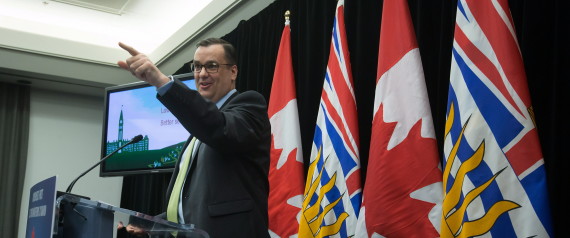
Industry Minister James Moore
TORONTO - Wind Mobile was one step closer to its goal of becoming a national telecommunications player on Friday, by winning key wireless spectrum licences in southern Ontario, Alberta and British Columbia in the latest federal auction.
The new licences gives Wind Mobile and other regional carriers the capacity of AWS-3 (Advanced Wireless Services) airwaves that will help prepare them for a future in a data-guzzling wireless market.
Industry Minister James Moore said a total of $2.11 billion was raised in the wireless spectrum auction Friday.
But the latest effort by Ottawa to help encourage a fourth national wireless carrier won't have any immediate impact on consumers.
"Overall, it doesn't change the dynamic in the marketplace,'' said Maher Yaghi, a telecom analyst at Desjardins Securities, in an interview.
"We have four players in most markets, but that fourth player is not a national player. That means they don't have the same scale as the other three incumbents to be as competitive.''
Wind Mobile has some 750,000 wireless customers concentrated in populated areas of Ontario, Alberta and British Columbia and has made no secret of its hopes to become the fourth national carrier. But while it hasn't faced the same type of financial problems that pushed its rivals Mobilicity and Public Mobile into court-supervised protection, Wind holds just a small fraction of the market compared with the larger players.
The AWS-3 frequency will boost capacity for Wind Mobile but doesn't expand the carrier's reach into new parts of the country. Eventually, it will allow Wind Mobile to boost its 3G network to the faster LTE network, which is the current standard for major carriers.
Wireless spectrum, which is essentially a radio frequency, is a prized asset for any carrier because it's one of the crucial pieces of the service it provides customers.
Depending on the type of spectrum, the characteristics and value will vary. Lower frequencies generally have a better ability to penetrate walls and travel a further distance, while AWS-3 is more adept at carrying large quantities of data very quickly, which is vital to handle the growing demand of streaming video and other data-heavy features of the latest smartphones.
Governments control who can use what spectrum with licences that allocate certain amounts to individual companies. In this auction, 60 per cent of the available spectrum was reserved for smaller carriers, while the remaining 40 per cent was available to all bidders.
Breaking down the details of the auction, several carriers came out with a significant boost to their overall spectrum allocation.
Wind Mobile boosted its spectrum holdings by 180 per cent with the acquisition of three licences. The carrier paid $56.4 million for spectrum in areas covering 18.1 million people in southern Ontario, Alberta and British Columbia.
Other successful regional carriers included Bragg Communications, which operates EastLink in Atlantic Canada, which increased its spectrum ownership by 77 per cent. It paid nearly $10 million for four licences in Newfoundland and Labrador, Nova Scotia and Prince Edward Island, New Brunswick and northern Ontario.
Videotron (TSX:QBR.B) paid $31.8 million for four licences in Quebec and eastern Ontario, increasing its holdings by 65 per cent.
Larger carriers also participated, including Telus (TSX:T), which was the biggest spender paying over $1.5 billion for 15 licences covering areas serving more than 30 million people. The company boosted its ownership by 16 per cent.
Bell Mobility (TSX:BCE) paid nearly $500 million for 13 licences covering areas serving 13.5 million people, including its holdings by four per cent.
Ottawa has been attempting to boost competition in the wireless market, but Bell, Rogers and Telus continue to represent 90 per cent of the market.
Making a dramatic shift in the composition of the industry won't happen any time soon, said Carmi Levy, an analyst and writer at Voices.com, a London, Ont.-based web technology company.
"We delude ourselves into believing there is going to be revolutionary change, simply because of the outcome of one spectrum auction process,'' he said.
"It took decades for us to get into the position we are now, and as a result, it's going to take additional decades for us to evolve away from the status quo."
Rogers Communications (TSX:RCI.B), the biggest buyer in the 700 megahertz spectrum auction last year, did not win any licences this time. A spokeswoman for the company said Rogers acquired the key spectrum it wanted last year.
A second spectrum auction covering higher-end 2,500 MHz spectrum used in rural communities is scheduled for April 14.
In that auction, Ottawa has placed caps on how much spectrum companies can own, a move that it has said will largely shut out Rogers and Bell because they already own large chunks of it. Wind Mobile and a number of smaller regional companies are also seeking to participate.
Rep. Yanez hears concerns about 'smart meters' at Sterling Heights meeting
Published: Sunday, February 22, 2015
By SEAN DELANEY Source Staff Writer
State Rep. Henry Yanez and the Michigan Public Service Commission hosted a meeting Feb. 13 to discuss Advanced Metering Infrastructure, or smart meters. Source photo/Sean Delaney
There were many concerns voiced about the installation of "smart meters" on residential homes during a public forum Feb. 13 at the Sterling Heights Public Library, but issues of health, safety and privacy topped the list.
"This is a complicated issue," said State Rep. Henry Yanez, who hosted the meeting in cooperation with Sterling Heights and the Michigan Public Service Commission after concerns about the Advanced Metering Infrastructure meters were raised at recent City Council meetings.
Unlike traditional electric meters that merely record power use -- and then must be read in-person once a month by a meter reader -- smart meters measure consumption in real time. By being networked to computers in electric utilities, the new meters can signal people or their appliances to take certain actions, such as reducing power usage when electricity prices spike.
But the very interactivity that makes smart meters so attractive also makes them vulnerable to hackers, because each meter essentially is a computer connected to a vast network that some argue will be used to monitor residents' activities.
"We've heard concerns from our constituents in communities like Sterling Heights for a number of years about the deployment of smart meters," said Michael Byrne, legislative liaison for the MPSC. "In response, the MPSC launched an investigation in 2012 on a number of issues related to smart meters, including privacy. As part of that investigation, we took a look at the type of data the utilities would be collecting and their practices for handling that data. The fact is companies have had sensitive customer information that they've collected for years, prior to the deployment of smart meters."
Byrne, who participated in the discussion via speaker phone, argued that the data collected via smart meters would be used by utility companies to determine how much electricity a customer is using, not what they're using it for or why.
"The information that is transmitted over the wireless network back to the utility company doesn't tell about a specific appliance that's being used or what kind of activities a customer is doing," he said. "It only transmits data about how much electricity is being consumed at that time."
In addition to privacy, several Macomb County residents who oppose the installation of smart meters on their homes argued that the devices represent a health hazard, noting that other communities have reportedly banned the meters after residents who had the devices installed became ill.
"We're not saying that people aren't experiencing health issues, and we certainly feel for those people, but at the same time there's no ability to actually prove that there is some sort of scientific link between the two (illness and smart meters)," Byrne said. "But even with that being said, the MPSC is requiring the utility companies to offer some kind of opt-out option. It's a cost-based option, but it's there for customers who would rather not have the wireless transmission take place on their meters."
According to Sterling Heights City Manager Mark Vanderpool, the opt-out program provides residential utility customers with an option of having a non-transmitting digital meter installed at a cost of $67.20 for the AMI opt-out initial fee, plus $9.80 per month for the opt-out monthly charge. Continued...
Le 23 février à 6h00 par Valérie Pons | Mis à jour le 23 février
Via son association la jeune femme de 28 ans, se bat pour le maintien de la publiphonie, dont cette cabine téléphonique, rue Barande, est l'ultime représentante à Perpignan. PHOTO/Thierry Grillet
Présidente de l'association nationale Perdons pas le fil, la jeune femme s'oppose au démantèlement des cabines téléphoniques.
À 28 ans, avec son visage nu et lisse et ses cheveux recouverts par un turban clair, elle en paraît facilement dix de moins. C'est d'ailleurs à sa majorité et alors qu'elle était étudiante en Sciences à l'université de Rangueil à Toulouse, qu'Anne-Laure Mager a ressenti les premiers symptômes d'électro-hypersensibilité (EHS), reconnue et définie par l'Organisation mondiale de la santé (OMS). Anne-Laure est handicapée. Mais cela ne se voit pas...
Proximité nocive d'une antenne-relais
"Comme beaucoup de jeunes, je me servais régulièrement d'un téléphone portable, témoigne-t-elle. Mais j'avais quand même remarqué quelques anomalies me concernant : des nuits agitées, courtes, des maux de tête intenses, comme un étau qui me broyait les tempes, j'avais des douleurs articulaires, des nausées, des pertes d'équilibre, des troubles de la mémoire et de la concentration… Et puis, un jour, je me suis retrouvée dans une rue, à Toulouse, en ayant perdu tous mes repères spatio-temporels ! Impossible de savoir ce que je faisais là. Qui plus est avec une migraine épouvantable. Après avoir retrouvé peu à peu mes esprits, je suis retournée chez moi et là les maux de tête ont recommencé... J'ai donc décidé de faire un test : j'ai demandé à une amie si elle pouvait m'héberger quelques jours. Elle a accepté et je crois que jamais je ne me suis sentie aussi bien ! Plus d'étau, plus de vertiges, ni de nausées. J'ai compris que le problème se trouvait sur mon lieu de vie, à cause sans doute d'un cumul d'ondes électriques émanant d'une antenne-relais proche de mon domicile".
Sa "bête noire" : le Wifi
Anne-Laure est allée consulter son médecin généraliste, puis des spécialistes, tous compréhensifs, qui lui ont prescrit des batteries d'examens aboutissant finalement à la reconnaissance de sa pathologie. La jeune femme, devenue totalement intolérante aux ondes émises, notamment par le Wifi, sa "bête noire", de plus en plus présentes dans l'environnement, a dû stopper ses études et interrompre sa licence. Elle apprenait en outre que ses parents, aujourd'hui retraités, étaient également diagnostiqués électro-hypersensibles ! Serait-ce génétique ? Ou le simple fruit d'un malheureux hasard ? Quoi qu'il en soit, les Mager ont fait isoler les murs de leur maison, dans le quartier Saint-Assiscle à Perpignan, et ne s'habillent plus qu'avec des vêtements fabriqués dans des tissus spéciaux contenant des fils de cuivre. Qui sont plus onéreux.
Entre 2000 et 3 000 adhérents
"Notre vie est loin d'être simple, mais nous ne vivons pas reclus comme beaucoup de personnes souffrant d'EHS, dont de plus en plus d'enfants et d'ados. Nous avons pu conserver une vie sociale en communiquant uniquement via la technologie filaire. On ne s'estime pas les plus malheureux. Je suis responsable pour la région de Perpignan de l'association nationale à but non lucratif Perdons pas le fil. Nous sommes entre 2 000 et 3 000 adhérents dispatchés sur le territoire. Je me bats pour que soit maintenu le service universel des communications électroniques (lire ci-contre), indispensable tant sur le plan social que sanitaire", conclut Anne-Laure.
Pour joindre l'association, T. 04 68 37 16 48 ou sur contact@perdonspaslefil.org
Pour le droit à l’accessibilité"
Anne-Laure et « Perdons pas le fil » œuvrent pour que les handicapés EHS puissent librement accéder aux cabines téléphoniques, pour tout appel et notamment pour composer les numéros d’urgence.
Sans publiphones et un maillage suffisant du territoire, ces personnes se trouvent dans l’incapacité de communiquer, hors la technologie filaire. De même, il existe un rapport des parlementaires Verdier et Cammani sur le service universel pour lequel l’association avait été auditionnée, le 18 juin 2014 à l’Assemblée nationale, mais n’avait pu s’y rendre à cause des grèves à la SNCF. Elle en conteste aujourd’hui le compte rendu même : « Il est écrit noir sur blanc dans ce rapport qu’aucune des personnes auditionnées ne s’oppose à la sortie des cabines du service universel, or c’est faux ! C’est tout le contraire que l’on souhaite, enrage Anne-Laure. Je rappelle que nous demandons l’amélioration des obligations du service universel : au moins une cabine téléphonique par commune certes, mais pour les villes de plus de 1 000 habitants, il faudrait augmenter le parc de publiphones en fonction de la population et les maintenir dans les gares, les aéroports, les aires d’autoroutes… Deux cabines pour des agglomérations de plus de 100 000 habitants c’est dérisoire… Et aussi discriminatoire à l’égard des personnes handicapées dont les EHS. Alors, pour une ville comme Perpignan, par exemple, au lieu de les démanteler, il faudrait rétablir l’installation de 12 cabines garanties par le service universel ! ».
Via its association the young woman of 28, is fighting for the maintenance of public payphones, including the telephone booth, Barrande street, is the ultimate representative in Perpignan. PHOTO / Thierry Grillet
President of the National Association Let us lose no wire, the young woman is opposed to the dismantling of telephone booths.
At 28, with his bare and smooth face and hair covered by a turban clear it easily looks ten years younger. This is also its majority and while a student in Sciences at the University of Rangueil in Toulouse, Anne-Laure Mager felt the first symptoms of electromagnetic hypersensitivity (EHS) recognized and defined by the World Health Organization (WHO). Anne-Laure has a disability. But that is not seen ...
Harmful near a relay antenna
"Like many young people, I was using a mobile phone regularly, testifies she But I still noticed some anomalies in me. Restless nights, short, intense headache, like a vise crushed my temples, I had joint pain, nausea, loss of balance, memory and concentration problems ... And then one day I found myself in a street in Toulouse, having lost all my spatiotemporal marks Impossible to know what I was doing there. Moreover with a terrible migraine. After regaining gradually my spirits, I went home and there the headaches started again ... So I decided to do a test: I asked a friend if she could take me in a few days She agreed and I think I never felt I was both more grip, more dizziness.! or nausea. I realized that the problem was on my living place, probably because of a combination of electric waves from a relay antenna near my home. "
His "nemesis" Wifi
Anne-Laure went to see her GP and specialists, all understanding, which prescribed battery of exams ultimately leading to the recognition of its pathology. The young woman became totally intolerant of transmitted waves, including WiFi, his "nemesis", increasingly present in the environment, had to stop his studies and interrupt his license. She also learned that her parents, now retired, was also diagnosed electro-hypersensitive! Could it be genetic? Or simply the result of an unfortunate accident? Anyway, the Mager made insulate the walls of their home in the St. Assiscle district in Perpignan, and dress more than clothes made of special fabrics containing copper son. Which are more expensive.
Between 2000 and 3000 members
"Our life is far from easy, but we do not live recluse like many people with EHS, which more and more children and teenagers. We were able to maintain a social life by communicating solely via wired technology. It does not consider the most unfortunate. I am responsible for the Perpignan region of the National Association nonprofit Let us lose no wire. We are between 2 000 and 3 000 members dispatched to the territory. I fighting to be maintained as universal service for electronic communications (see cons below), essential both socially and health, "concludes Anne-Laure.
To join the association, T. 04 68 37 16 48 or contact@perdonspaslefil.org
For the right to access "
Anne-Laure and not "Let us lose the thread" working to ensure that disabled EHS can freely access the telephone booths, including for any call to dial emergency numbers.
Without payphones and adequate network coverage, they are unable to communicate outside the wired technology. Similarly, there is a report of Verdier and Cammani parliamentarians on universal service for which the association was auditioned, June 18, 2014 in the National Assembly, but could not get there because of the strikes SNCF.
She now contests the record himself: "It is black and white in this report that none of the persons heard no objection to the release of the cabins of universal service, or it's wrong! This is the opposite that is to be, enraged Anne-Laure. I recall that we ask the improvement of universal service obligations: at least one telephone booth by town certainly, but for cities of more than 1 000 people, it would increase the payphones in terms of population and keep them in railway stations, airports, motorway service areas ... Two cabins for agglomerations of more than 100 000 inhabitants is ridiculous ... And also discriminates against people with disabilities whose EHS. So, for a city like Perpignan, for example, instead of dismantling it would restore the installation of 12 booths guaranteed by the Universal Service! ".
Environment ministry’s false mobile radiation information draws CIC ire
TNN | Feb 23, 2015, 05.51AM IST NEW DELHI: The Central Information Commission ( CIC) has pulled up the environment ministry for providing "false and misleading" information that it had conducted no study on the harmful effects of mobile radiation. It has also asked the ministry to explain why it allowed unrestricted installation of mobile towers and not formulated a policy on it.
The commission was hearing a case related to RTI applicant Suresh Chandra Guptha who sought information related to a WHO study that said electromagnetic waves from mobile towers could be possible carcinogens for a kind of brain cancer.
Malfunction of the Autonomic Nervous System, Dysautonomia, and Its Underlying Causes
"The Autonomic system is affected by microwaves of the centimeter wave length band. These waves affect circulation, respiration, temperature control, water balance, albumin and sugar concentration in the cerebro-spinal fluid, hydrogen ion concentration, EEG, GSR, sleep, conscious awareness, etc." - W. Bergman (The Effect of Microwaves on the Central Nervous System)
Underlying Causes of Dysautonomia
As you may know, dysautonomia is not a specific medical diagnosis. Dysautonomia is an umbrella term used to describe any malfunction of the autonomic nervous system. There are many underlying diseases and conditions that can lead to dysfunction of the autonomic nervous system. This is not an all inclusive list, so check with your doctor if you believe you might have an underlying cause for your POTS or other form of dysautonomia. Remember that not every dysautonomia patient can find a specific underlying cause, and some of these conditions are very rare.
Antiphospholipid Syndrome Antiphospholipid syndrome (APS), also known as "Hughes syndrome" for the British rheumatologist who first described the syndrome in 1983, is an autoimmune blood clotting disorder. It is also known as "sticky blood." It may cause clotting of arteries (most commonly causing stroke or heart attack) as well as veins (most commonly causing deep vein thrombosis of the legs and pulmonary embolus of the lungs). It may also cause recurrent miscarriage due to clotting within the placenta. Less well known to physicians is that APS also causes many non-thrombotic manifestations due to "sludging" of the blood. These include a number of neurological manifestations such as headache, memory loss, word finding difficulty, trouble with balance, multiple sclerosis-like syndrome, neuropathy and disorders of the autonomic nervous system (most commonly postural tachycardia syndrome and neurocardiogenic syncope). APS may occur in association with another autoimmune disorder (most commonly lupus, but also Sjogren's syndrome and rheumatoid arthritis); this is known as secondary APS. It may also occur on its own (primary APS). The clotting manifestations are treated with anticoagulation (warfarin or heparin). Less well known is that the non-thrombotic manifestations may also be treated with anti-platelet agents (aspirin or plavix) or anticoagulants with significant improvement or even resolution of the symptoms. APS is diagnosed when there is at least one clinical manifestation and at least one of the following antibodies: anticardiolipin IgG or IgM, beta 2 glycoprotein I IgG or IgM, or the lupus anticoagulant. Research is currently underway to determine if intravenous immunoglobulin (IVIG) may benefit those with autonomic dysfunction caused by APS. APS Action APS Foundation Hughes Syndrome Foundation Autonomic Dysfunction in Primary APS: A Frequent and Frightening Correlation? Neurological syndromes in lupus association with APS
Celiac Disease Celiac disease ("coeliac" in the United Kingdom, Australia and New Zealand) is a genetic, multisystem autoimmune disease in which the small intestine is the major site of injury. When a person with celiac disease eats gluten [the protein portion in wheat (gliadin), rye (secalin) and barley (hordein), and for some with celiac disease, oats (avenin)], the immune system responds by damaging or destroying the small intestine's villi, which are the structures that enable the intestine to absorb the nutrients needed to survive. From the small intestine, the disease can go on to impact other parts of the body as it progresses. Celiac disease is not rare. The prevalence of celiac disease in the United States is approximately one in every 133, which translates to approximately three million Americans. Of those three million, recent research shows that 83% remain undiagnosed. The average length of time to diagnosis in the U.S. for those experiencing symptoms is four years. This delay in diagnosis increases a person's chance of developing neurological disorders, additional autoimmune diseases, osteoporosis and cancer. By some estimates, neurological disorders are thought to occur in 6-10% of people with celiac disease. Autonomic neuropathy, peripheral neuropathy and ataxia are types of neurological disorders that can appear in people with celiac disease. Autonomic neuropathy and coeliac disease Celiac Center at Beth Israel Deaconess, Boston Celiac Disease Center at Columbia University Medical Center University of Chicago Celiac Disease Center Celiac Support Association
Crohn's Disease and Ulcerative Colitis Crohn's disease is a chronic inflammatory condition of the gastrointestinal tract. Ulcerative colitis is a disease of the large intestine, in which the lining of the large intestine becomes inflamed and develops ulcers that can produce pus and mucous. The combined inflammation and ulceration can cause abdominal discomfort and frequent emptying of the colon. Both Crohn's and Colitis are forms of Inflammatory Bowel Disease (IBD), and both conditions can be associated with autonomic neuropathy and symptoms of autonomic dysfunction. Some studies have documented that about 50% of Crohn's and Colitis patient have autonomic nervous system complications. Crohn's & Colitis Foundation of America Mayo Clinic Crohn's disease summary Disturbed autonomic nerve function in patients with Crohn's disease Autonomic vagal nerve dysfunction in patients with ulcerative colitis
Deconditioning Deconditioning is a physical change in the way the body functions due to a decrease in activity. Deconditioning can be caused by many different health conditions. One of the most common causes of deconditioning is bed rest, from intentional bed rest after surgery, to unintentional bed rest during an acute viral illness. Due to the debilitating nature of their symptoms, which can make exercise, standing and sometimes even sitting upright difficult, many patients with POTS or other forms of dysautonomia become deconditioned over time. Deconditioning may exacerbate symptoms, so it is important to take steps to prevent deconditioning from occurring, or to reverse it if the patient has already become deconditioned. University of Chicago - Deconditining Resources Deconditioning in patients with orthostatic intolerance. Cardiac Atrophy After Bed-Rest Deconditioning Effects of short-term and prolonged bed rest on the vestibulosympathetic reflex.
Mitchochondrial Diseases Mitochondria are membrane encapsulated structures found in every cell in the human body. They are considered the "power plant" of energy production, but they are also responsible for other important tasks in the body. There are many different forms of mitochondrial disease (sometimes called "mito"), but most mitochondrial diseases present with neurological symptoms including neuromuscular, respiratory, gastrointestinal, and autonomic dysfunction. Mitochondrial diseases are difficult to diagnose and seeing a specialist is key as the process usually involves a combination of clinical evaluation, blood tests, brain imaging, and muscle biopsies. United Mitochondrial Disease Foundation Mitochondrial Disorders Overview Autonomic dysfunction presenting as orthostatic intolerance in patients suffering from mitochondrial cytopathy.
Paraneoplastic Syndrome Sometimes when there is a tumor in the body, whether it is cancerous or not, the body tries to get rid of the tumor by producing antibodies meant to attack and remove the tumor. Unfortunately, sometimes these antibodies can also attack part of the nervous system. When this occurs, it is referred to as Paraneoplastic Syndrome. The antibodies involved are called paraneoplastic antibodies. This is considered quite rare, however, some studies have shown that up to 1% of patients with solid tumors may have paraneoplastic antibodies. If paraneopastic antibodies attack the autonomic nervous system, the patient can develop symptoms of dysautonomia. Frequently, the neurological symptoms present before the cancer is diagnosed. In some cases, the paraneoplastic syndrome improves once the tumor is removed. In other cases, intravenous immunoglobulin or other immune modulating treatments are used to try to reduce the harmful antibody levels. Medscape: Paraneoplastic Autonomic Neuropathy Screening for tumours in paraneoplastic syndromes: report of an EFNS Task Force Paraneoplastic neuropathy: wide-ranging clinicopathological manifestations.
Sjogren's Syndrome Sjogren's Syndrome is one of the most common autoimmune disease in the United States, and possibly worldwide. One million people in the U.S. are living with Sjogren's. Experts believe there may be another three million people in the U.S. who have Sjogren's, but remain undiagnosed. Due to a lack of awareness within the medical profession and the complex and diverse symptoms Sjogren's can present with, the average patient can take five years to get diagnosed. Typical symptoms can include dry eyes, dry mouth, fatigue and joint pain. However, Sjogren's can attack any tissue or organ in the body, and not every patient has the classic dryness symptoms. Sjogren's can initially present as POTS. There is some evidence that younger patients, or those earlier in the disease process, may present initially with neurological symptoms and may be less likely to have the traditional symptoms of dryness. In the past, autonomic neuroapthy has been considered to be a rare manifestation of Sjogren's, but newer recent research indicates that approximately half of all Sjogren's patients experiences symptoms of autonomic dysfunction. Many physicians rely only on blood tests (SS-A, SS-B and ANA) to rule out Sjogren's as a possible diagnosis. However, about 50% of Sjogren's patients with neurological manifestations do not test positive for any of the antibody tests. A minor salivary gland lip biopsy is currently considered the gold standard test to diagnose or rule out Sjogren's. The diagnostic criteria for Sjogren's continues to be hotly debated by experts. The American-European Consensus Criteria for Sjogren's Syndrome is the most widely accepted diagnostic criteria at this time. Approximately 50% of Sjogren's patients have "primary" Sjogren's, meaning just Sjogren's and no other autoimmune disease, and the other 50% have Secondary Sjogren's. Secondary Sjogren's is Sjogren's in association with another autoimmune disease, most commonly Lupus, Rheumatoid Arthritis or Hashimotos Thyroiditis. In some cases, the immune system becomes so overactive that Sjogren's patients can develop three or more autoimmune conditions at once. Sjogren's Syndrome Foundation Sjogren's Syndrome Foundation Local Support Group Leaders - US & International - Since it's very hard to find doctors that have significant expertise in diagnosing Sjogren's, you can call the support group leaders and ask who the best local doctors are to diagnose and treat Sjogren's. A Primer on the Neurological Complications of Sjogren's Primary Sjogrens syndrome is associated with impaired autonomic response to orthostasis and sympathetic failure.
Vitamin Deficiencies Vitamins are organic substances made by plants or animals that are required for human health. Many of these vitamins, including Vitamins E, B1 (thiamine), B3 (niacin) B6 (pyridoxine), and B12 are essential to healthy nerve function. Thiamine deficiency, in particular, is common among people with alcoholism. People who have digestive problems, which are very common in people who have autonomic disorders, are often deficient in B12. Vitamin deficiencies can usually be corrected with a proper diet, and if that is not sufficient, supplementation with oral, intravenous, or injectable vitamins may be necessary. University of Chicago Peripheral Neuropathy Center - Vitamin B12 Deficiency Natural History and Prevalence of Vitamin B12 Deficiency USDA Food Sources of Selected Nutrients
Remember, this is not a complete list of things that can cause dysautonomia. If you have questions about the other causes of dysautonomia, it's best to speak with your doctor. If you need help finding a doctor with expertise in autonomic disorders, you can look for one on our Interactive Global Dysautonomia Map.