Silicon Valley is engineering your phone, apps and social media to get you hooked, says a former Google product manager. 14 minutes.
Showing posts with label Gaming Disorder. Show all posts
Showing posts with label Gaming Disorder. Show all posts
Tuesday, August 06, 2019


Friday, July 19, 2019
Save Your Child's Brain Part I: The Toxic Effects of Video Games and other Electronic Screens
We are fortunate to have as a guest blogger, Victoria Dunckley, MD, who has done ground-breaking work on helping families in de-toxing children, especially sensitive ones, from technological overstimulation. Author of the book “Reset Your Childs’ Brain, A Four-Week Plan to End Meltdowns, Raise Grades, and Boost Social Skills by Reversing the Effects of Electronic Screen-Time, “she has identified the formal diagnosis “Effects of Electronic Screen Time,” or EEST. She has developed a four-part mini-course for parents and teachers entitled, “Save Your Child’s Brain.”. We will post all four parts on our blog, with thanks to Dr. Dunckley.
The Agony and Confusion of “What’s Wrong with my Child?”
Many parents come to me and ask: Is this normal? Is my child misdiagnosed? Who do I believe when professionals are giving me different answers? Is there something in my child's environment I can change before resorting to psychotropic medication?
Some parents haven't noticed a problem but a teacher is concerned. Other times the child is doing okay in school but is alienating his friends. And still, other times a child who had previously had no problems at all starts falling apart, has meltdowns, and begins to struggle in school.
All of these scenarios can leave a parent confused and overwhelmed--afraid to turn one direction for fear you'll miss something. You may wonder whether you need professional help, and which professional to turn to (neurologist? pediatric behaviorist? educational specialist? psychiatrist? family therapist?), and even if you do decide on one, you may wonder how to choose "the best." Some people don't even take any action at all because they're afraid of the answers they may get. That's totally normal and understandable.
Congratulations for reading this mini-course, where you'll finally find some answers--answers that may surprise you and may mean a much more gentle approach to your child's well-being.
If you're worried about your child, here's what you should know about video games' effects:
An extensive review of the studies, combined with my own clinical experience in helping so many children recover their well-being and mental health, has shown me that there is not just one toxic pathway but multiple toxic pathways induced by electronic screen exposure. The brain is more sensitive to toxins than any other organ, and the eyes are the only part of the nervous system connected to the outside world. Furthermore, small brain changes in chemistry and blood flow can lead to big changes over time and can set in motion a cascade of negative events that self-perpetuate.
Here's some basic science explaining why video games are damaging to your child's brain and body:
- EYES: the eyes connect the outside world directly to the brain. That is why video games can cause seizures in some children. Electronic screens are unnaturally bright with vivid colors. This attracts the eye, but the eyes and brain were not made to handle this intense stimulation. One change that occurs as a direct result is the signals that tell our brains to go to sleep don't get triggered, and insomnia often results.
- BRAIN DEVELOPMENT & the FRONTAL LOBE: The evidence is mounting that active video gamers' frontal lobes do not develop properly. Why is this so alarming? Because adolescence is the time that the frontal lobe develops most actively, and it determines personality, impulse control, empathy, planning, and reasoning abilities. Basically, all the things we need to succeed in life! Even cell phone usage and texting have been shown to negatively impact frontal lobe function.
- BODY: Because the brain thinks it's in a fight-or-flight mode even when playing educational electronic games, the body sends out stress hormones. These stress hormones are toxic to every organ in our bodies; they also affect sleep, learning, and memory.
- BRAIN and MOOD: Anything electronic causes irritability. Again, there are multiple mechanisms causing these mood changes. Frontal lobe blood flow, hormones, and brain chemicals like dopamine all contribute to the irritable mood you see after your child plays. To explain this a little further, when the child plays they release "feel good" chemicals (dopamine), and when they stop, they are in a relative state of withdrawal. This looks just like drug withdrawal, by the way! The child might be tearful, irritable, disorganized, depressed and feel they can't concentrate.
ACTION PLAN FOR Part 1:
- Share this with your spouse/partner and any other regular caretakers.
- Make a list of 3-5 problems plaguing your child at home, school, or with friends, then another list of what you'd like to see instead.
Feel empowered by having information that's useful no matter what's going on! Pat yourself on the back for taking these steps.
Tuesday, May 28, 2019
'Gaming disorder' on iPhone & other platforms recognized by World Health Organization
The member states of the World Health Organization have voted to adopt a revised list of diseases which includes addiction to video games —including smartphone titles —as a mental health disorder.
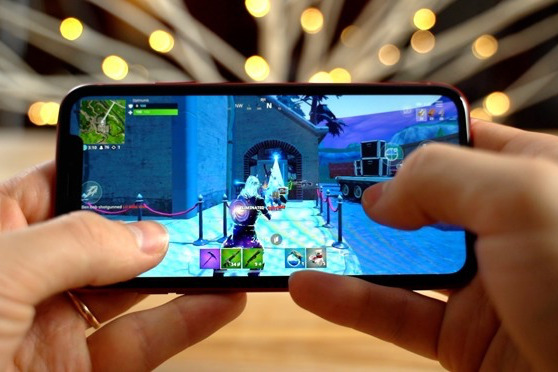
Playing Fortnight on an iPhone
At its 2019 annual general meeting in Geneva, Switzerland, the member countries of the World Health Organization have officially recognized an addiction to gaming on smartphones and other devices as an international disease. The World Health Assembly voted to accept the revised list, called ICD-11, which nations take into account when planning public health strategies.
"Studies suggest that gaming disorder affects only a small proportion of people who engage in digital- or video-gaming activities," said the World Health Organization in a statement. "However, people who partake in gaming should be alert to the amount of time they spend on gaming activities, particularly when it is to the exclusion of other daily activities."
"Understanding what makes people sick, and what eventually kills them, is at the core of mapping disease trends and epidemics, deciding how to programme health services, allocate healthcare spending, and invest in improving therapies and prevention," continued the World Health Organization. "ICD-11 has been updated for the 21st century and reflects critical advances in science and medicine."
Journalist Rintaro Hosokawa covered the Assembly for the Nikkei publication and reports that the organization has further defined the symptoms of the disease. "According to WHO, [sufferers] cannot control the time and frequency of playing games by themselves," said Hosokawa (in translation), "[They] give top priority to the game and continue even through the problem is happening for more than 12 months."
ICD-11, or the International Statistical Classification of Diseases and Related Health Problems, will come into effect on January 1, 2022.
The decision comes as Apple is both stepping up its Screen Time efforts to help people understand how long they spend on their iPhones, and launching its gaming Apple Arcade.
Source
Playing Fortnight on an iPhone
At its 2019 annual general meeting in Geneva, Switzerland, the member countries of the World Health Organization have officially recognized an addiction to gaming on smartphones and other devices as an international disease. The World Health Assembly voted to accept the revised list, called ICD-11, which nations take into account when planning public health strategies.
"Studies suggest that gaming disorder affects only a small proportion of people who engage in digital- or video-gaming activities," said the World Health Organization in a statement. "However, people who partake in gaming should be alert to the amount of time they spend on gaming activities, particularly when it is to the exclusion of other daily activities."
"Understanding what makes people sick, and what eventually kills them, is at the core of mapping disease trends and epidemics, deciding how to programme health services, allocate healthcare spending, and invest in improving therapies and prevention," continued the World Health Organization. "ICD-11 has been updated for the 21st century and reflects critical advances in science and medicine."
Journalist Rintaro Hosokawa covered the Assembly for the Nikkei publication and reports that the organization has further defined the symptoms of the disease. "According to WHO, [sufferers] cannot control the time and frequency of playing games by themselves," said Hosokawa (in translation), "[They] give top priority to the game and continue even through the problem is happening for more than 12 months."
ICD-11, or the International Statistical Classification of Diseases and Related Health Problems, will come into effect on January 1, 2022.
The decision comes as Apple is both stepping up its Screen Time efforts to help people understand how long they spend on their iPhones, and launching its gaming Apple Arcade.
Source
Monday, February 11, 2019
Dr George Carlo on Gaming Disorder International Classification of Diseases -- WHO ICD-11
'Below is the transcript from a Facebook Live piece I did last week regarding the WHO ICD designation of "Gaming Disorder" as a diagnosis.... and the link.
https://www.facebook.com
This is important as we discussed in May at Sedgwick Making Waves. Note the simple mechanism discussion which is highlighted that connects the dots for this particular condition. Same holds true for other conditions -- when adaptive capacity is compromised, all sorts of bad things can happen.
_________________Dr. George L. CarloSecrets of Champions, Ltd.Washington, D.C.Personal: 571-276-4000
Hello. I'm George Carlo and thank you for taking the time to join us today. I would also like to thank the Generation Zapped film producers for providing this forum for a critically important discussion. I am a health scientist who has been studying the effects of wireless technology for more than three decades. Over that time I headed what remains the world's largest program examining wireless health effects and I now continue to work on defining and re-defining the scope of this ever evolving problem and exploring all manner of appropriate solutions to it.
Two weeks ago, something very significant and unprecedented occurred that changes the game for all of us.
The World Health Organization defined "Gaming Disorder" as a medical diagnosis in the latest International Classification of Diseases -- theICD-11. They include it under the category of addictive behaviors. The condition is what has also been referred to over the years as technology addiction, digital addiction, Internet addiction, cell phone addiction and screen addiction.
This decision by the World Health Organization represents the first time that any official diagnosis has been assigned to a condition that flows directly and unequivocally from the use of wireless technology. That the wireless industry, the health insurance industry -- who will now have to pay for detox treatments for the condition -- and the gaming industry pushed back in the process at WHO, means there had to have been overwhelming scientific and clinical evidence underscoring their decision to designate the diagnosis.
Here is the official ICD-11 diagnostic criteria:
"Gaming Disorder is characterized by a pattern of persistent or recurrent gaming behavior (digital gaming or video gaming), which may be online (i.e. over the Internet) or offline, manifested by: 1. impaired control over gaming (e.g. onset, frequency, intensity, duration, termination, context; 2. increasing priority given to gaming to the extent that gaming takes precedence over other life interests and daily activities, and 3. continuation or escalation of gaming despite the occurrence of negative consequences. The behavior pattern is of sufficient severity to result in significant impairment of personal, family, social, educational, occupational or other important areas of functioning. The pattern of gaming behavior may be continuous or episodic and recurrent. The gaming behavior and other features are normally evident over a period of at least 12 months in order for a diagnosis to be assigned, although the required duration may be shortened if all the diagnostic requirements are met and symptoms are severe."
While this is an important step forward for management of this condition, the size of the population at risk is ominous -- and it reaches into most all of our lives. Projections are estimating double-digit percentages of the population already effected.
Consider, for example, the growing global popularity of gaming and esports across all demographics. Esports -- which is organized, team gaming -- is the fastest growing competitive sport in the world. There are now professional teams that play before spectators in filled arenas and on Youtube channels. There are college scholarships now granted for players -- both male and female. There are high school teams. And, there are groups now organizing competitive leagues for young people reaching down to pre-teens following the examples of Little League baseball, football, basketball and soccer. This is a wake-up call for parents, teachers, coaches, health care providers, government agencies, and all of those responsible for the wellbeing of our young people. This is an insidious problem that is growing day by day -- it's in our homes, schools, and places of business. It's sneaking up on us all.
The good news is that prevention is achievable. And there is hope for those already afflicted. But we don't have time to waste.
So, let's dig a little bit deeper into what really is happening in the neurophysiology of those with tech addictions. It is a multi-layered and complicated condition.
- For gamers and tech users overall, there is first a psycho-social aspect that is almost like an insidious 'gateway'. At first, it's the aspect of instant communication, playing and socializing. It starts out as a seemingly harmless set of interactions among friends, family and acquaintances. And it's fun. Most of us have been there.
- Over time, the social draw part deteriorates and is no longer enough impetus for the participation. For gamers, the social aspect gives way to higher reward stimuli like 'winning' -- whether it's winning the game or gaining respect from competitors and teammates or other reward-based feedbacks. These 'reward loops' trigger release of 'feel good' chemicals like dopamine and oxytocin. This is the conversion step where the psycho-social aspect becomes physical and the cascade toward ever more 'feel good' can move into cruise control.
- Once this conversion cascade happens and it becomes physical, the gaming stimulus becomes a 'stressor' that triggers biological response, and good health becomes dependent on who wins the race between 'stressor' and 'compen
- To make matters worse, when there are multiple environmental stressors in play -- competition stress, money problems, poor diet, lack of sleep, chemical exposure, medications, heat, illnesses, workplace hazards, and stress from the wireless technology the gamers rely on -- the 'compensation' part of the equation is impaired so the 'stressors' win.
- Most troubling is the localized gaming environment itself. When polarized waveforms like those man-made forms in wireless communication, interact with biological cells, tissues, and organs, their charges displace ions. This rogue displacement of ions triggers biological cascades that disrupt normal physiological structure and function.
- When physiology is disrupted, normal feedback loops that depend on intercellular communication are part of the disruption. That means that signals that are necessary to trigger things like immune response, avoidance reflexes, and other protective systems are compromised. Thus, the ability to compensate in real time to environmental stressors of any sort is lessened.
- When this happens, normal 'adaptation' doesn't occur and the addiction cascade ensues. This cascade includes the search for artificial compensators -- like stimulants, amphetamines, stress meds, pain meds, and recreational drugs. In those on this path to addiction, the artificial compensation cascades eventually take over and life is in a very precarious place.
- One point of clarity. It is not accurate to 'blame' the individual, relegating the condition to 'bad choices' as we so often do with other addictive behaviors. That one is different and I do believe that the term 'addiction' itself is a bit pejorative in this regard. When the cascade becomes physical, it is far more than behavioral -- it is a complex physiological, environmental illness with underlying pathology that leads to severe functional impairment and worse. It's good that this is now defined as a diagnosis by the WHO for the purpose of facilitating medical intervention. But there is more to the story than treatment. Prevention is going to be the longer-term key.
Knowing what we know, it is incumbent upon us to act. And I want to share with some programs underway that will help empower us to mitigate this problem.
First, to solve any problem of this magnitude, public awareness is the first need. The film Generation Zapped provides a wonderfully concise overview of the wireless health effects problem, including tech addiction. World-class experts like Dr. Victoria Dunckley, featured in the film and whose book "Reset Your Child’s Brain" is a must read for parents. She and other experts take the complexities and put them in words that we all can understand. By the way, the Generation Zapped DVD has 45 mins of extended interviews including a segment by Dr. Dunckleyon screen addiction. The film is a huge contribution to public health. I suggest you buy it. Show it to friends, family and colleagues. Give it as gifts. Challenge the skeptics with it. Show it to decision makers and influencers in your circles. That is the most important first step toward mitigating the effects in your own life and solving the larger problem.
Second, some of my colleagues in Austria, Germany, France, Greece, Sweden, Canada and here in the U.S. are in the process of forming a Digital Detox Association whose purpose will be the evaluation of protocols and tools for prevention and treatment of digital addiction that are evidence-based and that work.
There are far too many products in the marketplace that claim vast protection against wireless signals that simply don't work or don't make sense scientifically. While some of these work, those that are gimmicks -- and some of them are -- not only exploit people seeking help, but they are dangerous if they engender false senses of security. It's important to sort out the good from the bad.
The same is true for the digital detox programs that are now popping up across the world. These treatment centers are expensive -- sometimes running fifteen to twenty thousand dollars per month out of pocket -- and there are presently no gatekeepers to make sure the protocols being applied actually work. This new association of ours will evaluate products and protocols based on the science, and make those evaluations public so those seeking help can have a marker of evidence-based reliability. Any of you who are practitioners and are interested in helping us with this work, please send an e-mail to me at preventaddiction2018@gmail.
Third, we have a prevention pilot program underway where we are studying different lifestyle modification protocols that minimize exposure to environmental stressors while at the same time increase adaptive capacity. For esports and other athletes who might want to participate, there is an application process available through the Secrets of Champions Foundation. The website is: www.foundationofchampions.
At this stage, we are at a crossroads. The World Health Organization with their diagnosis of Gaming Disorder has sounded a serious alarm. It is up to us to listen and let's fix it.
One more reminder. The Generation Zapped film is available on DVD and Digital beginning next Tuesday, July 10th. You can go to the website
www.generationzapped.c
Subscribe to:
Posts (Atom)