Wednesday, March 23, 2016

Demands from a Swedish local right wing party group to remove smart phones and tablets from the pre-schools in the municipality

Demands from a Swedish local right wing party group to remove smart phones and tablets from the pre-schools in the municipality


Dear All on my mailing llist,

Just a quick note from Sweden: http://www.sydostran.se/olofstrom/moderaterna-vill-ha-mobilfria-forskolor/

This newspaper article - from last Friday - deals with a political demand from the right wing party, Moderaterna, in Olofström, Blekinge, to remove smart phones and tablets from the pre-schools in the municipality. [I was down in Ronneby, very close to Olofström, and lectured about exactly this 3 weeks ago; seems as if my message did hit home.  :-))  ]

With my very best regards
Yours sincerely
Olle

(Olle Johansson, associate professor
The Experimental Dermatology Unit
Department of Neuroscience
Karolinska Institute
171 77 Stockholm
Sweden)

Press Release: Google’s Loony Experiment Approved by FCC

Press Release: Google’s Loony Experiment Approved by FCC


Please take a moment to send this around to all your local and national news media.  Please also broadcast it using social media.  All our press releases can be found at www.stopglobalwifi.org/PressReleases.html.  

The direct link for this press release is www.stopglobalwifi.org/documents/GUARDSPressReleaseMarch2016.pdf.  

It is very important that people be aware that this experiment is happening.  It was the public awareness of the smart meter installation that allowed people to make the connection between their symptoms and the recent smart meter installation.  None of these dangerous exposures will stop without public outcry.


Thank you,
GUARDS


Global Union Against Radiation Deployment from Space


For Immediate Release
 
Date: March 21, 2016
Contact:                 
Catherine Kleiber, Wisconsin USA, 920-478-969
Ed Friedman, Maine, U.S.A., 207-666-337 


Google’s Loony Experiment Approved by FCC

On March 17, 2016, the Federal Communications Commission (FCC) gave Google permission to conduct its Project Loon experiments in the U.S., despite evidence it will violate human rights and harm human health and the environment.

Based on details in the application, the experiments may take place at any location and any time or continuously, will pollute public and private environments indoors and outdoors in the U.S. with microwave radiation, and do not include any requirement to notify people in the area who will be exposed to an altered experimental environment.

In ignoring an evidence-packed objection filed by GUARDS to Google, Inc.’s high-altitude balloon-based project, the FCC letter announcing the approval relies on an unsupported assertion by Google, Inc. “Google states that its proposed operations present no meaningful health or environmental risks,” says the FCC. 

The microwave radiation utilized by wireless technology for communication is part of the radiofrequency (RF) spectrum. Project Loon uses both ground-level and balloon-borne RF-generating equipment designed to encourage proliferation of RF radiation reliant wireless communication systems, particularly in areas formerly without radiation saturation.

Over 200 scientists have signed an Appeal to the United Nations asking for RF limits that are more protective. The Appeal states, “Numerous recent scientific publications have shown that EMF affects living organisms at levels well below most international and national guidelines. Effects include increased cancer risk, cellular stress, increase in harmful free radicals, genetic damages, structural and functional changes of the reproductive system, learning and memory deficits, neurological disorders, and negative impacts on general well-being in humans. Damage goes well beyond the human race, as there is growing evidence of harmful effects to both plant and animal life.

The FCC’s RF limits are undergoing revision, slowly. Comments were due in 2013 on the FCC’s Notice of Inquiry. Hundreds of comments from citizens who are already suffering from the out-of-control proliferation of microwave radiation in our environment asked the FCC to revise its RF limits to be biologically protective as soon as possible. 

Wisconsin farmer Dan Kleiber is one of millions harmed by current RF standards, “None of the common uses of wireless technology comes close to justifying the monetary, physical, emotional, and social price our family has been forced to pay for it. ...  I wonder if I will get to see my sons grow to adulthood together or if one or both will have their lives cut short by the lack of meaningful biologically-based safety limits for radiation from wireless devices. They are sweet intelligent wonderful children and do not deserve to suffer or pay the final price so telecom companies can make more money. 

The FCC’s RF limits are based on the premise that if no thermal (heating) damage occurs, there are no biological effects. The 2012 BioInitiative Report, a review by a global group of experts, refutes that premise, finding, “Public safety standards are 1,000 – 10,000 or more times higher than levels now commonly reported in mobile phone base station studies to cause bioeffects.” 

Section 15 by Prof. Igor Belyaev, Stockholm University, in the 2012 BioInitiative Report states, Our analysis suggests that different (bandwidth, frequency, modulation, polarization) NT MW [non-thermal microwave] signals should be considered as separate agents in setting the safety standards. The data also indicate that duration of exposure may be as important as power density (PD) and specific absorption rate (SAR), and, therefore, the ‘dose’ and duration of exposure should also be considered in safety standards along with PD/SAR.

Balyaev’s section of the Report cites studies showing bioeffects at very low radiation levels. China and Russia, as well as other formerly Soviet countries, have RF limits that are one hundred times more protective than the FCC’s RF limits. Salzburg, Austria has RF limits that are one million to ten million times more protective.  

The U.S. Congress is complicit in the problem. On September 13, 1995, the Environmental Protection Agency’s Office of Air and Radiation, whichhad drafted population-protective, biologically-based RF exposure regulations, was de-funded by the Senate Appropriations Committee, which wrote,The Committee believes EPA should not engage in EMF activities.” The FCC has no environmental or health expertise, yet the 1996 Telecommunications Act gave the FCC sole responsibility for setting RF safety limits. At the same time, the Act prohibited municipalities from considering human health or the environment when siting cell towers.

The FCC response to GUARDS’ objections noted, “Issues regarding the risk of harm to life and property from the balloon potentially crashing orinterference with airplane operations are outside the regulatory authority of the FCC and should be referred to the Federal AviationAdministration (FAA) as they have authority over those matters.” This seems to indicate that the FCC, previously described by Harvard Ethics researchers as a “captured [by those they regulate] agency,” has not bothered to consult with the FAA and prefers to ignore this risk approval could impose. Meanwhile, there are instances of airplane pilots becoming ill, most likely from RF exposure in the cockpit, and of essential cockpit instruments malfunctioning due to RF interference. The safety of aircraft, crew, and passengers seems to be of no concern to the FCC.

GUARDS calls for an urgent reassessment of this situation. The Senate Appropriations Committee must allow the Environmental Protection Agency (EPA) to resume its RF regulatory responsibilities. The FAA must be allowed to put safety first. The FCC should be directed to work with the EPA, the FAA, and other federal agencies tasked with protecting health and the environment before granting unilateral approval of projects with such far-reaching consequences as Google’s Project Loon.

# # #

Resources:
Objection Filed To Google, Inc. License Application at FCC https://apps.fcc.gov/els/GetAtt.html?id=170563&x=.
Global Union Against Radiation Deployment from Space (GUARDS) www.StopGlobalWiFi.org
EMF Scientists Appeal to the United Nations www.EMFscientist.org
Captured Agency: How the Federal Communications Commission Is Dominated by the Industries It Presumably Regulates http://ethics.harvard.edu/files/center-for-ethics/files/capturedagency_alster.pdf
2012 Bioinitiative Report: www.bioinitiative.org

Tuesday, March 22, 2016

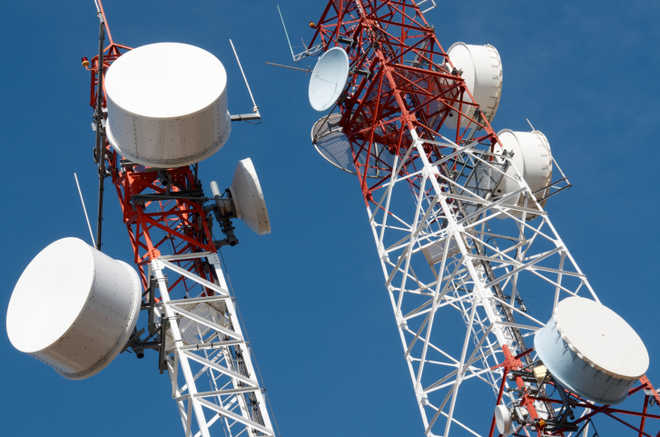
SC to assess health hazards of cell phone towers

SC to assess health hazards of cell phone towers


SC to assess health hazards of cell phone towers
R Sedhuraman
Legal Corresponden

New Delhi, March 18
The Supreme Court on Friday agreed to assess the impact of cell phone towers on the health of people in the vicinity by asking PIL petitioners to produce scientific evidence in support of their contention that radiation from such towers was harmful.
While petitioners’ advocate Prashant Bhushan pleaded for continuance of the ban on mobile towers in residential and other crowded areas, such as hospitals, schools and markets, cellular service providers contended that their towers posed no health problem.
A Bench headed by Chief Justice T.S. Thakur noted that retired judge P.N. Gupta, who died of cancer, had written a book that his health problem was due to remaining on cell phone calls for long hours on a regular basis. It said it was not sure if the late judge was in fact a victim of radiation.
In November 2012, another SC Bench comprising then CJI H.L. Dattu and Justice C.K. Prasad (since retired) had refused to entertain a PIL for appointment of an independent regulatory authority for minimizing the health risks arising from such towers. The Bench had noted that the government had come out with radiation norms for cell phone towers only recently and these were more stringent than the regulations in 90 countries.
Bhushan had pleaded that a group of 14 eminent scientists had released a research report in 2007, highlighting the health hazards of electromagnetic radiation.
The report provided evidence to show that exposure to such radiation could result in childhood leukemia, brain tumours, genotoxic effects, neurological effects and neurodegenerative diseases, immune system de-regulation, allergic and inflammatory responses, breast cancer, miscarriage and some cardiovascular effects, he said.
Bhushan also contended that the government had set the radiation norm at a unit of 0.92, while in China, Italy , France and Poland the permissible limit was one-tenth of this at 0.1.
The SC had said it “can step into the issue only if the government utterly failed” to minimise the health hazards arising from such emissions.

Effects of Weak Magnetic Fields on Biological Systems: RF fields can change cancer cell growth rates

Effects of Weak Magnetic Fields on Biological Systems: RF fields can change cancer cell growth rates


Joel's comments:  Last Friday Louis Slesin, Editor of Microwave News, announced a newly published paper by Frank Barnes and Ben Greenebaum. The provocative subject line for his message was "Paradigm Shift?" The message refers the reader to the following post on the Microwave News website: "Weak Magnetic Fields Can Promote Cancer: It May Not Be Impossible, After All." Mar 18, 2016.http://bit.ly/1pyt82I.
The paper, "Some Effects of Weak Magnetic Fields on Biological Systems: RF fields can change radical concentrations and cancer cell growth rates," was published in the March issue of the journal, IEEE Power Electronics Magazine. 

Over the past seven years I have discussed this issue with numerous physicists. Typically, they argue that it is impossible for low-intensity, non-ionizing EMF to cause health effects as this form of radiation has insufficient energy to cause chemical reactions; thus there cannot be biologic effects. One physicist went so far as to argue that if biologic effects were possible, Einstein would have to return his Nobel Prize awarded in 1921 for his discovery of the photoelectric effect. Physical scientists typically dismiss the vast peer-reviewed literature that demonstrates bio-effects as well as the epidemiologic studies that find adverse health consequences. They usually argue that all studies which report effects must have methodologic flaws.

Hopefully, this article will encourage some physicists and engineers who deny the possibility that non-thermal exposures to wireless radiation can cause harmful health effects to rethink their position. 


--

Some Effects of Weak Magnetic Fields on Biological Systems: RF fields can change radical concentrations and cancer cell growth rates


F. Barnes, B. Greenenbaum. Some Effects of Weak Magnetic Fields on Biological Systems: RF fields can change radical concentrations and cancer cell growth rates. IEEE Power Electronics Magazine. 3(1):60-68. March 2016. DOI: 10.1109/MPEL.2015.2508699

Excerpts

Concerns have been raised about the possible biological effects of nonionizing radiation since at least the late 1950s with respect to radar, other radio, and microwave sources. More recent concerns have arisen about the potential effects of low-intensity fields, including low frequency fields from the electric power generating, transmission, and distribution system and the devices it energizes, as well as intermediate, radio-frequency (RF), and higher-frequency radiation from devices such as cell phones, broadcast antennas, Wi-Fi, security monitors, and so forth. These are concerns about the direct effects of radiation on humans or other organisms. They are distinct from the electromagnetic compatibility issues that concern interference by the fields from one device with the function of another, though human health can be indirectly affected by electromagnetic interference with the function of medical devices, including hospital equipment or pacemakers.

Because of the difficulties in establishing the direct biological effects of long-term low-level exposures, the lack of an understood mechanism, and difficulties in obtaining reproducible results, the guidelines for exposure limits have been set based on relatively short-term exposures (minutes) that show clear-cut damage with the addition of a substantial safety factor. The current guidelines from the U.S. Federal Communications Commission (FCC) for limiting exposures in free space to the general public for the frequency range 100 kHz–100 GHz are given in Table 1 ... For cell phones, the specific absorption rate (SAR) is limited to 1.6 W/kg averaged over 1 g of tissue. These limits have been set based on providing a significant safety factor over exposure levels known to cause damage, where the primary damaging mechanism is heating and an increase in temperature. At low frequencies, the limits are based on induced current densities that would excite nerve firing, and the permissible exposures recommended by IEEE C95.6 are shown in Table 2. The International Commission on Nonionizing Radiation Protection (ICNIRP) sets electric field exposure limits ....

The most favored proposed mechanism for effects from low-level, long term exposures involves radicals, such as super oxide O2, NOx, and H2O2,which is readily converted into the radical OH-, molecules with unpaired electron spins that are highly reactive. These molecules are both signaling molecules and molecules that can cause damage to important biological molecules, such as lipids and DNA. Damages, such as aging, cancer, and Alzheimer’s, are associated with radical concentrations that are elevated for extended periods of time [2]. In this article, we present the possible theoretical mechanisms and experimental data that show long-term exposures to relatively weak static, low-frequency, and RF magnetic fields can change radical concentrations. As a consequence, a long-term exposure to 2fields below the guideline levels may affect biological systems and modify cell growth rates, while an organism’s built-in mechanisms may compensate for these changes.

The proposed hypothesis ... is that weak magnetic fields change the rate of recombination for radical pairs that are generated by the metabolic activity in cells, which, in turn, change the concentration of radicals such as superoxide and molecules such as H2O2. Most of the time, the signaling properties of these molecules generate antioxidants and other radical scavengers so that damaging health effects are not seen, and, in some cases, positive effects, such as the activation of the immune system, may be observed. However, long-term exposure to elevated magnetic fields can lead to elevated radical concentrations and an association with aging, cancers, and Alzheimer’s. This hypothesis is supported by some theoretical and experimental results. However, because biological systems contain a lot of feedback, feedforward, and repair processes, changes in radical concentrations will often have no observable effects. There is much work that needs to be done to illuminate the conditions in which magnetic fields can lead to either positive health effects or negative health effects, and observable effects may only occur when the exposures are combined with other biological stresses.

We have shown that both a theoretical base and the experimental results exist, demonstrating that weak static, low-frequency, and/or high-frequency magnetic fields can affect the concentration of radicals. There are also results that indicate that weak magnetic fields can change the growth rate of cells. However, there are many experiments where no changes are seen. This, we believe, is due to the many feedback and repair processes in the body. Droge [2] has shown in Figure 7 how extended elevations of ROS and nitrogen oxide species
lead undesired biological effects, such as aging, cancer, and Alzheimer’s.

Experiments in vitro that show changes in the growth rates of cells are more relevant to potential health effects.

We think that there are now both the theoretical bases and sufficient experimental results for further consideration of the possibility that long-term exposures to magnetic fields can lead to both useful applications in treating diseases and to undesired health effects. It is expected that these effects are frequency, amplitude, and time dependent. They will also be dependent on other biological conditions that can lead to changes in radical concentrations. In short, we have only begun to scratch the surface, and there is a lot of exciting research to be done before we can understand the ways in which low levels of magnetic fields can be used to control biological systems.

http://bit.ly/1WvQGiY

--
Also see:

How does wireless radiation produce harmful health effects?
http://bit.ly/EMRmechanism
--

Joel M. Moskowitz, Ph.D., Director
Center for Family and Community Health
School of Public Health
University of California, Berkeley

Electromagnetic Radiation Safety

Website:               http://www.saferemr.com
Facebook:            http://www.facebook.com/SaferEMR
News Releases:   http://pressroom.prlog.org/jmm716/
Twitter:                 @berkeleyprc

The Sydney Morning Herald on smart phone addiction

The Sydney Morning Herald on smart phone addiction


Excerpt

Smartphones are ruling our lives and killing our imaginations
March 18, 2016
Kim Arlington

Excerpt
It wasn’t too long ago that smartphones were a novelty, something the ardent tech-heads would queue up in the street to buy. But now we must go to the ends of the earth to escape them.

When Suzie Blackwell hiked through the mountains of Patagonia, she stayed at a camp with no Wi-Fi. “It was really noticeable how friendly people were,” she says. “Everyone was very open and approachable, and really engaged when you sat down and talked.”

Blackwell, who uses a work mobile as well as her own smartphone at home in Sydney, found it liberating. With no prospect of connecting to the internet, people made personal connections the priority.

Since Apple launched the iPhone in 2007, smartphones have saturated society. More than 80 per cent of Australians have one; only 4 per cent of 18 to 34-year-olds don’t.

Advertisement
We use them to email, take photos, check social media, listen to music, surf the internet, find directions, watch movies. We even use our smartphones to use our smartphones less, installing apps that monitor and limit our activity….. The pressure to be constantly available and responsive on social media can cause depression, anxiety and decrease sleep quality for teenagers, according to University of Glasgow researchers.

It’s not just teens feeling that way. Thirty per cent of those surveyed for the latest EY Digital Australia: State of the Nation report said their smartphone or tablet negatively affected their sleep or stress. Thirty-one per cent felt “addicted” to their device – a figure that rose to 46 per cent among 18 to 34-year-olds. They are a major contributor to the breakdown of the work/life divide; one study found working from smartphones and tablets adds two hours to the average working day.

SNIP

Read the post here.

Monday, March 21, 2016

Feeling Wonky? You Might Be Coming Down With Smartphone Sickness


| 5 min read
Feeling Wonky? You Might Be Coming Down With Smartphone Sickness

Dr Ashwini Setya

“Q: Do I have a smart phone?
A: No, it has me!”
That pretty much sums up the current scenario. 
So it’s no surprise if suddenly scrolling through your cell phone makes you feel sick in the stomach. Don’t blame the ridiculously sinful chocolate cake you just ‘liked’ on your newsfeed, because the technology-generated mayhem can make you feel woozy. Maybe a dull headache, dizziness or creeping nausea- these are just some of the peculiar side-effects of spending too much time on WhatsApp, Facebook, Instagram, or whatever the cool kids are hooked on to these days.

Is Your Smartphone Making You Sick?

Mobile phones are ubiquitous; it is not surprising that more than a billion mobile phones are being used in India today, translating into a population penetration of close to 80 % (Photo: iStock altered by The Quint)

Mobile phones are ubiquitous; it is not surprising that more than a billion mobile phones are being used in India today, translating into a population penetration of close to 80 % (Photo: iStock altered by The Quint)

Cell phones emit radiofrequency energy (radio waves), a form of electromagnetic non-ionizing radiation, which is absorbed by the tissues closest to them. The dose of the absorbed energy is expressed as specific absorption rate (SAR), in watts per kilogram of body weight.

Exposure to ionizing radiation (like in X-rays), increases the risk of cancer. But so far, the only consistently recognized biological effect of radiofrequency energy is heating, which is what we utilize in microwave ovens.

Can Your Smartphone Cause Cancer?

Cancer is one word that spells doom. In reality, we are in a very grey zone with evidence on this claim.
(Photo: iStock)

(Photo: iStock)

Several studies with conflicting results (depending on who has funded them) notwithstanding, the International Agency for Research on Cancer (IARC), an organ of the WHO, classified cell phone use as “possibly carcinogenic to humans”.
Though several other expert bodies on cancer, in cleverly worded statements, have indicated that more studies over longer periods are required before the issue can be decided one way or the other.

Your Phone Slows Down Your Reflexes

When young adults use cell phones while driving, they’re as bad as sleepy septuagenarians! True story (Photo: iStock)

When young adults use cell phones while driving, they’re as bad as sleepy septuagenarians! True story (Photo: iStock)
A study published in the medical journal Human Factors, confirms that the reaction time of cell phone users slows dramatically. When you are texting your reaction time is found to be 23 percent longer in emergency situations. Mobile phones diminish the ability to focus. No wonder road accident rates have shot up.

If you put a 20-year-old driver behind the wheel with a cell phone, their reaction times are the same as a 70-year-old driver who is not using a cell phone. It’s like instantly aging a large number of drivers.

Professor David Strayer, Co-author, University of Utah

Your Phone is a Germ Hotspot

A recent study done by Harvard University found that 25% phones have trace-able fecal matter on them.Eeeeewww! (Photo: iStock altered by The Quint) 

A recent study done by Harvard University found that 25% phones have trace-able fecal matter on them.Eeeeewww! (Photo: iStock altered by The Quint) 
Your phone goes with you everywhere, gets set on dirty counters, tables, dropped who-knows-where, and everything your fingers touch goes on your screen. A 2012 Purdue University investigation found cell phones had 10 times more bacteria than a toilet seat! YIKES.

In other words, your phone is getting bombarded with germs every time it’s used. So, knowing that ... how often do you disinfect your phone? Have you ever?
Not surprising, considering no one gets off the toilet seat till they pass another level of Candy Crush!


It Could Be Ruining Your Children

Your child shouldn’t have to WhatsApp his neighbourhood friends from the sofa. They have door bells for that. (Photo: iStock altered by The Quint)

Your child shouldn’t have to WhatsApp his neighbourhood friends from the sofa. They have door bells for that. (Photo: iStock altered by The Quint)
A large-scale study done on almost one lakh mothers and 30,000 children reveals that women who regularly expose their children to cellphone radiation, both while pregnant and after birth, are 50% more likely to have children with behavioural problems.
The sheer number of participants in this study are a hell of a lot to write-off to coincidence.

And Giving You a Digital Eye

Unlike reading from a printed page, it’s harder for your eyes to focus on a digital screen because the letters aren’t as sharp, there’s less contrast between the backlit letters and background, and you’re up against glare and reflections.
The problem is more with kids.
Staring at the glowing digital display (PC, laptop, tab or smartphones) for a long time is unnatural for your eyes. And small prints and blurry images strain your eye muscle more. In a minute, you blink around 18 times and that drops to 6-7 times when you are hooked on to your gadget
Smartphones In Pregnancy
Excessive usage of cell phones during pregnancy could slow down the rate of brain development of the foetus or may lead to hyperactivity and cause other behavioural disorders in the unborn child. Also, radiations emitted by mobile phones can lead to miscarriage as also increased incidence of congenital anomalies.
And while all these health issues exist, still a staggering 33% phone users would rather give up sex than give up their cellphone.
Yeah, let that sink in.
(Dr Ashwini Setya is a Gastroenterologist and Programme Director in Delhi’s Max Super Speciality Hospital. His endeavour is to help people lead a healthy life without medication. He can be reached at ashwini.setya@gmail.com)