Friday, March 02, 2012

Phones will have to carry health warning - by law

Phones will have to carry health warning - by law

2nd March 2012

The Israeli Knesset has just backed a bill requiring all mobile phones to carry a health warning. The labels will state 'Warning - the Health Ministry cautions that heavy use and carrying the device next to the body may increase the risk of cancer, especially among children.' The bill also requires all advertisements of mobile phones to state the same warning. All advertising targeting minors would be banned under the law, and breaking the law would be a criminal offence.

Although there is still no scientific consensus about the level of risk associated with mobile phone use, there is increasing concern for the health of our children as the use by them is increasing almost exponentially and they are much more vulnerable to the radiation the phones produce.

One of the bill's sponsors, Dov Khenin of Hadash, says

"People need to be more careful in their use of cellphones, he said, and especially, they must protect children."

All purchases for children have to be made by adults, as children are not old enough to enter into a legal purchase agreement. We hope that the new label will give caring adults pause for thought before submitting to the requests of their children/grandchildren. The phones do not make them safer. The Metropolitan Police say as many as 10,000 mobile phones are stolen every month. Two thirds of the victims are aged between 13 and 16. The research shows that children under 15 are the most common targets with up to half a million young people aged between 11 and 15 falling victim to phone theft. Younger children are often targeted by those whose phones have been stolen.

Parents and other adults buying phones for children need to examine their motive for doing so carefully.

If we really care, do we want to expose our children to:
  • the potential of being a street crime victim
  • developing a brain tumour or other form of cancer
  • reducing their possibility of having their own children (see our article on EMFs and reproduction)
  • developing early dementia (associated by scientists with phone use)

The Israeli Knesset join the increasing ranks of scientists, politicians and people like you and me not to mention organisations in America, Australia, Austria, Belarus, Belgium, Canada, Finland, France, Germany, Italy, Norway and Denmark, Russia, Thailand and Bangladesh that believe precuationary action must be taken NOW, rather than waiting for the bodies to fall.

http://www.emfields.org/news/20120302-mobile-phone-health-warning.asp

Willful Ignorance or Mindful Intelligence?


Willful Ignorance or Mindful Intelligence?


Writer(s): 
 Paul Raymond Doyon, Associate Professor, Utsunomiya University

In order for students to develop critical thinking skills, they first and foremost seriously need to learn how to THINK, period. A few years ago I tried a little experiment with approximately 400 students at one of Japan’s top ten universities. I told the students a true story about a comment a former prime minister of New Zealand made about Australia. I had the story translated into Japanese to make sure there were no misunderstandings and explained cultural differences related to the humor of these two countries.
The story goes like this: New Zealand and Australia have an agreement where the citizens of both countries can go and live in each other’s countries and receive all benefits that the citizens of each respective country would receive. The problem was that more New Zealanders would go to Australia than the other way around and many ended up living on welfare. When a reporter asked the then prime minister of NZ what he thought about this problem he replied that every time a New Zealander goes to Australia the average IQ of both countries goes up. Now, out of approximately 400 students only one student could figure out why. Furthermore, this was one of the so-called “stupid” students at this university—because he did not have to take the entrance examination for admission. He said naturally this was because New Zealanders are smarter than Australians but that any New Zealander who would want to go to Australia must be less intelligent than your average New Zealander. In order to understand this joke, one must be able to make logical inferences—and we might assume that despite all the abilities to memorize and regurgitate these students were lacking this basic skill.
When I first came to Japan I had a student to whom I was trying to teach the difference between It is and They are. When I asked him what color my eyes were, he replied, “It is blue.” And despite his inability to grasp the grammar that I was trying to teach him, I was perplexed by his answer because my eyes are actually brown. I even had him look into my eyes and asked him in Japanese what color they were. He replied again that they were blue. Obviously, he had developed a misconception that foreigners all had blue eyes and this was overriding his ability to actually perceivereality. The map is not the territory—and his cognitive map seemed to be a creative, yet gross misrepresentation, of reality.
Recently, the idea of noticing has become quite popular in ELT literature. It is just as important that students are able to notice—and then correct—their mistakes as it is for teachers to notice problems (e.g., Takayuki sleeping at the back of the class, etc.) in the classroom and to then do something about them. Many of us have experienced second-language learners who continuously fail to notice their mistakes and teachers who over the years keep on ignoring sleeping Takayuki. In both cases problems are ignored—either willfully or not—and hence remained unsolved. Thus, we might very well be able to say that ignoring (無視すること)is the opposite of noticing (気付くこと). Furthermore, when we notice that the word ignore is the root of the word ignorance(無知)we might also be able to posit thatmindful intelligence is rooted in noticing.
If we were to place the notion of noticing on the Experiential Learning Cycle, which is described and developed by David A. Kolb (1984),it would certainly be placed in the vicinity of the Concrete Experience and Reflective Observationnodes (in the Divergent Quadrant) of the cycle which also includes Abstract Conceptualization, and Active Experimentation as modalities of learning (See Figure 1). Hence, Kolb places perception (contrasted with conception) and what he calls apprehension (contrasted with comprehension) at the experiential node of the experiential learning cycle.
Students who spend too much time and brain power via rote memorization and regurgitation of disconnected facts and figures may not be developing their abilities to connect the dots and put the pieces of the puzzle together so to speak.
Furthermore, an overemphasis on concepts may be blinding the students to the original percepts needed to cultivate an intelligence gained via experience.
References
Kolb, D.A. (1984). Experiential Learning: Experience as the Source of Learning and Development. Englewood Cliffs, New Jersey: Prentice-Hall, Inc. 
http://jalt-publications.org/tlt/departments/grassroots/articles/685-willful-ignorance-or-mindful-intelligence

Willful ignorance or mindful intelligence? Part 2: Developing beginner’s mind


Willful ignorance or mindful intelligence? Part 2: Developing beginner’s mind

Writer(s): 
 Paul Raymond Doyon, Utsunomiya University

In the beginner’s mind there are many possibilities; in the expert’s mind there are few. Suzuki Roshi
Helgesen (2010) remarked that when people ask him what he teaches, he replies he teaches human beings.
Though some may prematurely argue that bringing other subjects into the language classroom is non-conducive to language learning, nothing could be further from the truth. Maley (2008) talked about bringing in knowledge from other subjects in what he calls feeder fieldsEducational Holism asserts that the learning of one subject transfers to the learning of other subjects and vice versa (Nunn, 2010). Lakoff and Johnson (1980) have proposed that all cognition (and hence learning) is based on metaphors. If this is true, the more metaphors—and hence, perspectives—we have for learning, the better learners we will become. The learning in one subject can act as cognitive metaphors to enhance learning in other subjects. Collateral learning was described by Dewey as far back as 1938:
Perhaps the greatest of all pedagogical fallacies is the notion that a person learns only the particular thing he is studying at the time. Collateral learning in the way of formation of enduring attitudes, of likes and dislikes, may be and often is much more important than the spelling lesson or lesson in geography or history that is learned. (p. 48)
As Borg (2010) pointed out in his plenary address at the 49th JACET Convention last year, greater awareness of pedagogical options leads to an increased repertoire of choices and more informed decision-making. Most would agree that an informed decision is naturally better than an uninformed—or even a misinformed—decision.
Too many people these days make the mistaken assumption that being skeptical is equivalent to exercising their critical thinking skills. In their skepticism they are often too quick to dismiss, and hence ignore, certain possibilities. Elbow (as cited in Brown, 1993) has postulated that people in Western society have been overly and myopically conditioned to play the doubting game:
The doubting game seeks truth ... by seeking error ... You must assume [an assertion] is untrue ... You make special effort to extricate yourself from the assertions in question ... You must hold off to one side the self, its wishes, preconceptions, experiences, and commitments. (1993, pp. 288-289)
Perhaps they have also been overly and myopically conditioned to play the war game since often it seems that a conversation turns into becoming more about winning the argument than actually finding truth. Paul (2007) describes a course he taught where he gave the students an essay by John Austin at Oxford and asked them to 
“State the purpose of the essay, state the main question that Austin considers, state the information he uses in answering these questions, give us his basic conclusion, identify his assumptions, then characterize his point of view.” Then I read the student papers. What did they do? They argued with John Austin, disagreeing with him, before they understood what he was saying. (Para. 36).
On the other hand, naturally, when one lacks information about a given topic, then certain propositions related to it may, at face value, initially seem absurd. However, when more information is gathered and looked at—rather than willfully ignored (which is too often the case)—then possibilities open up and one is better able to make an informed judgment. Paul (2007) has actually described critical thinking as “a system for opening every system (that exists)”. Hence, what too many people are exercising these days seems to be uninformed (or misinformed) skepticism rather than a more informed partial skepticism (Kolb, 1984). As Kolb concludes, 
the proper attitude for the creation of knowledge is neither a dogmatism of apprehension or comprehension nor an utter skepticism, but an attitude of partial skepticism in which the knowledge of comprehension is held provisionally to be tested against apprehensions, and vice versa. (pp. 107-109).
Rather than jumping to conclusions when we don’t have enough information or dismissing information based on a position of utter skepticism, perhaps more of us should adopt the Zen position of beginner’s mind or what Elbow calls the “believing game”, where one looks for truths and remains open-minded to possibilities—by making “acts of self-insertion and self-involvement, not self-extrication” (Brown, 1994, p. 289). In this way we can avoid the risk of stymieing the development of our own critical intellect.
References:
Borg, S. (2010, August). Teacher cognition and teacher autonomy. Paper presented at the 49th JACET Annual ConventionMiyagi City, Japan.
Brown, H. D. (1994). Principles of language learning and teaching. Englewood Cliffs, New Jersey: Prentice Hall Regents.
Dewey. J. (1938). Experience and education. New York: Touchstone.
Helgesen. M. (2010, August). ELT and the science of happiness: Positive psychology in the classroom. Paper presented at The 1st Cebu International TESOL Conference, Cebu City, The Philippines.
Kolb, D. A. (1984). Experiential Learning: Experience as the Source of Learning and Development. Englewood Cliffs, New Jersey: Prentice Hall.
Lakoff, G. & Johnson, M. (1980). Metaphors We Live By. Chicago: University of Chicago Press.
Maley, A. (2008, August). Art and artistry in ELT. Humanising Language Teaching. 10(4). Retrieved February 28, 2011, from .
Nunn. R. (2010, August). Holism and applied language study. Paper presented at The 1st Cebu International TESOL Conference, Cebu City, The Philippines.
Paul, R. (2007, July). Critical thinking in every domain of knowledge and belief. Paper presented at the 27th Annual International Conference on Critical Thinking, Berkeley City, CA. Retrieved February 28, 2011 from .
http://jalt-publications.org/tlt/departments/grassroots/articles/820-willful-ignorance-or-mindful-intelligence-part-2-developing-

Thursday, March 01, 2012

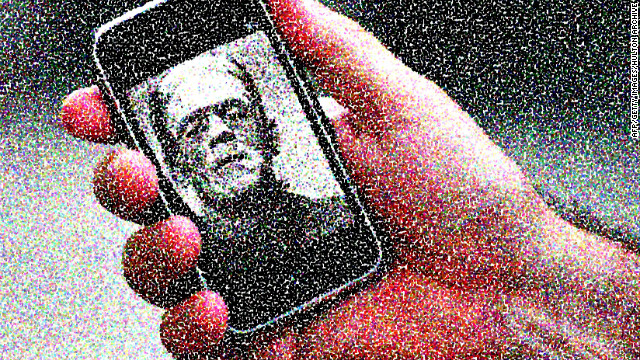
How our mobiles became Frankenstein's monster


How our mobiles became Frankenstein's monster

By Andrew Keen, Special to CNN
February 28, 2012 -- Updated 1031 GMT (1831 HKT)


Digital commentator Andrew Keen says our phones are becoming monsters beyond our control.


Digital commentator Andrew Keen says our phones are becoming monsters beyond our control.


STORY HIGHLIGHTS
  • Digital commentator Andrew Keen says our mobile phones are becoming uncontrollable monsters
  • Keen says our dependency on our mobile devices leaves us open to dark side of technology
  • Our only salvation lies through protective legislation -- and from knowing when to switch off, he says
Editor's note: Andrew Keen is a British-American entrepreneur and professional skeptic. He is the author of "The Cult of the Amateur," and the upcoming (June 2012) "Digital Vertigo." This is the latest in a series of commentaries for CNN looking at how internet trends are influencing social culture.
(CNN) -- As always, Mobile World Congress, the world's largest mobile telephone extravaganza, is being held in Barcelona this year. But it really should be held in Geneva, close to where Mary Shelley created Frankenstein.
That's because, with our increasing addiction to our mobile phones, we are in danger of creating a monster that we are less and less able to control.
Exaggeration? When was the last time you went out without your smartphone? How naked, how lost, do you feel without your mobile device? How much essential data, I mean really personal stuff that you wouldn't want anyone else to see, does your mobile phone contain?
Andrew Keen
Andrew Keen
Expect all the noise this week in Barcelona to be aboutmore powerful phones from Nokia, HTC, Samsung and LG. These hardware companies will articulate the benefits of their technology in terms of "personal empowerment." But the real truth behind these increasingly intelligent devices is personal disempowerment. Such is the eerie reality of a phone that you can't live without.
Some of the problems with our cellphones are already well known. Last November, for example, the American epidemiologist and writer Dr Devra Davis told me about her research claiming that our cellphones could be giving us cancer.
Then there was Robert Vamosi, the security expert, who explained to me how our mobile gadgets were spying on us. Vamosi even authored a book last year about this, entitled "How Our Technologies Betray Us: The Dark Side of Our Infatuation With New Technologies."
Vamosi isn't exaggerating about this dark side. There's an entire ecosystem developing around our mobile devices designed to spy on us. The Wall Street Journal ran a chilling series entitled "What They Know" which revealed how our Apple iPhones and Google Android devices were watching our every move. The surveillance and the mobile phone industries, The Journal indicated, are becoming ever more indistinguishable.
Every day now seems to reveal a new mobile data scandal. Only this week, for example, it was reported that Facebook, Flickr and other app makers were reading our text messages without our permission.
With our increasing addiction to our mobile phones, we are in danger of creating a monster that we are less and less able to control
Andrew Keen
The real problem with these phones is their increasing intelligence. Just as Google is designing the self-driving car, so tomorrow's cell phone will become more and more all-knowing. By 2015 not only will there by seven billion mobile devices in the world, but they will -- empowered by artificial intelligence features like Apple's Siri personal assistant and Evi, its new British competitor -- become more and more indistinguishable from the human brain.
"What we're talking about is a complete physical interface to the digital and virtual worlds," the futuristRichard Hammond told CNN.
"So we need to bring more brains onto the device," Hammond explained, "so we can provide more relevant information when needed ... based on artificial intelligence. Because that's the kind of technology that brings the device closer our own reasoning capabilities."
But do any of us really want our cell phones to have our "reasoning capabilities?" Do we want to create mobile devices in our own image?
No, we don't, I suspect. Especially since, as mobile ad industry experts acknowledged to CNN, this will involve the creepiest kind of compromises, allowing them to eavesdrop and record every aspect of the lives we reveal to the world through our mobile devices.
At one point, I wonder, do increasingly intelligent and autonomous cell phones incorporate such sophisticated intelligence that they become indistinguishable from us?
At what point will we find ourselves in a world described by the Russian-American satirist Gary Shteyngart in "Super Sad True Love Story" where everyone carries a mobile device called an "apparat" that is able to identify the most intimate details of a stranger's life?

Mobile World CongressMobile World Congress
Meanwhile, my earlier Frankenstein allusion is already being used by writers to describe our digital future. The best-selling writer, Robert Harris, did indeed base "The Fear Index" his latest thriller in Geneva, the scene of Shelley's Frankenstein.
But whereas Harris imagines a world of massive computers acquiring human reasoning, a much scarier scenario is one in which this algorithmic power has been so miniaturized that it can be put inside our mobile devices.
Hammond even suggests that this intelligence will become so indistinguishable from us that it will actually become part of us -- fashionable spectacles will provide visual displays, earring studs the audio and a third device will touch input. He then warns us about a future in which virtual reality will become so mobile that we will be able to wear it under our skin.
So what to do? How can we stop our phones becoming Frankenstein-like extensions of ourselves?
Yes, there is a need for legislation fighting our snooping mobile devices. I'm in favor, for example, of U.S. President Barack Obama's privacy bill of rights, and particularly his "Do Not Track" legislation which he unveiled last week. And I applaud the work of legislators like EU Justice Commissioner Viviane Reding and Minnesota Congressman Al Franken who are aggressively looking into the information-collecting practices of Google, Apple and the other big data companies in the mobile ecosystem.
But the growing omniscience of our mobile devices isn't just a political issue. "Practice safe phone" to combat their cancerous impact, Dr Devra Davis advises. But practicing safe phone extends to untangling ourselves from our mobile devices. It means fighting their growing power over us. It means reminding them who is boss.
Above all, we need to stop fetishizing cellphones. More than 60,000 people are expected to attend the Mobile World Congress this week to gaze at new phones. But remember: All the coercively seductive new products unveiled in Barcelona in the next few days are just phones. They can't make us younger, richer, more virile or more intelligent. And they certainly don't empower us.
The real sense of empowerment comes from (re)establishing our mastery over our mobile devices. As William Powers, the author of the excellent "Hamlet's BlackBerry" argues, what this means is disconnecting ourselves from our mobile devices once a week.
What it means is pressing the off button so that our smartphone can never become as smart as we are.
http://edition.cnn.com/2012/02/28/opinion/mobile-frankenstein-keen/index.html?hp

Are cell phones really so bad for your health?


Are cell phones really so bad for your health?


cell phones

Wednesday, February 29, 2012 by: Lloyd Burrell

See all articles by this author


(NaturalNews) Cells phones are one of the most utilized, most convenient inventions of the twentieth century. While there are definite advantages to using cell phones, e.g., being in contact with loved ones at all times, as with any convenience or luxury there are usually some downfalls or consequences. With cell phones the consequences can be detrimental and therefore, should not be dismissed lightly.

The consequences of cell phone use

Cell phones are a source of electromagnetic fields, radiation which creates change in anything it comes into contact with. EMFs emanate from mobile phones and because of how phones are used, these EMFs come into direct contact with the brain.

More than a dozen studies have linked using a cell phone for a long period of time -- ten years or more -- with a higher incidence of brain tumors and acoustic neuromas. These critical diagnoses are even more common when phones aren't switched from one side of the head to the other when engaged in conversation.

Other adverse health effects include:

• Evidence of leukemia, breast cancer and other cancers.

• Neurological concerns and changes in the nervous system.

• A much higher risk of salivary gland tumors.

Supporting studies

A study from the Medical University of Graz in Austria showed that cell phone use negatively affects sperm quality in men. A similar study from 2009 examined men in the height of their reproductive years and found infertility and the ability to father a healthy baby were compromised by cell phone usage.

Cells phones are also a source of perfluorooctanoic acid, a harmful chemical which has been linked to heart disease, cancer and female reproductive/developmental damage.

Cell phones are not the only problem. Cell phone towers, as well as other wireless devices, are responsible for contributing non-ionizing radio frequencies into the environment. Both theWorld Health Organizationand theInternational Association for Research on Cancerhave classified the electromagnetic fields emitted by cell phones as a 2B, possible carcinogen. The towers and the phones themselves are constantly emitting microwave radiation. Even when cell phones are not in use they are putting out EMFs.

Viable Solutions

According to theEnvironmental Working Group, after wireless industry representatives met with theFederal Communications Commissionin 2010, information on theFCC'ssite which had previously been supportive of purchasing safer -- lower radiation -- cell phones was eliminated and replaced with the following:

"Does not endorse the need for these practices."

When government organizations and industry work together it is not always in the best interest of the consumer. This means finding viable solutions without depending upon government or industry recommendations.

Solutions that can be easily implemented include:

• Minimizing use.

• Using a shielded wire headset or speaker phone.

• Keeping phone at a reasonable distance from the body.

• Turning your phone off when not in use.

• Using a land line with a corded phone whenever possible.

• Texting instead of talking.

• Switching phone from one side of the head to the other.

• Avoid using your phone when reception is poor.

Researchers are continuing to study EMFs and their connection to health in terms of long-lasting and future effects. Whatever conclusions are reached, minimizing the effects now instead of later is timely and crucial.

Sources for this article include:

http://www.ncbi.nlm.nih.gov/pubmed/21951197

http://www.magdahavas.com

http://www.clevelandclinic.org

http://www.ewg.org

http://www.ewg.org/news/epa-acts-curtail-potential-carcinogen

http://www.bioinitiative.org/freeaccess/report/docs/report.pdf

About the author:
Lloyd Burrell has spent the last 10 years researching the effects of EMFs on health, after becoming electrically sensitive in 2002. He now offers advice and strategies on healthy living in our electromagnetic world. Download his free EMF Health Report and subscribe to his newsletter by visiting hisEMF protection website.


Learn more:http://www.naturalnews.com/035096_cell_phones_radiation_health_effects.html#ixzz1nuR6cusl

Wednesday, February 29, 2012

Smart Meter Horrors - Wake Up!


Horrors - Wake Up!
By Cynthia Larson
2-27-12
 
I just heard the news that smart meters will begin being installed in Santa Barbara, starting next month. We've had them in my neighborhood now for more than a year, and I gradually became quite ill from them, much like the 'boiled frogs' who don't notice at first that the temperature of the water is increasing. By the time I got my local utility, PG&E, to remove the smart meters from my house, I'd come down with some sixteen smart-meter-related symptoms, including: sleeplessness, ringing in the ears, nosebleeds, migraines, muscle tremors, heart palpitations, nausea, and blurred vision. I now realize I need my neighbors to also opt out, because the smart meters emit microwave radiation that extends out in a one mile radius, with so much radiation it's like living between 200 and 600 feet away from a cell phone tower.

I want you to know that it's to your advantage to contact the California PUC and let them know you'd like the option to opt out for free from smart meters. It's also to your advantage to call SCE at (800) 810-2369 to be added to the delay list. If you or anyone who ever stays in your home or office have pacemakers or any other life support equipment, you definitely should call SCE at (800) 810-2369 to get on the smart meter delay list.

Last week, Palo Alto became the 50th local government in California to voice opposition to installation of wireless "smart" meters in their jurisdiction with a three year moratorium on installations. To date, four California counties have made smart meter installations illegal: Lake County, Marin County, Mendocino County, and Santa Cruz County. Seven cities have outlawed smart meters: Capitola, Fairfax, Lakeport, Rio Dell, Ross, Seaside, and Watsonville. The city of Berkeley is one of 40 California cities on record as having requested a moratorium on continued installation of "smart" meters.

Smart meters invalidate your homeowners insurance   If your home catches fire and is shown to have non-UL-approved fixtures (such as smart meters), your homeowners insurance will refuse the tab for any damages, because smart meters are not certified by Underwriters Laboratories.  The risk of fires is very real, since current wiring standards are insufficient for supporting the high frequency spikes smart meters emit.  A number of electrical fires have been documented as having been caused by `smart' meters.  Smart meters have yet to be tested or approved under federal Occupational Safety and Health Administration (OSHA) rules.

Analog meters ensure more accurate, reasonably priced utility bills      Utility customers have noticed increases in their bill after a `smart' meter is installed ­ in some cases hundreds of dollars more than usual. A recent poll showed that one third of people who had smart meters installed experienced bill increases, with one quarter of those noticing huge increases in their bills. Utilities claim the meters are accurate, but unexplained over-billing continues showing up all around the US.

Smart meters emit unsafe levels of harmful radiation   Now that increasing numbers of medical professionals and doctors are expressing concerns about exposure to Electro Magnetic Field exposure, particularly in the microwave range, it's becoming clear that 'EMF smog' is an invisible yet deadly pollutant and public health hazard we would do well to recognize. Thousands of people have complained of tinnitus, headaches, nausea, sleeplessness, heart arrhythmia, and other symptoms after `smart' meters were installed.  Smart meters  violate already high FCC limits on human exposure to microwave radiation (with radiation levels some 50 to 450 times higher than radiation from cell phones). Unlike cell phones, smart meter radiation can't be switched off, and are being installed even in homes of people who are developing "electro-sensitivity".  There are have also been reports of `smart' meter interference with pacemakers and other implants.

Smart meters violate civil liberties and your rights to privacy   When a `smart' meter is installed, your utility has access to a treasure trove of information about your electricity usage, potentially compromising your privacy. Depending on the regulatory protections ­ and enforcement of those rules ­ in your state, they will be able to sell this information to a series of corporations and the government. Read the interview with the Electronic Frontier Foundation about how `smart' meters violate privacy. Read how the ACLU in Vermont and the ACLU in Hawaii have both condemned the lack of consumer privacy protection.

Smart meters aren't really 'green'    Smart meters do not result in energy savings, according to Reuters.  They may even increase energy consumption, especially once smart appliances are added to homes that interact with smart meters in the home.  There is also emerging evidence that wireless, non-ionizing radiation (from cell phones, wifi, and `smart' meters) harms wildlife and damages trees. There have been direct reports of how smart meters affect vital bee populations.

Smart meters cost people their jobs   PG&E claims that they are retaining 80% of their meter readers. What they don't tell you is that several years back, they transitioned their meter readers from full time to temporary so the job loss would not appear so drastic. Utilities look upon smart meters as an easy way to boost profits by cutting jobs. There can be advantages to PG&E employees visiting our neighborhoods, to better detect developing gas leaks, for example.

Be actively involved   By opting out of smart meters, signing petitions, and contacting our utilities and political representatives, each of us can send a clear message that we are not willing to risk our health, safety, and privacy for 'smart' meters.  The conversion to smart meters is one of the largest technology rollouts in history, yet virtually no public consultation with ratepayers or local governments was carried out in advance.  The CA Public Utilities Commission, an appointed (not elected) body who are charged with regulating utility companies, ignored popular local opposition for years ­ though finally and belatedly producing an opt-out in early 2012 that costs PG&E customers hundreds of dollars to avoid a recognized possible carcinogen.

Keep asking questions and thinking critically     As actor and martial artist Chuck Norris, says, "The way I see it, we as consumers have a choice. Will we believe countless specialists who are saying smart meters are, at the very least, unnecessary health risks and contributors to overall electrosmog, or will we believe public utility companies and the feds, which have divested interests in the installation of smart meters?"

Please share this information, and encourage friends, family and neighbors to call SCE at (800) 810-2369 to get on the smart meter delay list.

-- Cynthia Larson