Wednesday, January 21, 2015

EESC EHS Opinion - plenary vote January 2015 (20/01/2015)

EESC EHS Opinion - plenary vote January 2015 (20/01/2015)


The Section for Transport, Energy, Infrastructure and the Information Society (TEN) of the European Economic and Social Committee (EESC) has now produced it's final draft opinion that we reported on recently. It would have represented a giant step forward in the recognition of electromagnetic hypersensitivity and the need in society to dramatically alter our approach to supporting sufferers of the condition. However today, the 21st January 2015, a Counter-Opinion was proposed and voted on before the EHS Opinion and the Counter Opinion was passed by plenary vote. That means that the good TEN 559 EHS Opinion was dismissed.
The Adams Counter-Opinion was voted on first and was passed 136 votes to 110 votes with 19 Abstentions. We do plan to do a short report on the meeting which was live-streamed.
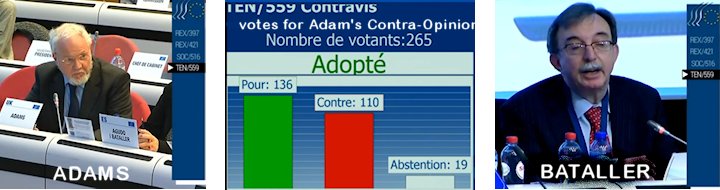
EESC votes
If anyone wants to replay the meeting, then Mast-Victims has archived the audio from the meeting

Opposition

Richard Adams OBE, a member of the TEN committee and someone who has worked hard over many years to make the world a better and fairer place, has written a strongly worded alternative to the document, that seems to completely miss the very purpose of the formal opinion, and also goes beyond its scope by evaluating the scientific and medical evidence (something the original was updated to avoid doing in its later iterations). His Counter-Opinion submission has been co-signed by 17 colleagues, mostly with industry/commercial/economic associations and experience.
He also very strangely and unjustifiably has criticised Lennart Hardell for a "lack of scientific and academic credibility", despite Dr Hardell's long and distinguished career record of publishing relevant work in peer-reviewed journals and inclusion in the IARC RF assessment panel as a renowned expert. Professor Hardell and Michael Carlberg have produced a detailed rebuttal of Adam's defamatory comments. Adams also made similar unjustified comments about the excellent BioIniative Reports.
We note that Mr Adams is a Trustee of UK Charity Sustainability First which promotes the Smart Grid and Smart Meters (which use RF to transmit data). The Charity is sponsored by BEAMA (which represents 300 electrotechnology firms and claims to have significant influence over UK and international political, standardisation and commercial policy), Cable & Wireless, Consumer Futures, British Gas, EDF Energy, Elexon E-Meter (Siemens), EON UK, National Grid, Northern Powergrid, Ofgem (the UK electricity industry Regulator), Scottish Power Energy Networks, and UK Power Networks. He is also a member of the Corporate Responsibility Stakeholder Council at RWE AG (one of Europe’s five biggest electricity and gas utilities). There is nothing wrong with this, but as all these organisations are promoting the installation of RF emitting Smart Meters and as he is strongly opposing the TEN group EHS Opinion, we see this as a potential conflict of interest that should be declared.
Powerwatch Comments As a continuation of the above point, the counter-opinion proposed by Richard Adams demonstrates an apparent lack of understanding behind the reason the committee was producing the opinion in the first place. It is not his role to argue one side or the other of the scientific debate, but to provide pragmatic and practical options for managing the social and economic impact of electromagnetic hypersensitivity. There is at least as much published support that "removal of EMF exposure" is as effective for sufferers as other treatments such as cognitive behavioural therapy.

The EC and Member States have signed up to applying the Precautionary Principle. The most recent interpretation document from the EC is the Communication on the precautionary principle COM(2000). This includes:
  • Recourse to the precautionary principle presupposes that potentially dangerous effects deriving from a phenomenon, product or process have been identified, and that scientific evaluation does not allow the risk to be determined with sufficient certainty
     
  • Decision-makers need to be aware of the degree of uncertainty attached to the results of the evaluation of the available scientific information. Judging what is an 'acceptable' level of risk for society is an eminently political responsibility
     
  • Decision-makers faced with an unacceptable risk, scientific uncertainty and public concerns have a duty to find answers. Therefore, all these factors have to be taken into consideration.
It will be very disappointing if his counter-opinion is giving much merit or weight in any future voting processes, as he has failed to offer any such options, arguing instead that the symptoms are unrelated to EMFs. He recommends that symptoms are addressed separately from EMFs, despite the lack of literature supporting the efficacy of such treatments, and that treatment should be designed around alleviating the concerns of these individuals about environmental exposures generally.

» An excellent new document on RF fields and health regarding 'Scientific proof' versus 'observation' and 'experiences' by Dr Leendert Vriens is well worth reading in our opinion.

Key extracts from the existing document

1.5 » The EU should assist currently affected groups and limit exposure fields in light of the recommendations set out in this opinion, especially with respect to recognising this exposure as a cause of functional disability and environmental illness. Steps should also be taken to prevent the number of sufferers from gradually increasing in the future due to the expansion of devices using these technologies.
2.2 » It is now believed that electromagnetic hypersensitivity syndrome, which is one aspect of what is known as Idiopathic Environmental Intolerance (IEI), attributed to electromagnetic fields (EMFs) from such everyday devices as mobile phones and Wi-Fi, can lead to permanent disability since there are reasonable indications that it could cause anatomical and functional disorders for sufferers to the point that it limits or prevents their capacity to work. The International Agency for Research on Cancer, a specialised WHO body, examined the potential carcinogenic risk of radiofrequency fields produced by mobile phones. Two international bodies have drawn up guidelines on exposure limits for workers and the general public (ICNIRO and IEZZ) (sic), should be ICNIRP and IEEE).
2.8 » There are more and more people suffering from electromagnetic and environmental hypersensitivity syndrome. In addition, these people may sometimes suffer the incomprehension and scepticism of doctors who do not deal with the problem professionally. That is why measures to stem the increase in the numbers of those affected and prevent those suffering becoming socially excluded are so important.
3.2 » However, people affected by electromagnetic waves display no symptoms whatsoever when not exposed to electromagnetic fields. This leads to the conclusion that any recurring radiation-induced conditions that diminish or disappear when the sufferer moves away from the source constitute electromagnetic hypersensitivity, even when according to some doctors, scientific evidence of a direct causal link is lacking. The present opinion addresses the implications of their situation for those affected rather than its causes.
3.3 » Electromagnetic hypersensitivity sufferers experience a serious deterioration in their quality of life, not only because of the physical symptoms it usually entails, but also because their lives are totally disrupted by the need to avoid exposure. In practice, it means that they not only have to avoid almost all public facilities such as transport, hospitals and libraries, but even their own homes, in order to escape adverse health effects, which is a breach of rights that are enshrined in the EU Charter of Fundamental Rights.
8.1.1 » The EESC believes that the EU should assist current sufferers and take steps to limit exposure fields in order to prevent the number of sufferers from gradually increasing in the future due to the expansion of devices using these technologies. It also supports the creation of white zones as an emergency measures for people worst affected by this syndrome.
8.5 » Electromagnetic safety thresholds for the use of products should be regulated and rules concerning the planning of electric power lines and relay antenna base stations should be established by adopting legislation on:
  • a safe distance between high-voltage power lines and other electrical installations and homes;
  • maximum permissible exposure levels and effective and transparent control mechanisms;
  • requirement for spatial planning tools to include public and private EMF-free zones (i.e. "white" zones, which would have to include housing, and public spaces that were free of electromagnetic pollution, such as health centres, hospitals, libraries, workspaces, etc.).
Powerwatch Comments This collection of extracts from the final opinion make a number of points clear, and elucidate the purpose of the committee's opinion. It is not their remit to discuss the scientific controversy between electromagnetic hypersensitivity and causation by electromagnetic fields, nor to discuss its medical diagnosis. It does recognise the existence of the syndrome, its recognition as a condition in some form or another, the increase in its prevalance, and the need to address it as a real societal issue preventing people from working and living normal lives. As such, the recommendations that are made in the document are focused on how best to manage the social and economic impacts of electromagnetic hypsersensitivity and offer solutions that have been demonstrated to be the most effective, such as providing places and areas where sufferers can live and work.

Links

» European Economic and Social Committee (EESC) website
» All the documents regarding the EHS opinion(s) (scroll down to the TEN/559 section of documents)
» Final version of the TEN opinion document on electromagnetic hypersensitivity
» Richard Adams' individual counter opinion to be presented alongside the official committee document
» Future agenda for the section for Transport, Energy, Infrastructure and the Information Society (TEN)
» Lennart Hardell's response to Richard Adams' defamatory comments
Published c.14:00 hrs GMT on 20th Jan 2015; small updates and link corrections made until 22:25 hrs 

http://www.powerwatch.org.uk/news/2015-01-20-eesc-final-opinion.asp

Monday, January 19, 2015

Why the modern world is bad for your brain

Why the modern world is bad for your brain


From The Guardian

In an era of email, text messages, Facebook and Twitter, we’re all required to do several things at once. But this constant multitasking is taking its toll. Here neuroscientist Daniel J Levitin explains how our addiction to technology is making us less efficient

Daniel J Levitin Q&A, Sunday 18 January 2015 

Excerpt

Our brains are busier than ever before. We’re assaulted with facts, pseudo facts, jibber-jabber, and rumour, all posing as information. Trying to figure out what you need to know and what you can ignore is exhausting. At the same time, we are all doing more. Thirty years ago, travel agents made our airline and rail reservations, salespeople helped us find what we were looking for in shops, and professional typists or secretaries helped busy people with their correspondence. Now we do most of those things ourselves. We are doing the jobs of 10 different people while still trying to keep up with our lives, our children and parents, our friends, our careers, our hobbies, and our favorite TV shows.

SNIP

Read the post here.

Effects of extremely low frequency electromagnetic field (ELF-EMF) on catalase, cytochrome P450 and nitric oxide synthase in erythro-leukemic cells

Effects of extremely low frequency electromagnetic field (ELF-EMF) on catalase, cytochrome P450 and nitric oxide synthase in erythro-leukemic cells


Patruno A, Tabrez S, Pesce M, Shakil S, Kamal MA, Reale M. Effects of extremely low frequency electromagnetic field (ELF-EMF) on catalase, cytochrome P450 and nitric oxide synthase in erythro-leukemic cells. Life Sci. 2014 Dec 11. pii: S0024-3205(14)00966-7. doi: 10.1016/j.lfs.2014.12.003. [Epub ahead of print]

Abstract

AIMS: Extremely low frequency electromagnetic fields (ELF-EMFs) are widely employed in electrical appliances and different equipment such as television sets, mobile phones, computers and microwaves. The molecular mechanism through which ELF-EMFs can influence cellular behavior is still unclear. A hypothesis is that ELF-EMFs could interfere with chemical reactions involving free radical production. Under physiologic conditions, cells maintain redox balance through production of ROS/RNS and antioxidant molecules. The altered balance between ROS generation and elimination plays a critical role in a variety of pathologic conditions including neurodegenerative diseases, aging and cancer. Actually, there is a disagreement as to whether there is a causal or coincidental relationship between ELF-EMF exposure and leukemia development. Increased ROS levels have been observed in several hematopoietic malignancies including acute and chronic myeloid leukemias.

MAIN METHODS: In our study, the effect of ELF-EMF exposure on catalase, cytochrome P450 and inducible nitric oxide synthase activity and expression by Western blot analysis in myelogenous leukemia cell line K562 was evaluated.

KEY FINDINGS: A significant modulation of iNOS, CAT and Cyt P450 protein expression was recorded as a result of ELF-EMF exposure in both phorbol 12-myristate 13-acetate (PMA)-stimulated and non-stimulated cell lines. Modulation in kinetic parameters of CAT, CYP-450 and iNOS enzymes in response to ELF-EMF indicates an interaction between the ELF-EMF and the enzymological system.

SIGNIFICANCE: These new insights might be important in establishing a mechanistic framework at the molecular level within which the possible effects of ELF-EMF on health can be understood.

http://1.usa.gov/1yEH5Mc

Excerpts

There has been considerable concern and controversy about the effects related with extremely low-frequency electromagnetic fields (ELF-EMFs) on the health of human populations [36]. Power lines and almost all kinds of household electrical appliances such as television sets, computers, hair dryers, mobile phones and many more emit ELF-EMFs. In view of its large application in everyday life, great attention is focused on the effects of the ELF-EMFs. The biological effects of ELF-EMFs have been the subject of more extensive studies since they can penetrate deeper into tissues [6], [13], [14] and [55]. Several epidemiological studies linked ELF-EMFs with an increased risk of cancer, for instance childhood leukemia, brain cancer, breast cancer, kidney cancer, cancer of the nervous system, lymphoma as well as cardiovascular diseases [7], [32], [45] and [48].

Despite the large number of studies performed, a causal relationship and biological mechanisms for potential effects of ELF-EMFs on carcinogenesis have not been clearly identified as yet. The main cause of skepticism is the ability of low amount of energy transfer by these fields to DNA [28]. Moreover, epidemiological associations observed between ELF-EMFs and cancer are believed to be mainly due to promoter, co-promoter or progressor effects rather than initiator [31].

On the other hand, appropriately controlled application of ELF-EMFs have therapeutic applications as well. Low frequency and low intensity fields have been used extensively for the treatment of non-union fractures and can accelerate wound healing [20], [50] and [51]. Pain and spasticity reduction is another area in which pulsed electromagnetic therapy has been reported to be very effective [8] and [16].

Currently, very little is known about how ELF-EMF modifies the biological systems. It can initiate a number of biochemical and physiological alterations in biological systems of different species [18], [21] and [40]. The biological effects in cell lines exposed to ELF-EMFs have been frequently noted [19], [24], [35], [33] and [42]. However, despite the large number of studies, an understanding is still lacking [12], [25] and [46]. The time span of application is an important factor which governs the physiological response of cells towards ELF-EMF exposure. In our earlier study, we have reported that ELF-EMFs applied at different time lengths modulate chemokine production and keratinocyte growth via inhibition of the nuclear factor kappa-light-chain-enhancer of activated B cell (NF-κB) signaling pathway and might inhibit inflammatory processes [54]. Another study reported that a single exposure to ELF-EMF results in a decrease in K562 differentiation, while continuous ELF-EMF exposure caused an increase in differentiation [2].

In this study, we used the K562 cell line, that are considered to be a reliable in vitro model of the hematopoietic system and of oxidative stress to assess the biological effects of ELF-EMF exposure. The purpose of this study was to evaluate activity and expression of catalase, cytochrome P450 and inducible nitric oxide synthase and their kinetic parameters in K562 cell line exposed to a well-defined and controlled ELF-EMF to add new knowledge about the mechanisms responsible for the biological effects of ELF-EMFs.


The experimental setup and ELF-EMF exposure system have been previously described by [54]. Briefly, the oscillating magnetic field (AC MF) consisted of: 1) a generator of sinusoidal signal at 50 Hz; 2) a power amplifier; 3) an oscilloscope dedicated to monitoring output signals from the gaussmeter (MG-3D, Walker Scientific); 4) a 160 turn solenoid (22 cm in length, 6 cm in radius, copper wire diameter of 1.25 × 10− 5 cm) generating a horizontal magnetic field. The solenoid was then placed inside the incubator. The geomagnetic field and magnetic field generated by solenoid have the same orientation. The achieved MF intensity (1 mT (rms)) was measured continuously using the hall-effect probe, situated adjacent to the specimen located in the central part of the solenoid, and connected to the gaussmeter ...

ConclusionWe hypothesize that ELF-EMF could trigger protein activation mediated by ligands, such as Ca2 +, activating NADH oxidase that alter ROS-regulated pathways, particularly pro-proliferative and/or survival pathways. In addition, modulation of kinetic parameters of CAT, CYP-450 and iNOS enzymes in response to ELF-EMF indicate an interaction between ELF-EMF and enzymological system. Our results confirm that the ELF-EMF affects not only the ROS product but also the enzymatic activity. Taken together, these results demonstrate the interplay between ROS and antioxidant molecules influenced by ELF-magnetic fields and underscore the subtle effects of low-frequency magnetic fields on oxidative metabolism and ROS signaling, that may be particularly important in hematologic malignancies.
http://bit.ly/1yGBVCm

--

Joel M. Moskowitz, Ph.D., Director
Center for Family and Community Health
School of Public Health
University of California, Berkeley

Electromagnetic Radiation Safety

Website:              http://www.saferemr.com
Facebook:            http://www.facebook.com/SaferEMR
News Releases:    http://pressroom.prlog.org/jmm716/
Twitter:                 @berkeleyprc

Exposure to 900MHz electromagnetic fields activates the mkp-1/ERK pathway and causes blood-brain barrier damage and cognitive impairment in rats

Exposure to 900MHz electromagnetic fields activates the mkp-1/ERK pathway and causes blood-brain barrier damage and cognitive impairment in rats


Tang J, Zhang Y, Yang L, Chen Q, Tan L, Zuo S, Feng H, Chen Z, Zhu G. Exposure to 900MHz electromagnetic fields activates the mkp-1/ERK pathway and causes blood-brain barrier damage and cognitive impairment in rats. Brain Res. 2015 Jan 15. pii: S0006-8993(15)00030-X. doi: 10.1016/j.brainres.2015.01.019. [Epub ahead of print]

Abstract

With the rapid increase in the number of mobile phone users, the potential adverse effects of the electromagnetic field radiation emitted by a mobile phone has become a serious concern. This study demonstrated, for the first time, the blood-brain barrier and cognitive changes in rats exposed to 900MHz electromagnetic field (EMF) and aims to elucidate the potential molecular pathway underlying these changes. 
A total of 108 male Sprague-Dawley rats were exposed to a 900MHz, 1mW/cm2 EMF or sham (unexposed) for 14 or 28 days (3h per day). The specific energy absorption rate (SAR) varied between 0.016 (whole body) and 2W/kg (locally in the head). In addition, the Morris water maze test was used to examine spatial memory performance determination. Morphological changes were investigated by examining ultrastructural changes in the hippocampus and cortex, and the Evans Blue assay was used to assess blood brain barrier (BBB) damage. Immunostaining was performed to identify heme oxygenase-1 (HO-1)-positive neurons and albumin extravasation detection. Western blot was used to determine HO-1 expression, phosphorylated ERK expression and the upstream mediator, mkp-1 expression. 
We found that the frequency of crossing platforms and the percentage of time spent in the target quadrant were lower in rats exposed to EMF for 28 days than in rats exposed to EMF for 14 days and unexposed rats. Moreover, 28 days of EMF exposure induced cellular edema and neuronal cell organelle degeneration in the rat. In addition, damaged BBB permeability, which resulted in albumin and HO-1 extravasation were observed in the hippocampus and cortex. Thus, for the first time, we found that EMF exposure for 28 days induced the expression of mkp-1, resulting in ERK dephosphorylation. 
Taken together, these results demonstrated that exposure to 900MHz EMF radiation for 28 days can significantly impair spatial memory and damage BBB permeability in rat by activating the mkp-1/ERK pathway.
http://1.usa.gov/1yGSrkv

Excerpts

To the best of our knowledge, this is the first study to demonstrate that 900 MHz EMF affected spatial memory in rats exposed to EMF for 28 days but not in rats exposed to EMF for 14 days. Furthermore, 900 MHz EMF exposure increased HO-1 immunostaining in the cortex and hippocampus of rats. The percentage of time spent in the target quadrant and the frequency of platform crossing were lower in the rats in the EMF28d group than in the other groups. The rats in the EMF28d group were also less able to recall the precise position of the hidden platform on the day of memory retention despite the 4-day training sessions.


The rats were randomly divided into a non-exposed group, an EMF14d group and an EMF28d group. In the irradiated group, the rats were exposed to radiation at a
power density of 1 mW/cm2, whereas the rats in the non-exposed group were exposed at a power density of 0 W/kg. There were 36 animals in each group and 3 rats were used for electron microscopy, 6 were used for immunohistochemistry, 12 for Evans Blue and 6 for Western blot and 9 rats in each group were used for Morris Water Maze (MWM) test (In Morris Water Maze, the rats need days of training and they are not suitable for any other experiences). All 108 rats were included in the final analysis.

Application of the electromagnetic field and exposure system used in this study have been previously described by Odaci E et al. (Odaci et al., 2008). In the EMF14d group, the rats were exposed to 900 MHz EMF for 3 hours per day for 14 days, and the rats were exposed for 28 days in the EMF28d group. The exposure system consists of a microwave power generator and monopole antenna ... The device could generate 900 MHz continuous electromagnetic waves with 2 W peak output power and 1 mW/cm2 power density in a mobile phone frequency. The specific energy absorption rate (SAR) varied between 0.016 (whole body) and 2 W/kg (locally in the head), which was determined in a phantom.


The present study provides evidence that 900-MHz electromagnetic field exposure resulted in the disruption of BBB permeability, due to an increased occurrence of neuronal albumin in the hippocampus and cortex of rats exposed to EMF for 14 days and 28 days, particularly in rats in the EMF28d group. The ability to learn and remember in rats is dependent on the integrity of relevant structures of the brain, and disrupted BBB permeability by EMF most likely results in ultrastructural changes and increased HO-1 expression in exposed rats. However, the mechanism for the passage of albumin over the BBB is unclear. Extravasation via vesicle-mediated transport across blood vessels, endothelial cells and transendothelial channels may account for this passage (Nittby et al., 2009; Shivers et al., 1987). The extravasation of serum albumin produces secondary neurotoxicity in the brain (Eberhardt et al., 2008; Lai et al., 1992). Albumin is a relatively small molecule, but other substances also have access to the brain and can result in a series of brain injuries. Moreover, the membranes of mitochondria and lysosomes of the residual body type could be affected and may release previously sequestered residual body material, including heavy metals and peroxidized lipid membrane residues.

Although rats in the EMF14d group exhibited changes in ultrastructure and BBB permeability, they showed no significant impairment in spatial memory, as measured using the Morris water maze test. Thus, the time period of exposure may be insufficient to significantly affect spatial memory, and the rats may have the ability to compensate or repair areas affected by EMF exposure to recover normal behavior. A previous study indicated that neural reorganization may allow compensatory strategies to overcome EMF-induced damage and may provide normal task acquisition and subsequent memory retrieval (Martin and Clark, 2007). Another possibility is that the Morris water maze test is not sufficiently sensitive to identify subtle changes in learning and memory.

In conclusion, our results indicate that 900-MHz electromagnetic field exposure attenuated cognitive function, ultrastructural structure and damaged BBB permeability in rat. Thus, for the first time, we found that the mkp-1/ERK signaling pathway may be potentially involved in this process. Because EMF exposure to life is a very complex process, further studies in vivo and in vitro are needed to elucidate the precise dosage and exposure time that are harmful. To better understand this process, further studies are required to investigate the molecular pathways involved in vitro.


-- 

Joel M. Moskowitz, Ph.D., Director
Center for Family and Community Health
School of Public Health
University of California, Berkeley

Electromagnetic Radiation Safety

Website:              http://www.saferemr.com
Facebook:            http://www.facebook.com/SaferEMR
News Releases:    http://pressroom.prlog.org/jmm716/
Twitter:                 @berkeleyprc

Green Bank, le village américain refuge des électrosensibles

Green Bank, le village américain refuge des électrosensibles


Sunday, January 18, 2015

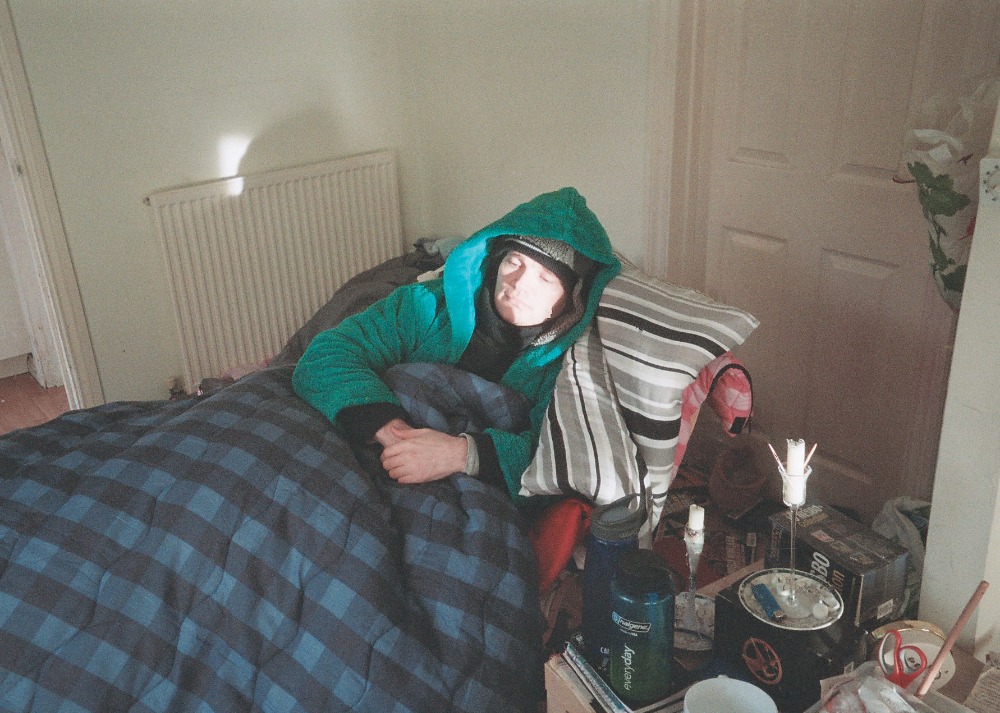
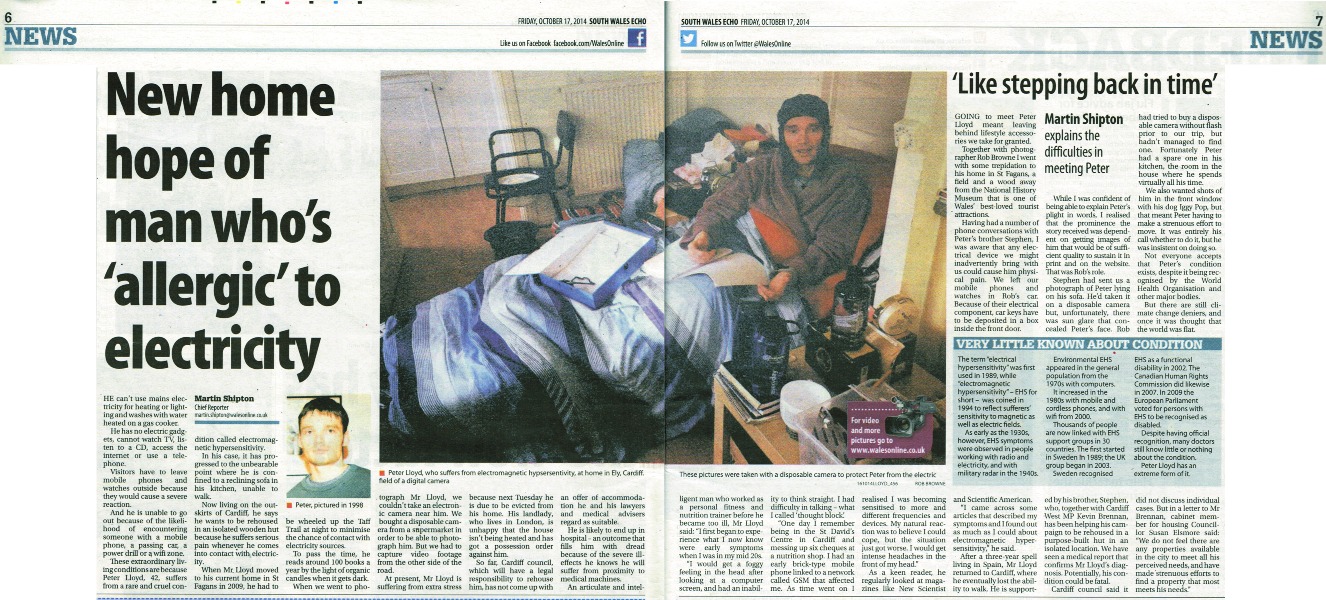
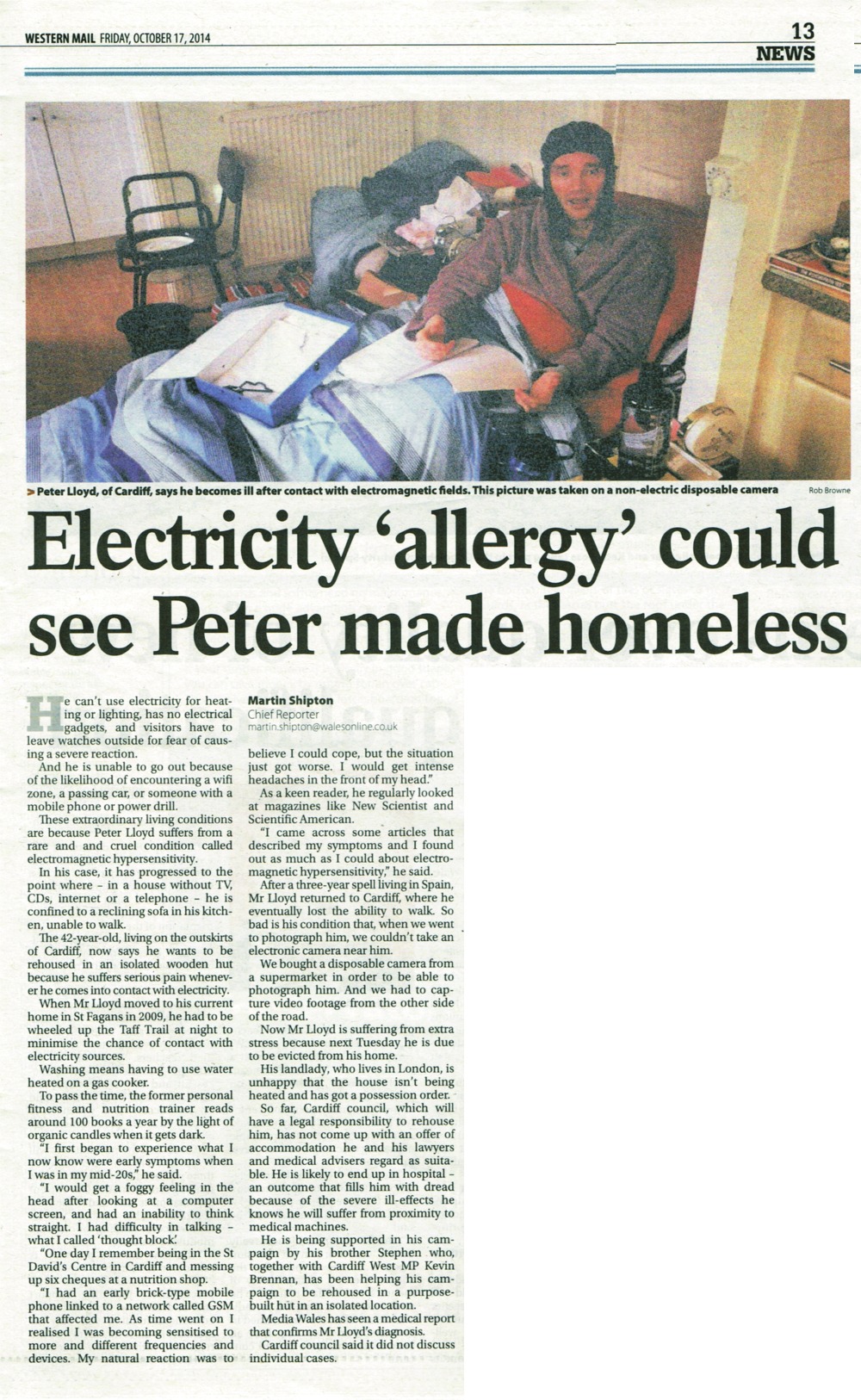
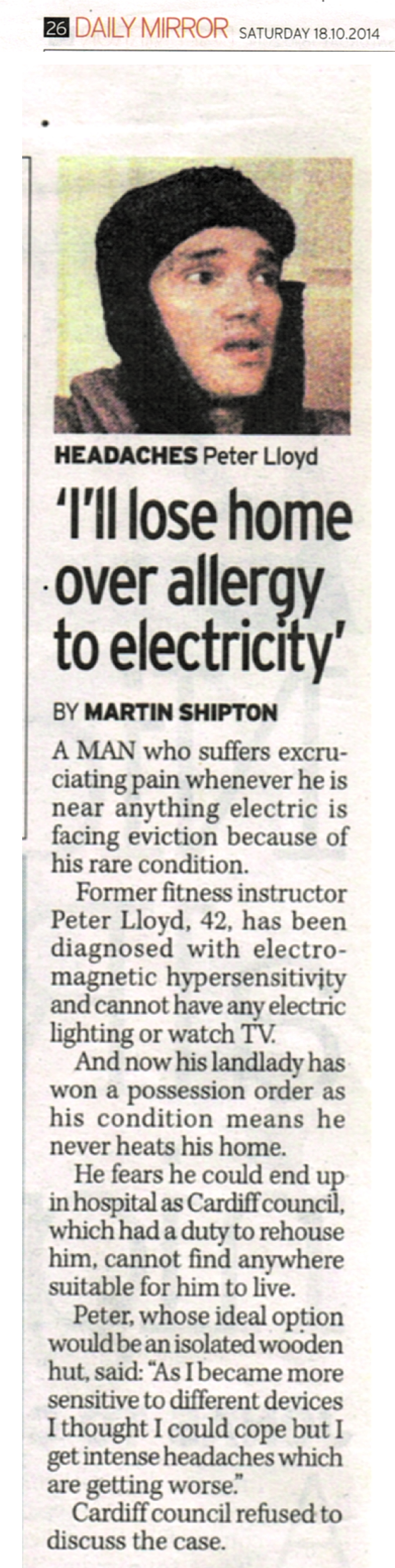
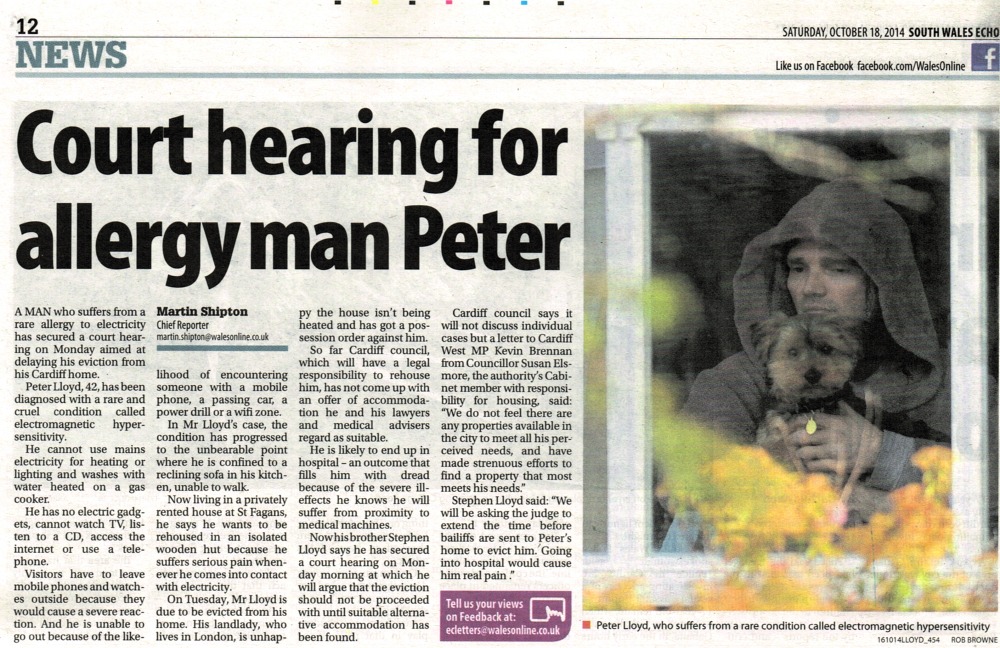
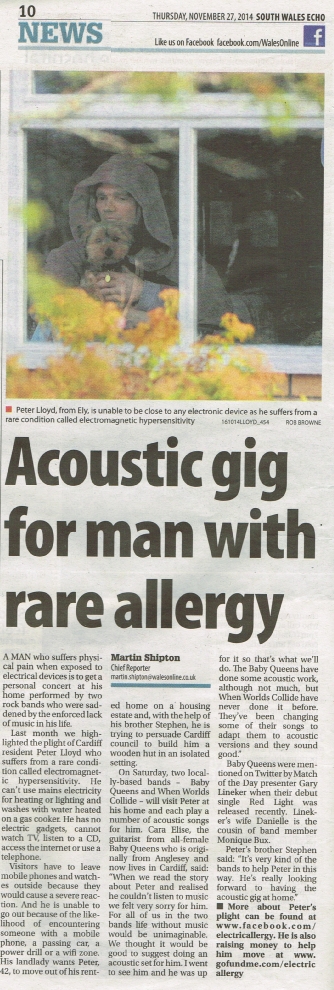
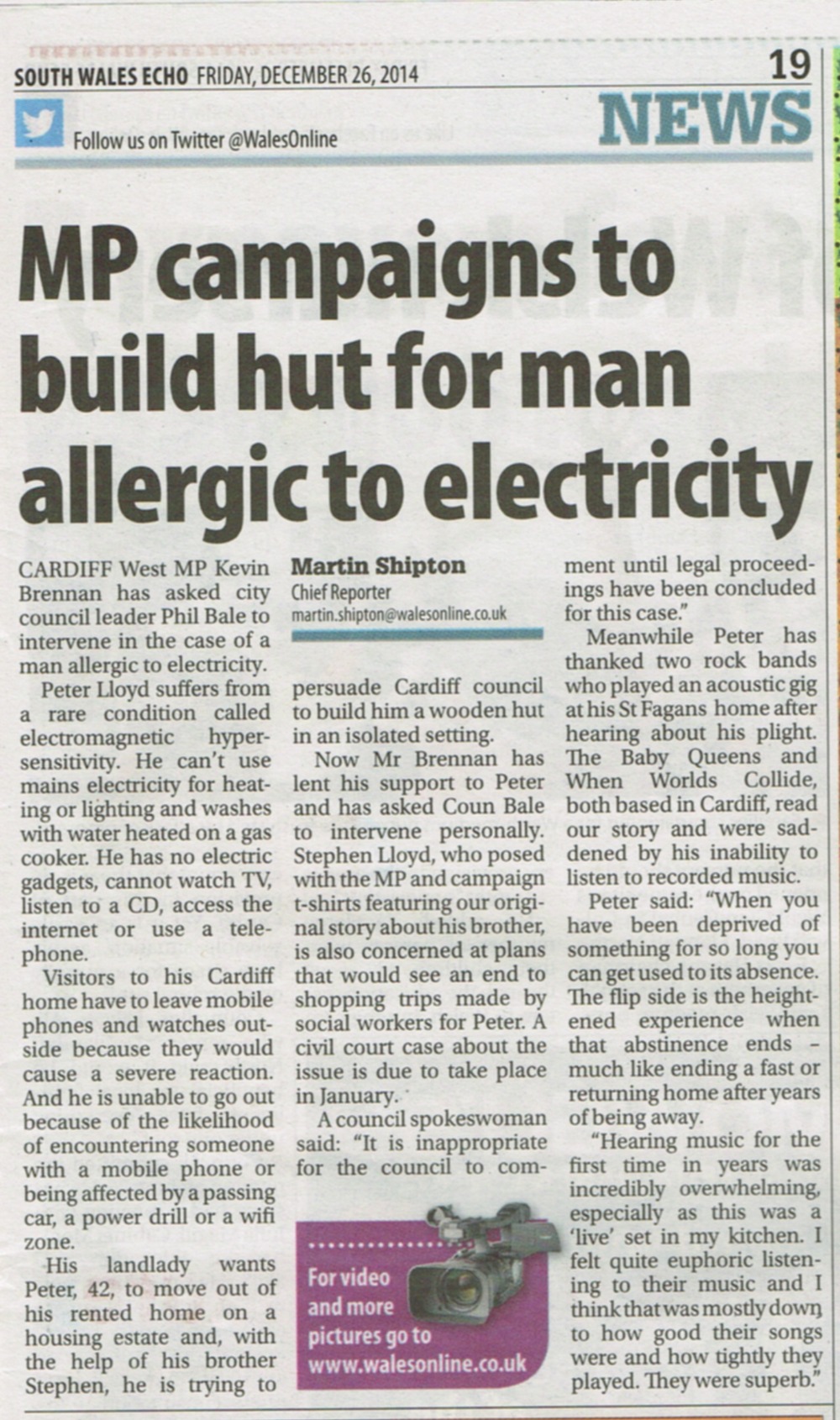
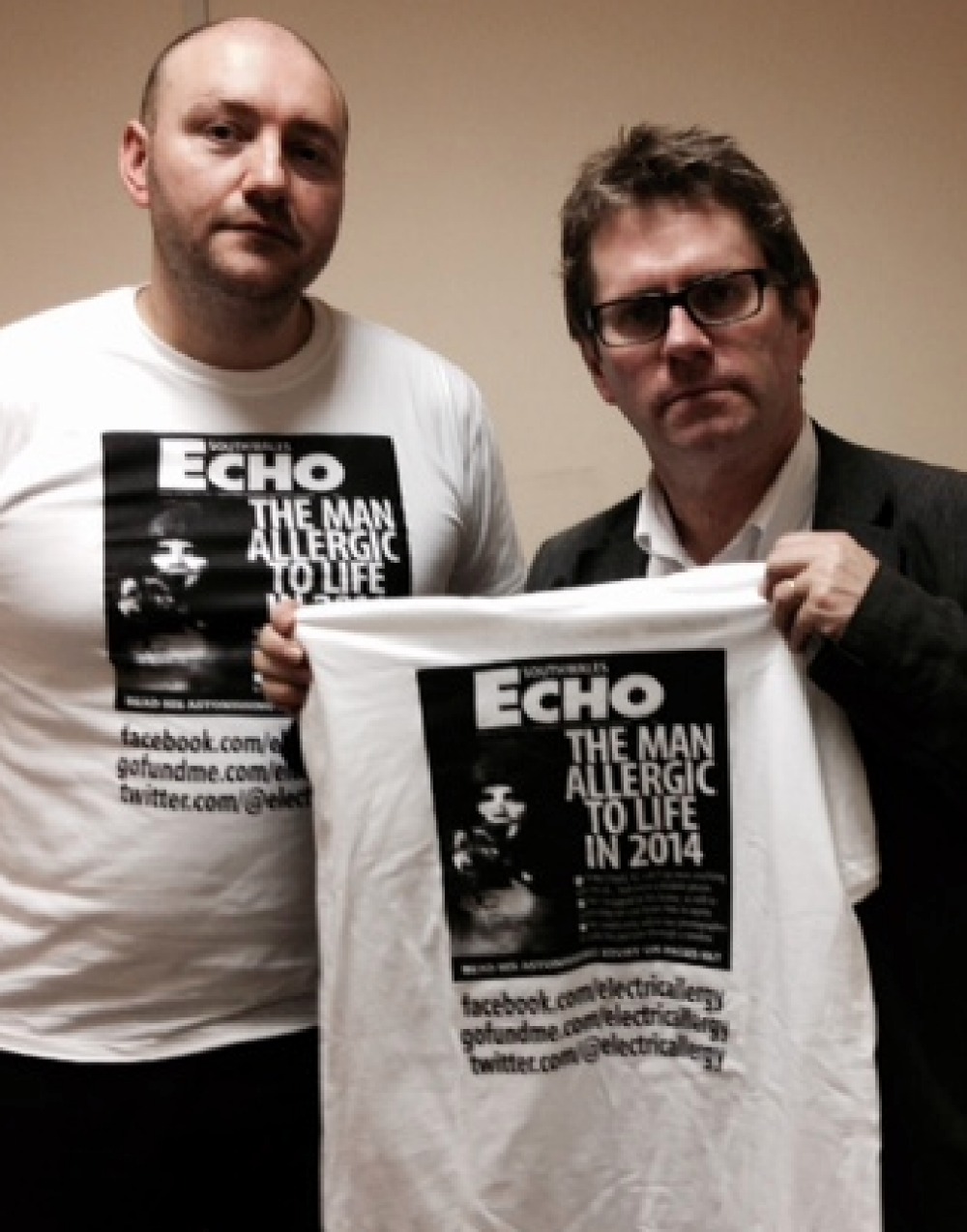
Save man allergic to electricity

Save man allergic to electricity 
St. Fagans Community, WLSWISHES
£6,465 of 43k
Raised by 46 people in 2 months 
Donate Now
179
TOTAL
SHARES
168
11
Created November 18, 2014 
Peter Lloyd