Saturday, August 31, 2013

Mobile phone radiation induces mode-dependent DNA damage in a mouse spermatocyte-derived cell line: a protective role of melatonin.


 2013 Aug 19. [Epub ahead of print]

Mobile phone radiation induces mode-dependent DNA damage in a mouse spermatocyte-derived cell line: a protective role of melatonin.

Abstract

Abstract Purpose: To evaluate whether exposure to mobile phone radiation (MPR) can induce DNA damage in male germ cells. Materials and methods: A mouse spermatocyte-derived GC-2 cell line was exposed to a commercial mobile phone handset once every 20 minutes in standby, listen, dialed or dialing modes for 24 h. DNA damage was determined using an alkaline comet assay. Results: The levels of DNA damage were significantly increased following exposure to MPR in the listen, dialed and dialing modes. Moreover, there were significantly higher increases in the dialed and dialing modes than in the listen mode. Interestingly, these results were consistent with the radiation intensities of these modes. However, the DNA damage effects of MPR in the dialing mode were efficiently attenuated by melatonin pretreatment. Conclusions: These results regarding mode-dependent DNA damage have important implications for the safety of inappropriate mobile phone use by males of reproductive age and also suggest a simple preventive measure, keeping our body from mobile phones as far away as possible, not only during conversations but during "dialed" and "dialing" operation modes as well. Since the "dialed" mode is actually part of the standby mode, mobile phones should be kept at a safe distance from our body even during standby operation. Furthermore, the protective role of melatonin suggests that it may be a promising pharmacological candidate for preventing mobile phone use-related reproductive impairments.
PMID:
 
23952262
 
[PubMed - as supplied by publisher]

http://www.ncbi.nlm.nih.gov/pubmed/23952262

Cell Phone Cancer - Information About Cell Phone Radiation Lawsuits


Cell Phone Cancer - Information About Cell Phone Radiation Lawsuits

This has to do with lawsuits but plenty of information all over the net on the dangers of cell phone radiation, wifi dangers, etc.


Poll

Read more at http://www.liveleak.com/view?i=0a7_1377817128#VDgv1QGRSAPPHrYc.99 

India: Curb Overuse of Mobile Phones, Say Experts


31 August 2013 

India: Curb Overuse of Mobile Phones, Say Experts


85 million cell phones are shipped to India each year.

Curb overuse of mobile phones, say experts


Deccan Herald, Mumbai, 30 August 2013


Experts at a panel discussion here have warned against excessive use of mobile phones, with some saying that "living close to mobile tower is like being in a life size microwave."


At a panel discussion, held here yesterday, the experts touched upon various forms of radiation, with a special focus on mobile phone radiation. They dwelt on effects that mobile phone radiation can have on people, a release said today.


Dr Girish Kumar, Professor at IIT Bombay said, "living close to mobile towers is like being in a life size microwave." The panel of experts also highlighted dangers of overusing a mobile phone.


The World Health Organisation Fact Sheet 2011 states that a person using mobile phone 30-40 cm away from the body while texting and using internet will have reduced exposure to radio-frequency fields than someone holding the handset close, the release said.


"WHO also advocates greater use of hands-free devices, as they help keep the mobile phone away from head and body during phone calls. Exposure is also reduced by limiting the number and length of calls. Using the mobile phone in areas of good reception also reduces exposure as it allows phone to transmit at reduced power," it said.


Film actor Juhi Chawla and activist Prakash Munshi highlighted the health hazards resulting from indiscriminate installation of mobile towers.


Dr Anand Gokani, consulting physician, Bombay Hospital spoke about precautions to be taken to avoid these health hazards. Dr Meenakshi Thakur of Tata Memorial Centre, Mumbai spoke about radiation diagnosis, nuclear medicines and safety issues.


The panel discussion on "Radiations: Myths and Realities" was organised to address questions and to educate and inform students, public and the media, by the Nehru Science Centre. The panel comprised scientists, social scientists and activists.


http://mieuxprevenir.blogspot.com/2013/08/india-curb-overuse-of-mobile-phones-say.html

EVENT: Commonwealth Club of California – “The High (?) Road to a True Smart Grid”, December 3rd


EVENT: Commonwealth Club of California – “The High (?) Road to a True Smart Grid”, December 3rd

An interdisciplinary expert panel will present a program at the Commonwealth Club of California Tuesday, December 3rd from 12:00 – 3:00 p.m., called “The High (?) Road to a True Smart Grid”. The program will cut through misunderstandings about the value of the ‘smart meters’ being rolled out across the country, and the misguided direction of electricity and energy policy in the U.S. The panelists will outline a blueprint for a safer and smarter approach to both electricity generation and distribution in the United States—one that has all of our best interests, and the interests of planet Earth, at heart. Complimentary light buffet will be served from 11:30 a.m. until noon.
To RSVP, please contact the Commonwealth Club of California at
www.commonwealthclub.org/events/2013-12-03/high-road-true-smart-grid
or 415-597-6700
Tickets: $32 non-members, $20 members,
$10 students (with valid ID)


“The High (?) Road to a True Smart Grid”


Read more at

http://electromagnetichealth.org/electromagnetic-health-blog/smart-grid-dec-3/

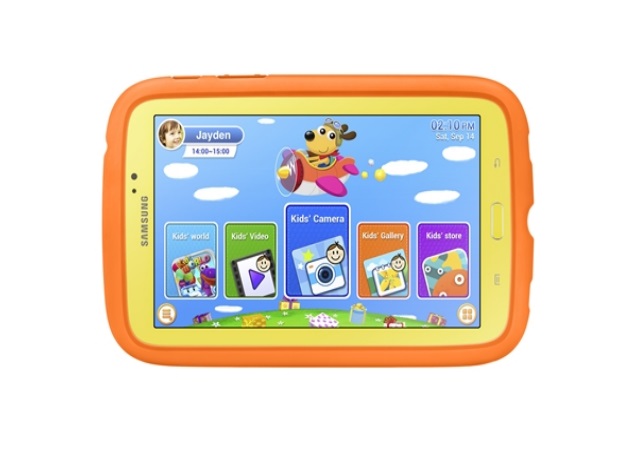
Samsung Galaxy Tab 3 Kids with Android 4.1 launched


Samsung Galaxy Tab 3 Kids with Android 4.1 launched

samsung-galaxy-tab3-kids-big.jpg

Samsung has launched a new Android tablet, the Galaxy Tab 3 Kids, a variant of the Galaxy Tab 3 tablet targeted at children.

The Samsung Galaxy Tab 3 Kids features a 7-inch WSVGA display with 1024x600 pixels resolution and a pixel density of 170ppi. The new tablet for kids is powered by a 1.2GHz dual-core processor paired with 1GB of RAM. It runs Android 4.1 Jelly Bean. The tablet features dual cameras, a 3-megapixel rear camera and a 1.3-megapixel front-facing camera. Connectivity options include Wi-Fi, Bluetooth, Wi-Fi Direct and Micro-USB. It features 8GB of internal storage which can be further expanded up to 32GB. It also includes a 4000mAh battery. The tablet measures 111.1x188x9.9mm and weighs 302 grams. The tablet will be available in only one colour variant, Yellow.

Commenting on the launch, JK Shin, CEO and Head of IT and Mobile Communication, Samsung Electronics said, "It's no secret that kids are using technology more than ever before. We saw an opportunity to create a device just for kids that provides them with an intuitive, fun and kid-friendly user experience filled with rich, interactive and educational content that parents will love."

The Samsung GALAXY Tab 3 Kids comes pre-loaded with children's apps and the company's new Kid's Store. The tablet also includes an Application Manager that offers parents the ability to select apps for kids to access. The Tab also has a Time Management feature that allows parents to set specific time periods for device usage for their kids.

The company is offering a Kids case that features a kid-friendly grip and multiple stand options with the latest Tab 3 for kids. The case comes equipped with C-Pen, a stylus.
The Samsung GALAXY Tab 3 Kids will be available in Korea starting early September and will subsequently be available across China, Europe, U.S., Africa, South America and South East Asia. Samsung has not revealed the pricing for the new tablet, yet. The company notes that the availability of applications through Kids Samsung Apps will vary by market.

Samsung Galaxy Tab 3 Kids key specifications
  • 7-inch WSVGA display with 1024x600 pixels resolution and a pixel density of 170ppi
  • 1.2GHz dual-core processor
  • 1GB RAM
  • 8GB of internal storage, expandable up to 32GB via microSD card
  • 3-megapixel rear camera
  • 1.3-megapixel front facing camera
  • 4000mAh battery
  • Android 4.1 (Jelly Bean)
  • Weight: 302 grams
For the latest technology news and reviews, like us on Facebook or follow us on Twitter and get the NDTV Gadgets app for Android or iOS.


http://gadgets.ndtv.com/tablets/news/samsung-galaxy-tab-3-kids-with-android-41-launched-411102

How Wireless Carriers Make You Trash Your Phone Before It's Really Broken


How Wireless Carriers Make You Trash Your Phone Before It's Really Broken

Making it harder to unlock your device works great for phone companies. Not so much for the planet.


Years ago, someone stole my very first cellphone (a flip model with—get this—an antenna) out of my bag on the New York City subway. I despaired. As a grad student, I was chronically broke and couldn't afford a replacement. Luckily, a generous friend gave me an old phone unearthed from his desk drawer. I got a new SIM card, switched it into my friend's handset, and added my contacts. Problem solved.
It wouldn't be so simple these days. In the mid-'90s, wireless companies began to place digital locks on their phones so that consumers couldn't transfer them to a new carrier. It's relatively easy to unlock a phone—you can download the necessary code for a few bucks. Butas of January 26, under the Digital Millennium Copyright Act (DMCA), you can no longer do this legally. The 1998 law, aimed mostly at curbing digital piracy, also outlawed cellphone unlocking, but the US Copyright Office had always granted an exemption since unlocking phones really has little to do with copyright. The wireless industry didn't like that—it argued that because carriers often subsidize the cost of phones, it's not fair to let customers take their device to a competitor.
The Copyright Office has apparently embraced that argument: This year, for the first time, it denied the usual requests by organizations and individuals to extend the exemption. Consumer advocates are now fuming over what Jennifer Granick, director of civil liberties at Stanford University's Center for Internet and Society, calls "a huge and expensive inconvenience."
But there's another reason the unlocking ban is a bad idea: It stifles the secondary phone market—which, of course, is just what phone companies want. "If a person purchases a used handset, they will not be purchasing a subsidized handset from the carrier and signing a two-year contract," explains James Mosieur, director of a reuse charity called the 911 Cell Phone Bank.
If you can't resell your locked phone, then what can you do with it? People keep their phones for an average of only 18 months. And according to the EPA, of the 152 million mobile devices officially discarded by Americans in 2010, just 11 percent were recycled. The rest (not counting the ones languishing in kitchen junk drawers or e-waste warehouses) ended up in landfills, where they can leach hazardous materials, including lead, copper, and flame-retardant chemicals.
The guts of smartphones also contain dozens of elements obtained by environmentally dicey mining and refining processes, including "rare earths" that leave behind radioactive tailings. Kyle Wiens, cofounder of iFixit, the electronics reuse company profiled in our November/December 2012 issue, estimates that a billion cellphones are sitting unused in closets and desks around the world. "And that's when it waslegal to unlock them. You can imagine that it's only going to get worse."
Representatives from Verizon, AT&T, and Sprint all told me that the ban wouldn't affect their customers, since they are willing to grant exceptions to individuals "in good standing" whose accounts have been open for a few months. "The problem," Mosieur points out, "arises when a device has been obtained legally from its rightful owner through a recycling program, a trade-in program, a neighbor, eBay, Craigslist, etc., and cannot or will not be unlocked by the carrier because the current owner is not the original account holder."
None of the providers I talked to would cough up details about the number of unlocking requests they receive and grant. Nor would they comment on what the unlock ban might mean for organizations that repurpose old phones for sale in the developing world. What would happen, I asked them, if they got a bulk request to unlock thousands or even millions of phones for a good cause? Crickets. The best answer I got was from Verizon's Brenda Raney, who emailed me to say the company doesn't comment on "speculative scenarios."
In March, a coalition that includes the Electronic Frontier Foundation, Reddit, and the popular website BoingBoing petitioned Congress to permanently exempt cellphones from the DMCA. Legistators from both sides of the aisle have introduced bills and the White House supports the idea. Yet so far none of the legislation has made it out of committee—thanks, no doubt, to the clout of the wireless industry, whose annual revenues of $196 billion dwarf those of agribusiness and auto manufacturing. In 2012, the CTIA, a trade association that lobbies for the major carriers, spent more than $12 million pressing Congress on various issues, while individual carriers and phone manufacturers unleashed well over $30 million. (Backers are most optimistic about a new bill from California Rep. Zoe Lofgren that would address the ban as part of a more significant DMCA fix.)
Wiens of iFixit says industry could take other steps, like putting repair manuals online, to keep phones out of landfill. But lifting the ban is "low-hanging fruit," he adds—especially for pols who wants to please their constituents. "It's amazing how popular these unlocks are."
http://www.motherjones.com/environment/2013/06/cell-phone-unlocking-environment-waste


LeapFrog’s Toddler-Safe Texting Aims to Fend Off Amazon


LeapFrog’s Toddler-Safe Texting Aims to Fend Off Amazon

By Matt Townsend - Aug 30, 2013 7:30 AM PT
(Corrects market gain in sixth paragraph of story published Aug. 28.)
Toddler-safe texting has arrived.

LeapFrog's Toddler-Safe Texting Aims to Fend Off Amazon
By tackling parents' fears about their kids going online, these toymakers are seeking to extend their dominance in a niche category of the booming tablet market that they created two years ago after releasing the first versions of LeapFrog's LeapPad and VTech's InnoTab. Photographer: Alain Jocard/AFP/Getty Images

Spurred by burgeoning demand for kid-styled tablets, LeapFrog Enterprises Inc. (LF) and VTech Holdings Ltd. (303) revamped their tyke-targeted devices to add features that let three-year-olds send short messages to grandma and even watch online videos without stumbling across websites kids shouldn’t see.

“Exposing our children to the Internet at an early age is incredibly valuable, but how do you do it safely?” John Barbour, chief executive officer of Emeryville, California-based LeapFrog, said in an interview.

By tackling parents’ fears about their kids going online, these toymakers are seeking to extend their dominance in a niche category of the booming tablet market that they created two years ago after releasing the first versions of LeapFrog’s LeapPad and VTech’s InnoTab.

With the added Web features in the recently released $150 LeapPad Ultra and $100 InnoTab 3s, they are also presenting more of an alternative to devices from Amazon.com Inc. (AMZN), Samsung Electronics Co. and Apple Inc. (AAPL) in the larger market for tablets that is projected by researcher IDC to increase 34 percent to 67 million units shipped this year.

LeapFrog and VTech faced little competition early on for tablets made specifically for children -- as opposed to parents handing over an iPad to their kids. The LeapPad became a runaway hit, and its success helped turn around the company’s fortunes. The shares have more than doubled since the first version went on sale in July 2011, compared with a 22 percent gain for the Standard & Poor’s 500 Index. The shares fell 1 percent to $9.83 at 1:19 p.m. in New York. VTech’s InnoTab has become its best-selling product.

Mattel’s Absence
That easy ride has ended and it’s not because Mattel Inc. (MAT) and Hasbro Inc. (HAS), the world’s largest toymakers, have entered the market. Despite these devices being one of the few bright spots in the sluggish U.S. toy industry, they’ve stayed out, saying making tablets is too expensive and risky and will instead focus on creating branded content for mobile devices.

Meanwhile, Samsung announced a kid tablet yesterday that will be released next month, and Amazon’s recent television advertising features a parade of children. It’s offering a monthly subscription service with unlimited kid content, more parental controls and marketing the 7-inch Kindle Fire at $174 as “the perfect family tablet.”

While sales of children’s tablets account for a small part of the total tablet market, which includes Apple’s top-selling iPad, there may be plenty of room to keep carving out this niche with more families now buying more than one tablet, IDC said.

Wal-Mart Backing
Given that LeapFrog has established itself as a leader in kid tablets and has increasing support from retailers such as Wal-Mart Stores Inc. (WMT), the Ultra is projected to be one of the top-selling toys this holiday-shopping season, said Michael Swartz, an analyst with SunTrust Banks Inc. (STI) in Atlanta who recommends buying the shares.

LeapFrog executives thought long and hard about adding adult features to the LeapPad because while kids are begging to get online, parents feel the need to hover over them, said Jill Waller, vice president of multimedia learning. VTech also spent months designing a tablet kids could use on their own.

Both companies curated the online experience, limiting access to such sites as PBS.org. LeapFrog makes all these decisions through its LeapSearch browser, while VTech uses filters and also lets parents add or block content.

Toddler Texting
Another LeapFrog innovation is its texting app, Pet Chat. Users are restricted to sending messages to each other from a pre-determined list of phrases such as “I’m being silly.” Hong Kong-based VTech has Kid Connect, which allows tykes to text another InnoTab or parent-approved smartphone.

“A pre-schooler will have the same ability as everyone else in terms of staying connected to mom and their friends,” said William To, VTech’s North America chief.

Adding Wi-Fi to the Ultra could help make it LeapFrog’s most successful tablet yet, Barbour said. The first two versions were among the top 10 best-selling toys last year, according to NPD Group, and helped boost companywide revenue 28 percent in 2012 for its best growth in nine years.

LeapFrog and VTech are using their status as trusted education brands to win over parents after years of making content and other electronic devices focused on learning. Another advantage is that Wal-Mart and other retailers typically put LeapPads in the toy aisle, which walls them off from adult tablets in the electronics department.

Target Mom
“We don’t want to be in the electronics aisle because mom doesn’t shop there,” VTech’s To said. “Teenagers walk that aisle. Maybe dad walks that aisle. Our target audience is really mom. She is the decision maker.”

Other new entrants are piling into the market as well with inexpensive “family tablets” designed to have it both ways. Parents can configure them to create multiple profiles so only dad can watch “Breaking Bad” while junior is confined to “Angry Birds.” Many, like the $150-priced Kurio 7s from Techno Source, run on Google Inc.’s Android software while LeapFrog and VTech feature their own operating systems.

“You can do anything you want but also hand it to your 6-year-old,” said Eric Levin, division head of Techno Source, a unit of Li & Fung Co. (494) Sales of the 7s should more than double this year to 1 million-plus units, he said.

Closely held Fuhu Inc. takes segmentation further with three devices that each target a few years of childhood, from the 5-inch nabi Jr. for preschoolers at $100 to the 10-inch nabi XD aimed at tweens for $250. After releasing its first tablet in late 2011, the company realized that how kids used the devices varied greatly, even for children just a few years apart, and parents wanted a more targeted experience.

CEO Unfazed
Barbour, the LeapFrog CEO, says he is unfazed by the mounting competition. Many customers loyal to the brand’s emphasis on education will upgrade to the Ultra, he said. Plus, he expects to win new customers switching from low-priced tablets that don’t offer much for kids or have moms in mind.

Even as the company has moved to offering downloads of its software, it will continue to sell cartridges with content such as electronic books and spelling games that are inserted into the tablets. That’s because the cartridges, which sell for as much as $25 apiece, remain appealing to mothers, he said.

“When mom is in Wal-Mart or Target, it’s actually easier for her to pick up a cartridge and use it, then it is to go and download,” said Barbour, who joined LeapFrog as CEO in March 2011 and oversaw the release of the first LeapPad. “Any time mom has to spend time being the head of IT at home, she’s very unhappy. Mom needs safety, she needs trust and she needs simplicity.”

To contact the reporter on this story: Matt Townsend in New York atmtownsend9@bloomberg.net

To contact the editor responsible for this story: Robin Ajello at rajello@bloomberg.net

http://www.bloomberg.com/news/2013-08-28/leapfrog-s-toddler-safe-texting-aims-to-fend-off-amazon.html