Tuesday, June 12, 2012

Microwaves can “accelerate the development of cancer"


Microwaves can “accelerate the development  of cancer"

 
"In the spring of 1993 at the height of public concern over cell phone–brain  tumor risks, Food and Drug Administration (FDA)biologists concluded that  the available data “strongly suggest” that microwaves can “accelerate the development  of cancer.” This assessment is in an internal agency memo recently  obtained by Microwave News under the Freedom of Information Act."

 
"U.S. EPA  released a draft copy of its report on the evaluation of the potential carcinogenicity of electromagnetic fields. The report, first of all, finds that  In view of these laboratory studies, there is reason to believe  that the findings of carcinogenicity in humans are  biologically plausible.  Of course, they were referring to laboratory studies that they  had reviewed. This admission by the EPA means that the carcinogenic effects of electromagnetic energy are valid or likely....The EPA has concluded that the results of the occupational cancer studies are remarkably consistent .... [T]he consistency and  specificity of the findings provide evidence that EM- field exposure in the workplace may pose a carcinogenic risk for adults . . ." (see footnote 94).  Radiofrequency energy exposure has moved into the everyday environment for most people. What was true for the relatively few individuals in the past is now, by the EPA’s own conclusions, the norm for the entire population.

In summary form, the EPA’s report of five case control studies found that four of the jive noted significantly elevated risks of cancer in the following categories of employment; (1) gliomas and astrocytomas in Maryland electricians, telephone servicemen, linemen, railroad and telecommunication workers, engineers as well as electronic engineers; (2) primary brain cancer in workers of Philadelphia, northern New Jersey, and south Louisiana involved with design, manufacture, repair, or installation of electrical and electronic equipment; (3) brain cancer in East Texas male workers involved in highly exposed (EM fields) occupations in the transportation, communication, and the utilities industry; (4) brain cancer in workers identified in a 16-state NCHS survey of industries and occupations" (see footnote 94). One common thread that runs through these four case studies is brain cancer.

Realize now that the levels of electromagnetic energy to which those workers were typically exposed were much lower than the exposure to which a portable cellular telephone user is subjected with each telephone call. The EPA, in this report, concedes that "There is a link between exposure to EM fields and certain forms of site-specific cancer, namely leukemia, CNS, and lymphoma" (see footnote 94). Of course, in the instances when the exposure is directed at the head and brain of the human subject,  as it is with portable cellular telephone use, we should expect that the predominant form of cancer would be central nervous system (brain) cancer.

Robert Kane's book pages 84- 89

Electro-smog: what does science say in Italy


Electro-smog: what does science say in Italy

 
The June 14, 2011 A.M.I.C.A. (l'Associazione malattie da intossicazione cronica e/o ambientale – Chronic toxic and/or environmental diseases Association) gathering in Rome involved a most helpful exchange between experts: scientists, lawyers, volunteers, environmentalists and institutional representatives regarding radiofrequency and microwave health risks.  One of its main conclusions is that policy-makers face the radiofrequency/microwave issue “seriously and concretely”. In the legal exchanges with experts it was demonstrated that the “standards” are inadequate and pose a kind of criminal code crisis, especially with regards to determining causality of damages, and the consequent judgement of guilt. For example: can certain events – including homicide – be connected to electromagnetic emissions. As has been indicated by medical experts, an “exact” correlation can never be verified. Therefore, the maximum grade of Italian justice does not require absolute certainty, but a known probability, along with the circumstances of a concrete case to demonstrate the event.

Andrew


A.M.I.C.A. interdisciplinary meeting:  Electro-smog: what does science say in Italy

Scientists, lawyers and institutional representatives on radiofrequency/microwave risks (English version)


What is the relation between radiation and biological dysfunctions? What is the state of scientific research? Which are the legislative instruments? Such were the issues discussed at the June 14, 2011 A.M.I.C.A. (l'Associazione malattie da intossicazione cronica e/o ambientale – Chronic toxic and/or environmental diseases Association) Cellular, Wi-Fi and Wi-Max: a health hazard?"meeting in Rome.  The event was held at the Palazzo Marini in Rome, with presentations by scientists, lawyers, volunteers, environmentalists and academics, who assessed health risks associated with mobile devices and RF. The scientific and legal interventions led to two basic conclusions: there is a need to encourage independent studies, and, policy makers must address seriously and effectively the problem.

The first session gave an overview of the scientific evidence on the risk associated with exposure to electromagnetic fields of wireless communications, with presentation of experimental and epidemiological research carried out by Italian and international scientists.

Fiorenzo Marinelli, Institute of Molecular Genetics, National Research Council (Bologna), presented in vitro and environmental study results of interactions between Wi-Fi, radar and mobile phones with cellular vitality. Wireless networks experiments show that irradiation of the cellular system results in decrease in number of living cells and the increase of cancer cells within one hour of exposure. Documented RF and microwave biological effects indicate damage to DNA, chromosomes, free-radical production, neurotransmitter modification, premature aging, memory loss and the appearance of allergies. The epidemiological survey conducted in the town of Potenza Apicena (originated by the presence of a misunderstood epidemic that affected persons exposed to electromagnetic waves) has demonstrated, as Marinelli shows, that exposure to radar emissions de-vitalize cells after 24 to 48 hours. The researcher expressed the need to perform more detailed studies in order to observe the cause-effect relationship between exposure and diseases (breast cancer, thyroid disorders, autism, leukemia, etc.). According to Marinelli, SAR (Specific Absorption Rate), the measurement system used to calculate the percentage of electromagnetic energy absorbed by the body under conditions of exposure to radio frequency electromagnetic fields, is of "extreme approximation ".

Septimius Grimaldi, National Research Council (Rome), has undertaken to demonstrate and explain the theoretical and biological aspects of damage from exposure to electromagnetic fields. According to biophysics, the effects are biological as well as thermal; specifically the biological (non-thermal) effects become particularly relevant when they result in adverse consequences in the central nervous system, whose proteins, made faulty, become associated with such diseases as dementia and schizophrenia.

Dr. Valeria Pacifico, Dermopatico dell'Immacolata Institute (skin pathologies), has analyzed oxidative stress associated with non-ionizing radiation. Monitoring of 541 electrosensitive patients has shown that, so far, no useful markers have been identified to define diagnostics criteria that would have permitted the development of therapeutic protocols guidelines. Currently, it is hypothesized that proximity and use of computer screens, cell phones, cordless phones and other electromagnetic appliances can be a cause of observed chemical and metabolic disorders. Patients, therefore, have no other choice than to eliminate what they consider to be the triggering factor of their illness, with a clear reduction of the quality of their lives.

One of the most interesting and pressing appeals of the day came from Dr. Ernesto Burgio, President of the International Physicians for the Environment(ISDE), who expressed the need to develop biological, genetic and epigenetic models, rather than physical ones for the study of electrosensitivity. The linear model developed by physicists has no correlation with epidemiological studies. Thus, argues Dr. Burgio, the number of contaminated victims resulting from Hiroshima to Chernobyl would be critically reassessed, who have been calculated abstractly and in a misleading way. Speaking of the present study, it has been shown how detrimental effects of ionizing radiation do not become immediately evident in exposed individuals, but sometimes only in second and third generations. This is an indication of the need to change the lines of study from the physical to the epigenetic paradigm.  

Along this rationale, there is harsh criticism of the Interphone mega-study, which is considered by some Italian scientists to be misleading in its choice of risk factors, while there is appreciation, for the recent action by the [WHO’s International Agency on Cancer Research] IARC, which classifies electromagnetic fields in category 2B: "possibly carcinogenic to people," with the wish expressed by the doctors present, that it be soon classified as group 2A.

A plausible link between electromagnetic radiation and genome modification has been investigated by Morando Soffritti, scientific director, Ramazzini Institutein Bologna, who presented initial results from a large experimental project involving over 18,000 mice that shows that exposure to low doses of gamma radiation results in a significant increase in the incidence of female breast cancer in mice. Soffritti, demands that occupational exposure limits to powerfrequency magnetic fields set by ICNIRP be reviewed.

The morning panel hosted as final presentation Professor Olle Johansson Experimental Dermatology Unit, Karolinksa Institute in Sweden, and member, Royal Institute of Technology, Stockholm), considered as one of the “champions” for electrical sensitivity. Johansson retraced the steps taken by doctors and politicians toward the adoption of the precautionary principle enshrined in the European Community that specifies the adoption guidelines to limit the use of cellular and cordless phones by children and vulnerable groups. Johansson disputes expert-selection criteria in high-level international bodies such as WHO, which, says the Swedish physician, often rely on consultants colluding with telecommunication companies.

The afternoon session hosted a debate between lawyers and representatives of electromagnetic-field-regulation bodies. The discussion depicts a disconcerting situation, which essentially, is a lack and inadequacy of standards as well as a crisis in criminal law in toto, which is grappling with the intricate problems in ascertaining causality of damage and, subsequently, with rulings.

Lombardi Lorenzo, head, Section of Electromagnetic Noise Pollution and Environment Ministry, explained Law 26 of 2001 for the Wireless technology installations emission standards. While providing for quality limits, it is an "incomplete" law, according to lawyer Matteo Ceruti that results in an "alarming" situation. In reality, this framework law cannot be applied administratively, due to the lack of implementing decrees. Not only is it unable to impose sanctions due to the absence of mandated authority, the law fails for four fundamental reasons: 1) absence of implementing decrees for most of its parts, 2) the issues that it relates to, 3) the weakening / reversal of principles, and 4) the application of generally inadequate case law.  In addition to all this, according to Ceruti, is a lack of scientific update that is envisaged by the law.

Citing the Radio Vatican case, Maria Cristina Tabano (with Codacons), followed by Nicola Bramante (criminal law) illustrated a fundamental point that relates to the causal link between damage and guilt. In view of the significant lack of scientific certainty in such matters, the two lawyers cited several Supreme Court rulings that to determine harm and culpability, statistical laws are sufficient, even with low average coefficients, provided that they are able to explain a specific event.

Such an interpretation concerns a relevant problem: it is possible to determine, beyond a reasonable doubt, that certain events – including homicide be associated with electromagnetic emissions? As has been indicated by medical experts, an “exact” correlation can never be verified. Therefore, the maximum grade of Italian justice does not require absolute certainty, but a known statistical probability, along with the circumstances of a concrete case to demonstrate the event.
 

Milton Zaret, an “Early Prophet” of Microwave Hazards, Dies at 91


U.S. Military Sought To Discredit His Theory of Microwave Cataracts

June 5, 2012
Milton Zaret, an ophthalmologist who was one of the first to warn about long-term health hazards of microwave radiation, died on May 29. He was 91.
"Dr. Zaret was an extraordinary pioneer who showed that microwaves have a profound effect on the eye," said Paul Brodeur, who chronicled Zaret's career in The New Yorker more than 35 years ago and in his subsequent 1977 book, The Zapping of America. Brodeur called Zaret an "early prophet" of the biological hazards of microwaves.

Sheryl Crow and Meningioma: Can You Really Be OK If You Have a Brain Tumor?


Sheryl Crow and Meningioma: Can You Really Be OK If You Have a Brain Tumor?

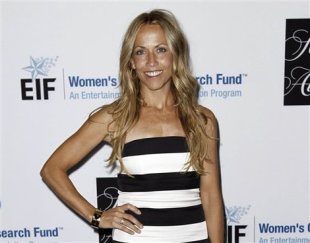
Can you really be OK if you have a brain tumor? Sheryl Crow tells fans she's fine. (Photo: Matt Sayles/AP)Can you really be OK if you have a brain tumor? Sheryl Crow tells fans she's fine. (Photo: Matt Sayles/AP)When news broke on Tuesday about her brain tumor, singer Cheryl Crow was quick to comfort her concerned fans.

"Hey everyone - please don't worry about my "brain tumor", it's a non-cancerous growth," Crow, 50, wrote on her Facebook page. "I know some folks can have problems with this kind of thing, but I want to assure everyone I'm OK. I'm feeling very healthy and happy, and having a great time on the road playing with my new band. I'm busy working on my next record too, which 'm very excited about... and I'll be on The Tony Awards this Sunday. Really appreciate everyone's love and concern, I feel so blessed to have the support of all my fans, but I'm good - really! Love, Sheryl"

Her fans obviously felt better -- the post has more than 14,730 "likes" and more than 1,600 comments, most of them positive and supportive -- but one has to wonder: Can you really lead a normal life while battling a brain tumor?

Crow is a breast cancer survivor, and the type of tumor she has now is called a meningioma. They are usually benign (non-cancerous) and form in the meninges, or the protective lining, of the brain and spinal cord and grow inward toward the brain. Doctors found the tumor after the 50-year-old superstar (and mother of two) sought help for memory lapses.

"Ms. Crow speaks about memory issues, and that is definitely the kind of symptom that could be caused by this type of tumor," Dr. Anders Cohen, chief of neurosurgery and spine surgery at The Brooklyn Hospital Center, told Fox News. "Generally a tumor that affects memory would be located in the left frontal lobe of the brain."

If the tumor does not grow bigger and is not interfering with a patient's quality of life, doctors often feel no need to operate or have the patient undergo radiation treatments. No one knows what causes meningiomas, according to experts at the Mayo Clinic, though they are more common in older women.

"We can be more conservative with meningiomas because they usually stay put," Cohen said. "We don't want to perform unnecessary procedures unless the tumor is growing and there is pressure on the brain, or it's creating symptoms."

The International Business Times reports that Crow's cavalier outlook has angered some people, who are calling her reassurances "uninformed" and saying she's caused "great distress" among others who have suffered from meningioma.

"My husband has a Meningioma Brain Tumor and it is very very serious," wrote Facebook user Suzanne Morse in a comment on Crow's wall on Wednesday. "He has had 3 brain surgeries that has left his body ravaged. He had to stop working in 2009 has had to undergo Proton Radiation and he and my family lives have been devastated. Please use this forum to post the truth about this terrible tumor non-cancerous does not mean not life threatening. I do wish you the best but am saddened that you are setting back all the work being done to educate the public."

Copyright © 2012 Yahoo Inc. 

CNN: Dr. Gupta on Sheryl Crow's Brain Tumor + Cell Phone Possible Link


CNN: Dr. Gupta on Sheryl Crow's Brain Tumor + Cell Phone Possible Link


CNN: Anderson Cooper with Dr. Gupta discussing the possible causes of Sheryl Crow's brain tumor. Sheryl Crow is thought to attribute one potential cause to her cell phone usage.

http://www.naturalhealingtoolsnews.com/2012/06/cnn-dr-gupta-on-sheryl-crows-brain.html

Strålforskare kringgår avtalet om oberoende

Strålforskare kringgår avtalet om oberoende

Svensk forskning om mobilstrålning finansieras av industrin. För att säkra forskarnas oberoende har Vinnova gått in som mellanhand. Men Ny Teknik kan visa att denna ”brandvägg” brister. Kontakter mellan industrin och forskarna rapporteras inte som avtalet föreskriver.
Strålforskare kringgår avtalet om oberoende
Cosmosstudien följer mobilanvändare i fem länder, under 25 års tid. Foto: Jörgen Appelgren


(Uppdaterad version) Maria Feychting, professor i epidemiologi vid Karolinska institutet, KI, blev nyligen vice ordförande i kommissionen Icnirp, International Commission on Non-Ionizing Radiation Protection, som sätter gränsvärden för mobilstrålning och andra elektromagnetiska fält.
Samtidigt finansierar hon delvis sin forskning kring hälsorisker och mobiltelefoni via telekomindustrin, vilket hon öppet redovisar i sin jävsdeklaration till Icnirp. Telia Sonera, Ericsson och Telenor bidrar med 50 procent av kostnaden för den svenska delen av forskningsprojektet Cosmos (med över 50 000 mobilabonnenter), hittills cirka 7 miljoner kronor.
Maria Feychting ser ingen konflikt i att leda Icnirps verksamhet samtidigt som hon får industrimedel.
– Jag tycker inte att det är något problem eftersom medlen förmedlas via tredje part som agerar brandvägg mellan oss forskare och industrin, vilket garanterar oss oberoende, säger hon.
Men Ny Tekniks granskning visar att industrin och forskarna först diskuterar sig samman kring finansieringen och sedan vänder sig till Vinnova och ber myndigheten agera mellanhand.
Vinnovas handläggare Pontus von Bahr uppger att parterna kom till förre generaldirektören Per Eriksson med upplägget.
I det sammanhanget upprättades ett så kallat brandväggsavtal 2007, som ska skydda forskarna från ”otillbörlig påverkan” från mobilintressenterna.
Enligt Christer Törnevik, forskningsområdeschef på Ericsson, började Ericsson och forskarna att träffas 2005.
– Innan avtalet skrevs med Vinnova ställde vi dock en del kvalitetsrelaterade frågor, och föreslog att vissa kvalitetskriterier skulle inkluderas i avtalet. Det är normalt att vi får möjlighet att ge vår input och synpunkter angående designen på studier, uppger han.
Ericsson har bland annat föreslagit en internationell referensgrupp och att antalet enkätpersoner skulle uppgå till minst 25 000, säger han.
Vinnovas insyn i vilka underhandskontakter som skett när brandväggsavtalet varit i kraft har varit mycket begränsad.
Trots en skrivning i avtalet om att det ska ”säkerställa att alla förbindelser” mellan företagen och forskarna ”är transparenta” begär inte Vinnova några särskilda redovisningar av möten. Forskarna har nämnt kontakter med industrin i lägesrapporter till Vinnova. Där finns dock inte uppgifter om mötesdatum, dagordning eller deltagare. I myndighetens förteckning över handlingar i ärendet finns inga noteringar om sådana möten.
Personer från Ericsson Research har vid några tillfällen träffat KI-forskarna sedan Cosmos-projektet påbörjades 2007. Dessa möten har gällt fortsatt finansiering och teknisk information, uppger Christer Törnevik
Enligt Maria Feychting har hon deltagit i möten med företagen 2006, 2009 och 2011, vilka bland annat gällt bolagens intresse för att bidra med medel.
Brandväggsavtalet gällde fram till 2009. Därefter tecknades ett fortsättningsavtal för 2010. Sedan har avtalet upphört.
Nu äskar forskarna återigen finansiering från industrin.
Projektledaren för Cosmos, Anders Ahlbom, professor i epidemiologi vid KI, skickade den 6 oktober 2011 ett mejl direkt till Ericsson: en elva sidor lång ansökan med projekt- och budgetplan för 2012 till 2014. Han skriver i mejlet att finansieringen kräver ett brandväggsavtal ”företrädesvis via Vinnova”.
Forskarnas förfrågan om finansiering ska, enligt Anders Ahlbom, senare skickas till Vinnova.
– Jag kan bara säga att det här är helt normalt. Vi har en diskussion först om själva studien, jag ser inget konstigt med det, säger Christer Törnevik.
Tommy Ljunggren, chef för systemutveckling inom mobiltelefoni på Telia Sonera, säger dock:
– Det är lite underligt, jag vet inte varför men vi har fått ansökan direkt till oss och inte via Vinnova, säger han.
Bolaget avvaktar med att ta ställning till dess man får en ansökan från Vinnova.
Anders Ahlbom:
– Det kan ju verka konspiratoriskt och konstigt att vi har underhandskontakter med industrin, men vi är helt oberoende. Min uppfattning är att telekomindustrin ska bidra med finansiering.
KI-forskarna Anders Ahlbom, ovan, och Maria Feychting, till höger, driver den svenska delen av mobilforskningsprojektet Cosmos. Anders Ahlboms integritet som forskare blev i fjol ifrågasatt av en arbetsgrupp i FN:s cancerforskningsorgan IARC. Maria Feychting är ensam i Icnirps kommission om att få forskningsmedel från telekom­industrin. Övriga Icnirp-ledamöter har inga eller få industrikopplingar.
(I en tidigare version av artikeln saknas uppgifter om att möten med industrin kortfattat hade nämnts i lägesrapporter till Vinnova.)
http://www.nyteknik.se/nyheter/it_telekom/mobiltele/article3483861.ece


From Mona Nilsson:

Swedish Magazine New Technique discloses hole in the 

firewall Fecyhing/Ahlobom and Mobile phone industry

Prof Anders Ahlbom: "we are totally independent."
 
google translation (source below)

Swedish research on cell phone radiation is financed by industry. To ensure independent researchers Vinnova has gone in as an intermediary. But new technology could prove that this "firewall" deficiencies. Relations between industry and researchers reported not set out herein. Maria Feychting, professor of epidemiology at the Karolinska Institute, KI, was recently Vice President of the Commission ICNIRP, International Commission on Non-ionizing Radiation Protection, which sets limits on cell phone radiation and other electromagnetic fields.
While she partially funded his research into health and mobile phones via the telecom industry, which she openly recognizes in his jävsdeklaration to ICNIRP. TeliaSonera, Ericsson and Telenor contributes 50 percent of the cost for the Swedish part of the research project Cosmos (with over 50 000 mobile subscribers), now about 7 million.
Maria Feychting sees no conflict in leading Icnirps activities while she receives industry funding.
- I do not think there is a problem because funds channeled through third parties acting firewall between our researchers and industry, ensuring our independence, she says.
But Ny Teknik's audit shows that the industry and scientists first discuss together about the funding and then turn to Vinnova and request authority to act an intermediary.
Vinnova officer Pontus von Bahr stated that the parties came to the former Director-General Per Eriksson with the arrangement.
In this context, established a so-called Firewall Agreement 2007, which will protect researchers from "undue influence" of mobile stakeholders.
According to Christer Törnevik, research area manager at Ericsson, Ericsson began and scientists to meet 2005th
- Before the contract was written with Vinnova, we asked, however, some quality-related issues, and suggested that certain quality criteria should be included in the contract. It is normal to have the opportunity to give our input and comments on the design of studies, he said.
Ericsson has proposed inter alia an international reference and the number of survey persons would be at least 25 000, he says.
Vinnova has not had any insight into the informal contacts that occurred when the firewall agreement is in force.
Despite the wording of the agreement that it will "ensure that all links" between companies and researchers "are transparent" do not ask Vinnova any specific reports of meetings.
The Authority's list of the file are no records of such meetings.
People from Ericsson Research have sometimes met with KI scientists since Cosmos project commenced in 2007. These meetings have been continued funding and technical information, says Christer Törnevik
According to Maria Feychting, she has participated in meetings with the companies in 2006, 2009 and 2011, which among other things, been the companies' interests to contribute funds.
Firewall deal was until 2009. After signing a contract extension for 2010. Since the agreement has ended.
Now scientists boxes again funding from industry.
The project manager for Cosmos, Anders Ahlbom, professor of epidemiology at the Karolinska Institutet, sent October 6, 2011 an email directly to Ericsson: one eleven-page application with project and budget plan for 2012 to 2014. He writes in the email that funding requires a firewall agreement "preferably by Vinnova."
The researchers' request for funding will, according to Anders Ahlbom, later sent to Vinnova.
- I can only say that this is normal. We have a first discussion on the study itself, I see nothing strange about it, says Christer Törnevik.
Tommy Ljunggren, head of systems development in mobile, TeliaSonera, says, however:
- It's a bit strange, I do not know why but we have received an application to us directly and not through Vinnova, he says.
The Company reserves its position until it receives an application from Vinnova.
Anders Ahlbom:
- It may seem conspiratorial and wonder that we have informal contacts with industry, but we are totally independent. My understanding is that the telecom industry to contribute funding.
KI researchers Anders Ahlbom, above, and Maria Feychting, right, drives the Swedish part of the mobile research Cosmos. Anders Ahlbom's integrity as a scientist was questioned last year by a working group of the UN's cancer research agency IARC. Maria Feychting alone in Icnirps Commissioners about getting research funds from the telecom industry. Other ICNIRP members have little or no industry connections.


http://www.nyteknik.se/nyheter/it_telekom/mobiltele/article3483861.ece
 

ARE YOU EXPERIENCING ABNORMALLY HIGH ELECTRICITY BILLS?


ARE YOU EXPERIENCING ABNORMALLY HIGH ELECTRICITY BILLS?

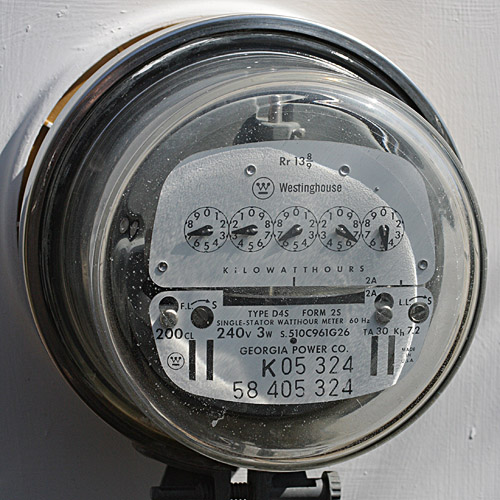
May 30, 2011.  People are complaining that their electricity bills are higher after smart meters were installed in their homes, implying that the new wireless meters are not reading accurately.  Others, who have retained their analog meters are say they are getting higher bills as well although they are using the same amount of electricity.
Smart meters generate transients and contribute to poor power quality or dirty electricity.  Analog meters, those that spin around, are sensitive to these transients, which make the meters read inaccurately.
I wrote about this in January 2010 related to electricity bills being adversely affected by radio frequency radiation from cell phone antennas.  Click herefor link to that story.
The electrical utilities are aware of this problem and that is one reason they try to maintaing good power quality, but this is becoming increasingly difficult with electronic equipment and switching power supplies.
Hydro One has a booklet called “Power Quality Energy Efficiency Guide” dealing with this issue for those interested.  Click here to download pdf.  It provides different ways of mitigating poor power quality including the use of power line filters and power conditioners.
Commercial filters for in-home use are available. The only one I’ve tested are the Graham Stetzer filters that work optimally within the frequency range of 4 to 100 kHz. This is the frequency range that has adverse biological effects on those living in homes with poor power quality.
So poor power quality contributes to higher electricity bills, it damages sensitive electronic equipment, and it makes some people sick.
If you think your electricity bills are higher and the increase co-incided with smart meters being placed on your home, please contact me with the evidence.  We will tabulate the data we collect and provide the information to the Provincial Energy Ministries and request that they act upon this information.
The type of information required would include a copy of your electrical bill for several months before and several months after smart meters were installed in your home with the exact date that the smart meter was installed. If you can get your neighbours to provide similar information that would be useful as well.  If you provide your name, contact information (phone or email address) and address that information will be kept confidential and will not be released to anyone including the Energy Ministries without your permission.
Please send the information to drmagdahavas@gmail.com with “Smart Meter Costs” as the subject or via mail to Dr. Magda Havas, ERS, Trent University, Peterborough, ON, K9J 7B8.  It would be good to get this information by September 30 2012 to put into a fall document.
Corroborating evidence from outside of Canada is welcome.