Showing posts with label Tom Wheeler. Show all posts
Showing posts with label Tom Wheeler. Show all posts
Wednesday, July 10, 2019
A Slow Death by 5G Wireless Technology
Richard Gale and Gary Null PhD
Progressive Radio Network, July 9, 2019
During the past year, Senate hearings leading up to the roll out of 5G wireless technology have made it quite clear that the race to capture first prize in the Internet of Things has little do to with popular consumer demands for improved internet access. Being called the fourth industrial revolution, the hype is that 5G will provide internet speeds up to one hundred times faster than 4G. Yet aside from the idealized and perhaps hyperbolic benefits of faster internet connections and downloads, 5G is best understood within the context of the US’ competitive race against China to establish global wireless dominance. The Obama administration’s FCC, under the influence of the telecommunication industry’s insider Tom Wheeler, who served as the chair of the agency, launched the Spectrum Frontiers rules to mandate the 5G rollout as a “national priority.” Therefore, rather than the fundamental incentive to improve the lives of citizens, more important is 5G’s role to reinforce American global economic expansionism and military hegemony. For past presidents, and Trump in particular, economic figures hold all-consuming importance. One estimate claims 5G will bring over $12 trillion into the global economy, about $3.5 trillion in the US while providing 22 million new jobs. While 5G surely holds the promise of a huge windfall for the economy, these benefits will be eventually be neutralized by medical and environmental catastrophes.
For the Defense Department, 5G will further harness global military dominance and strengthen the US’ lead as the planet’s policeman. For the Department of Homeland Security, other federal intelligence agencies, and local law enforcement 5G assures more far-reaching surveillance and policing on the American public. International spying and interference in other nations’ internal affairs will also advance exponentially. All the while the telecommunications industry wets its lips over the certain forecasts of rising stock prices and enormous executive compensations.
For the Trump administration, the 5G roll out is imperative. Last December the White House released an announcement that “[I]t is imperative that America be first in fifth-generation (5G) wireless technologies — wireless technologies capable of meeting the high-capacity, low-latency, and high-speed requirements that can unleash innovation broadly across diverse sectors of the economy and the public sector.” What we are really looking at is a competitive war the US is waging with China, which has already installed 1.9 million wireless sites. As the US continues to lag behind, it is equally imperative that 5G opponents keep careful watch of the predictable rise in disease and mental health disorders in China.
5G smart cities will provide the government with total surveillance of society. This was announced by T-Mobile’s Chief Technology director Neville Ray at the 2018 Mobile World Congress in Barcelona. Sprint Vice President Ron Marquardt remarked that city government officials will have the capacity to monitor “security issues.” The new generation technology, therefore, will offer a boon for the private security industry.
Writing for The New Yorker, investigative journalist Sue Halpern describes how the new era of electromagnetic connectivity will increase the risks and severity of cyber attacks. “Ransomware, malware, crypto-jacking, identity theft, and data breaches have become so common that more Americans are afraid of cybercrime than they are of becoming a victim of violent crime.” writes Halpern. “Adding more devices to the online universe is destined to create more opportunities for disruption.” 5G will not simply connect your alarm clock and television to your mobile unit. It is estimated that millions of new 5G base stations will be installed, 20,000 new satellites orbiting in space, and 200 billion objects with wireless antennas will be transmitting EMF waves by 2020. A few years later it is expected to expand to one trillion electronic objects. 5G technology will be fully integrated into airplanes, automobiles, trains and subway systems. Imagine being in a commercial flight 6 miles above the earth and a major 5G disturbance occurs.
5G servers are already being utilized for spy operations. Halpern reports on the discovery of Huawei wireless servers installed in the African Union’s headquarters in Addis Ababa “sending sensitive data back to China every evening.” Israel, Russia and the US have already been accused on many occasions for conducting industrial and defense cyber espionage. On all accounts, the threats of cyber warfare will worsen after 5G is functioning fully on a global scale.
In the meantime, Washington and our mainstream media proclaim 5G is perfectly safe and the next great stride for America’s utopian progress. Yet it may very well be the trojan horse that brings the US into an electronic dark age.
The overarching question being ignored by Congress concerns 5G’s public safety and environmental implications. During a Senate Commerce, Science and Transportation Committee hearing last February, Senator Richard Blumenthal (D-Connecticut) challenged representatives from the telecommunication industry about the technology’s health risks. When queried on the industry’s commitment to comply with the FDA’s insistence to fund “independent research” on EMF’s biological effects, Brad Gillen, an executive VP for CTIA – the leading trade association representing the wireless communications industry — denied there were any industry-funded studies and no research on 5G’s health risks were active. Nor was Steven Berry, President of Competitive Carriers Association, aware of any ongoing research. Blumenthal also sent a formal request to Trump’s FCC Secretary requesting information about the scientific evaluation of 5G’s risks. The FCC failed to acknowledge his request.
Besides the unbelievable arrogance displayed by the industry’s spokespersons, from our perspective it is perhaps worse that Senator Blumenthal, a ranking committee member and highly respected in Congress, failed to present any of the scientific literature confirming 5G’s health risks. He could have also subpoenaed the FCC for ignoring his request. He has unlimited resources through the National Academy of Sciences, the National Institutes of Health medical database, the EPA, and FDA yet didn’t cite a single study nor invite an independent medical expert to testify what we already know about 5G’s and earlier generation’s EFM adverse effects on the human body. Dr. Henry Lai, a DNA researcher at the University of Washington could have been called to testify. Prof Lai was quoted in the British Medical Journal for stating “I can name 600 studies showing bioeffects of microwaves off the top of my head.” Earlier this year, a petition signed by 26,000 scientists, medical doctors and environmental experts warned the United Nations, the World Health Organization, the EU and Council of Europe and the governments of all nations that “the deployment of 5G constitutes an experiment on humanity and the environment that is defined as a crime under international law.”
The Senate hearing was another typical dog and pony show that we have become accustomed to over the decades, with pro-industry shills declaring ignorance of facts, and pleading for a green light while repeating false promises to conduct further research. In the meantime, Congress concedes to industry demands because revenues are being lost and shareholders are becoming impatient. We have heard this all before with the approval of asbestos, Monsanto’s glyphosate and genetically modified crops, tobacco and countless pharmaceutical drugs with questionable safety and efficacy records.
May’s Senate Judiciary Committee hearing on 5G was even more of a charade. Senators Lindsay Graham and Barbara Feinstein completely avoided the evidence supporting 5G’s detrimental effects on human, animal, insect and environmental health. The 5G rollout was a certainty in the mind of every Committee member. Questioning of industry representatives focused solely on national security and cyber threats to the Internet of Things. Nor were the larger public consequences of safety from having all electronic systems controlled by artificial intelligence suddenly being disabled discussed. Clearly national security, protecting the country’s military, intelligence and the elite trumps health issues. Since no modern military can realistically win a conventional war, then how likely will the next war between superpowers be waged in the cyber world? This possibility seemed foremost in the minds of our Senators.
The FCC is a fully industry-captured agency. In 1996, President Clinton willingly handed over to the telecommunications industry carte blanche power over state and local governments to install 5G technologies. Clinton’s Telecommunications Act (TCA) is a corrupt piece of legislation. It decrees that no health or environmental concern can interfere with telecom installations. In addition, the TCA gives full power to the FCC to regulate telecom EMF’s health effects. This ruling was a dangerous joke because the FCC is not a health agency, nor does it employ biomedical experts. The Act also overrides the authority of towns, cities, and county councils to rule against 5G stations and cell tower installments.
Under President Obama, FCC chair Tom Wheeler in no uncertain terms called for the private industry’s technology to drive national policy rather than vice versa. In other words, the telecommunications industrial complex has been handed precedence over elected legislators, including Congressional leaders, such as Senator Blumenthal, who voice deep concerns about 5G’s human and environmental risks. Wheeler, a principal architect behind the 5G strategy, has never acknowledged that there is an enormous body of medical research concluding EMF threats. He is a product of the same private industrial mindset that has churned out climate change deniers in the fossil fuel corporations and the GMO-risk deniers in Big Agriculture.
Obama’s FCC also established a criterion whereby the technology antecedes the warnings voiced by medical, health and environmental institutions and agencies. And under Trump and the chairmanship of Ajit Pai, the FCC’s corruption has entered steroidal hyper-drive to destroy net neutrality laws and “dismantle existing consumer protections.” Pai, a former Verizon attorney, was originally appointed by Obama and has been accused by the New York Times for running the department in secrecy and failing to make the agency’s internal policy decisions public.
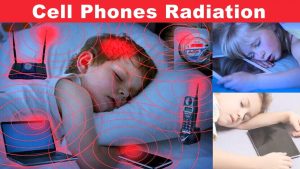
It therefore seems certain that Washington, in full collaboration with the telecommunications industry, has been scheming full spectrum dominance of the global wireless connectivity for two and half decades. During this time, the tactic has been to demolish public protections. In return for America’s efforts to achieve telecommunication hegemony in order to expand the police state and the nation’s imperium, average citizens are handed the leftover crumbs of faster internet speeds. The real victims in the US’ cyber chess match with China is the world’s population. No animal, bird, insect, plant or human will be able to avoid exposure. 5G will expose us to levels of radiation that are tens to hundreds of times greater than what we face today. And this exposure will be uninterrupted throughout the day, throughout the year and well into the future. It is now just a matter of a short period of time before we will all be saturated with microwave pulses.
Unfortunately, the telecom industry and its contracted scientists remain in complete denial. A plethora of medical and environmental research has accumulated about the health and ecological risks of electromagnetic frequency radiation (EMF) and microwaves. Four hundred new studies on electromagnetic radiation risks have been compiled by public health Professor Joel Moskowitz at the University of California at Berkeley. These studies cover earlier generation technologies, whereas 5G will be far more evasive and less safe. Compared to 4G technology in use today, every 5G base station will contain hundreds of thousands of antennas each aiming laser like microwave beams to all devices.
In a study published in the August 2018 issue of Journal of Medical Imaging and Health Informatics, after an extensive review and analysis of the medical literature researchers concluded that “incidence of cancer cases was remarkably higher among people who resided in 400 meters from mobile antennas, in comparison to those who lived further away. Inhabitants living close to cellular antennas are also at increased risk for developing neuropsychiatric complaints.” Under the 5G regime every American in a suburb or city will be living 100 meters or less from an antenna. In 2016, the Europa EM-EMF guideline found “strong evidence that long-term exposure to certain EMFs is a risk factor for diseases such as certain cancers, Alzheimer’s disease, and male infertility…Common EHS (electromagnetic hypersensitivity) symptoms include headaches, concentration difficulties, sleep problems, depression, lack of energy, fatigue, and flu-like symptoms.”
In our opinion, the 5G rollout is an irresponsible experiment with potential holocaust-like consequences in the long term. Neither the US nor China have ever felt obliged to follow UNESCO’s Precautionary Principle to avoid “morally unacceptable harm” when the science is plausible but still uncertain. In the case of 5G, the harm to human life is conclusive, and in the view of Dr. Lennart Hardel, an oncology professor at University Hospital in Orebro, Sweden, it may be in violation of the Nuremberg Code.
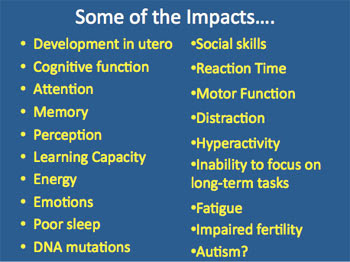
Among the many research papers on the adverse effects of electromagnetic radiation, some are especially worrisome:
Nearly 100% of studies employing real mobile phone exposures reveal adverse effects, which include associations to brain tumors, declines in animal populations, and symptoms of un-wellness. (published in BioMed Research International).
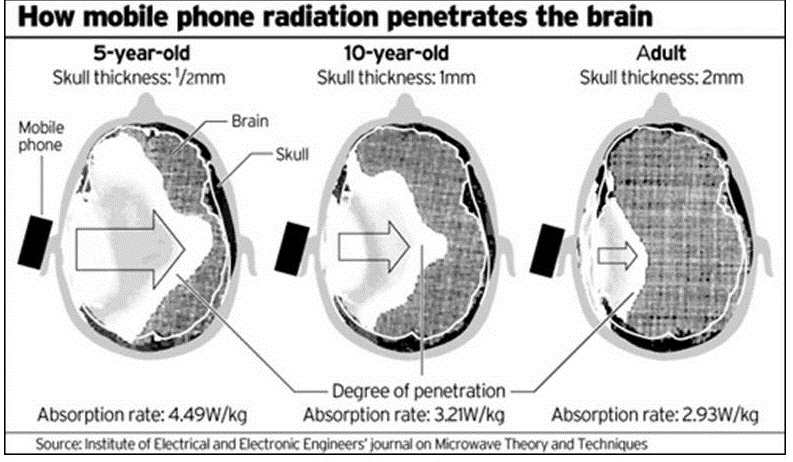
Children are at greater risk than adults and absorb more microwave radiation than adults. (Journal of Microscopy and Ultrastructure)
The geometry of a child’s head significantly increases mobile phone EMF absorption in the brain, eye, cortex, hippocampus, and hypothalamus. Children have especially high bone marrow conductivity, greatly increasing EMF absorption.(published in the journal Physics in Medicine and Biology)
Simultaneous exposure to lead and RF from mobile phone use was associated with increased ADHD symptom risk.(Published in PLOS One)
Chronic multi-system illness” correlates electromagnetic hypersensitivity to 3 MHz-300 GHz, with headaches, concentration difficulties, sleep problems, depression, lack of energy, fatigue, and flu-like symptoms. (published in Reviews of Environmental Health).
Oxidative stress due to 900 MHz and 1.8 GHz microwave exposure associated with cognitive impairment and inflammation in rat brain (Published in the Indian Journal of Experimental Biology)
Use of laptop computers connected to internet through Wi-Fi decreases human sperm motility and increases sperm DNA fragmentation (published in the journal Fertility and Sterility)
Radiofrequency waves emitted from conventional Wi-Fi devices poses potential effect on both fertility and the integrity of sperm cells. (Published in the Journal of Pediatric Urology)
Population living within 350 meters of an 850 MHz, 1500 watt cell phone tower in Netanya, Israel experienced a 4 fold cancer increase (i.e., carcinoma of the breast, ovary, lung, kidney, bone, and Hodgkin’s disease). (published in the International Journal of Cancer Prevention).
In addition there is something largely missing from the 5G debate in the US, whereas some European nations are paying attention to it; that is, existing safety standards for wireless technology are obsolete. This conclusion was arrrived at independently by Vienna Medical University in Austria and Carl Blackman at the University of North Carolina, published in the journal Pathophysiology. The problem herein lies in the failures of federal regulatory agencies to be truthful to the scientific evidence rather than show favoritism to the wireless industry’s own junk science and commercial interests. Again, private interests profit, and the public is harmed.
Finally, we may consider 5G’s vulnerability and dangers to society in the event of a solar storm, such as a massive coronal plasma emission (CPE). Such a threat is very real, as University of Michigan professor of space sciences Justin Kasper told members of the Senate Committee on Homeland Security last February. Kasper specializes in how solar activity effects society. His fears are that a solar flare similar to the one that engulfed the earth in a “magnetic tsunami” in 1859 could potentially wipe out the country’s electrical power grid. Power transformers are massive utilities costing tens of millions of dollars each and generally there are no backups. Therefore, imagine if such a solar storm were to assault a fully installed global 5G wireless network whereupon everything modern culture depends upon is interconnected. Satellite communications will be an essential component of the 5G infrastructure and are defenseless against massive radiation emissions from the sun. Without operative electrical and water utilities, septic systems, gas pumps, air conditioning in summer or heating in winter, for weeks, months and perhaps a year in the event of a massive coronal plasma emission, society as we know it would come to a standstill. Nuclear power plants would likely spiral downward into meltdown. Transportation as we know it would come to a halt. And in the event of a super “magnetic tsunami” chaos could follow.
Therefore, 5G poses far more problems than even its sharpest critics voice. It is not simply a threat to human health and the environment from constant exposure, but the security of the entire international community of nations is in peril. Our Congressional leaders are a national disgrace for failing to side with the public rather than the telecommunications industry. Obviously contaminating all life on the planet is too insignificant of a concern. In fact, 5G holds the possibility in being another tipping point in the sixth extinction.
Source


Thursday, May 16, 2019
Cell Phone Industry, in Collusion with Junk Scientists and the U.S. Media, Continues its Ruse About Cellphone "Safety"
Cellphone industry continues to control the safety message
This tactical plan can be used by any threatened industry on any issue at any time to influence science, regulators, public perception and government policy.
Citizens beware.
The government never tested the safety of cellphones prior to the cancer lawsuit. But just one week after it was launched, Tom Wheeler, president of the Cellular Telecommunications and Internet Association (CTIA) in the United States, announced that cellphones were safe. He also announced the industry would fund research that would “re-validate the findings of the existing studies.” With that, he authored the conclusions of the Wireless Research Technology project before it even began.
The first industry tactic is to buy the science. Biochemistry professor Henri Lai looked at 326 safety-related studies on cellphone use between 1990 and 2005 and found that 67 per cent of independently funded studies found biological damage from cellphone radiation, but only 28 per cent of industry-funded studies did.
Lai participated in the CTIA study. In an interview with Microwave News, he recounted numerous anomalies and apparent industry manipulation of the study, including an attempt to gut its discussion section.
The CTIA massaged the message again after the World Health Organization published its Interphone study in 2000. The study showed that those who used a cellphone for 10 years or longer saw their risk of glioma (a type of brain tumour) increase by 120 per cent.
Yet John Walls, VP for public affairs at CTIA, told reporters that “Interphone’s conclusion of no overall increased risk of brain cancer is consistent with conclusions reached in an already large body of scientific research on this subject.”
Another tactic is to kill the research. Biochemistry professor Dariusz Leszczynski first experienced this in 1999 when he was adjunct professor at Harvard Medical School. He wanted to investigate the effects of radiation that were higher than the government-allowed levels but kept getting overruled by scientists funded by Motorola.
In 2011, Leszczynski said in an interview, “Everyone knows that if your research results show that radiation has effects, the funding flow dries up.” A year later, his employer, the Radiation and Nuclear Safety Authority of Finland, stopped researching the biological effects of cellphones and released him.
The draft version of a National Toxicology Program study in 2016 called cellphone radiation a “probable” or “known” carcinogen with “broad implications for public health.”
Yet when the final version was released in 2018, the study’s senior scientist John Bucher said in a press conference, “I don’t think this is a high-risk situation at all.”
Microwave News editor Louis Slesin wondered openly what changed at NTP?
His best guesses were industry, military and political pressure, as well as leadership changes.
Tom Wheeler, CTIA president from 1992-2004, chaired the Federal Communications Commission in the U.S. from 2013-2017. Meredith Attwell Baker, FCC commissioner from 2009-2011, has presided over CTIA since 2014.
In a Harvard University ethics paper, journalist Norm Alster called FCC a “captured agency,” and cited the CTIA website, which praised FCC for “its light regulatory touch.”
Leave it to big wireless to maintain its message over the airwaves.
Lee Harding is a research associate with the Frontier Centre for Public Policy.
Wednesday, May 01, 2019
The disinformation campaign—and massive radiation increase—behind the 5G rollout
Things didn’t end well between George Carlo and Tom Wheeler; the last time the two met face-to-face, Wheeler had security guards escort Carlo off the premises. As president of the Cellular Telecommunications and Internet Association (CTIA), Wheeler was the wireless industry’s point man in Washington. Carlo was the scientist handpicked by Wheeler to defuse a public-relations crisis that threatened to strangle his infant industry in its crib. This was back in 1993, when there were only six cell-phone subscriptions for every 100 adults in the United States. But industry executives were looking forward to a booming future.
Remarkably, cell phones had been allowed onto the US consumer market a decade earlier without any government safety testing. Now, some customers and industry workers were being diagnosed with cancer. In January 1993, David Reynard sued the NEC America Company, claiming that his wife’s NEC phone caused her lethal brain tumor. After Reynard appeared on national TV, the story went viral. A congressional subcommittee announced an investigation; investors began dumping their cell-phone stocks; and Wheeler and the CTIA swung into action.
A week later, Wheeler announced that his industry would pay for a comprehensive research program. Cell phones were already safe, Wheeler told reporters; the new research would simply “re-validate the findings of the existing studies.”
George Carlo seemed like a good bet to fulfill Wheeler’s mission. He was an epidemiologist who also had a law degree, and he’d conducted studies for other controversial industries. After a study funded by Dow Corning, Carlo had declared that breast implants posed only minimal health risks. With chemical-industry funding, he had concluded that low levels of dioxin, the chemical behind the Agent Orange scandal, were not dangerous. In 1995, Carlo began directing the industry-financed Wireless Technology Research project (WTR), whose eventual budget of $28.5 million made it the best-funded investigation of cell-phone safety to date.
Outside critics soon came to suspect that Carlo would be the front man for an industry whitewash. They cited his dispute with Henry Lai, a professor of biochemistry at the University of Washington, over a study that Lai had conducted examining whether cell-phone radiation could damage DNA. In 1999, Carlo and the WTR’s general counsel sent a letter to the university’s president urging that Lai be fired for his alleged violation of research protocols. Lai accused the WTR of tampering with his experiment’s results. Both Carlo and Lai deny the other’s accusations.
Critics also attacked what they regarded as the slow pace of WTR research. The WTR was merely “a confidence game” designed to placate the public but stall real research, according to Louis Slesin, editor of the trade publication Microwave News. “By dangling a huge amount of money in front of the cash-starved [scientific] community,” Slesin argued, “Carlo guaranteed silent obedience. Anyone who dared complain risked being cut off from his millions.” Carlo denies the allegation.
CURRENT ISSUE
Whatever Carlo’s motives might have been, the documented fact is that he and Wheeler would eventually clash bitterly over the WTR’s findings, which Carlo presented to wireless-industry leaders on February 9, 1999. By that date, the WTR had commissioned more than 50 original studies and reviewed many more. Those studies raised “serious questions” about cell-phone safety, Carlo told a closed-door meeting of the CTIA’s board of directors, whose members included the CEOs or top officials of the industry’s 32 leading companies, including Apple, AT&T, and Motorola.
Carlo sent letters to each of the industry’s chieftains on October 7, 1999, reiterating that the WTR’s research had found the following: “The risk of rare neuro-epithelial tumors on the outside of the brain was more than doubled…in cell phone users”; there was an apparent “correlation between brain tumors occurring on the right side of the head and the use of the phone on the right side of the head”; and “the ability of radiation from a phone’s antenna to cause functional genetic damage [was] definitely positive….”
Carlo urged the CEOs to do the right thing: give consumers “the information they need to make an informed judgment about how much of this unknown risk they wish to assume,” especially since some in the industry had “repeatedly and falsely claimed that wireless phones are safe for all consumers including children.”
The World Health Organization classifies cell-phone radiation as a “possible” carcinogen.
The very next day, a livid Tom Wheeler began publicly trashing Carlo to the media. In a letter he shared with the CEOs, Wheeler told Carlo that the CTIA was “certain that you have never provided CTIA with the studies you mention”—an apparent effort to shield the industry from liability in the lawsuits that had led to Carlo’s hiring in the first place. Wheeler charged further that the studies had not been published in peer-reviewed journals, casting doubt on their validity.
Wheeler’s tactics succeeded in dousing the controversy. Although Carlo had in fact repeatedly briefed Wheeler and other senior industry officials on the studies, which had indeed undergone peer review and would soon be published, reporters on the technology beat accepted Wheeler’s discrediting of Carlo and the WTR’s findings. (Wheeler would go on to chair the Federal Communications Commission, which regulates the wireless industry. He agreed to an interview for this article but then put all of his remarks off the record, with one exception: his statement that he has always taken scientific guidance from the US Food and Drug Administration, which, he said, “has concluded, ‘the weight of scientific evidence had not linked cell phones with any health problems.’”)
Why, after such acrimony, Carlo was allowed to make one last appearance before the CTIA board is a mystery. Whatever the reason, Carlo flew to New Orleans in February 2000 for the wireless industry’s annual conference, where he submitted the WTR’s final report to the CTIA board. According to Carlo, Wheeler made sure that none of the hundreds of journalists covering the event could get anywhere near him.
When Carlo arrived, he was met by two seriously muscled men in plain clothes; the larger of the two let drop that he had recently left the Secret Service. The security men steered Carlo into a holding room, where they insisted he remain until his presentation. When summoned, Carlo found roughly 70 of the industry’s top executives waiting for him in silence. Carlo had spoken a mere 10 minutes when Wheeler abruptly stood, extended a hand, and said, “Thank you, George.” The two muscle men then ushered the scientist to a curbside taxi and waited until it pulled away.
In the years to come, the WTR’s cautionary findings would be replicated by numerous other scientists in the United States and around the world, leading the World Health Organization in 2011 to classify cell-phone radiation as a “possible” human carcinogen and the governments of Great Britain, France, and Israel to issue strong warnings on cell-phone use by children. But as the taxi carried Carlo to Louis Armstrong International Airport, the scientist wondered whether his relationship with the industry might have turned out differently if cell phones had been safety-tested before being allowed onto the consumer market, before profit took precedence over science. But it was too late: Wheeler and his fellow executives had made it clear, Carlo told The Nation, that “they would do what they had to do to protect their industry, but they were not of a mind to protect consumers or public health.”
This article does not argue that cell phones and other wireless technologies are necessarily dangerous; that is a matter for scientists to decide. Rather, the focus here is on the global industry behind cell phones—and the industry’s long campaign to make people believe that cell phones are safe.
As happened earlier with Big Tobacco and Big Oil, the wireless industry’s own scientists privately warned about the risks.

That campaign has plainly been a success: 95 out of every 100 adult Americans now own a cell phone; globally, three out of four adults have cell-phone access, with sales increasing every year. The wireless industry is now one of the fastest-growing on Earth and one of the biggest, boasting annual sales of $440 billion in 2016.
Carlo’s story underscores the need for caution, however, particularly since it evokes eerie parallels with two of the most notorious cases of corporate deception on record: the campaigns by the tobacco and fossil-fuel industries to obscure the dangers of smoking and climate change, respectively. Just as tobacco executives were privately told by their own scientists (in the 1960s) that smoking was deadly, and fossil-fuel executives were privately told by their own scientists (in the 1980s) that burning oil, gas, and coal would cause a “catastrophic” temperature rise, so Carlo’s testimony reveals that wireless executives were privately told by their own scientists (in the 1990s) that cell phones could cause cancer and genetic damage.
Carlo’s October 7, 1999, letters to wireless-industry CEOs are the smoking-gun equivalent of the November 12, 1982, memo that M.B. Glaser, Exxon’s manager of environmental-affairs programs, sent to company executives explaining that burning oil, gas, and coal could raise global temperatures by a destabilizing 3 degrees Celsius by 2100. For the tobacco industry, Carlo’s letters are akin to the 1969 proposal that a Brown & Williamson executive wrote for countering anti-tobacco advocates. “Doubt is our product,” the memo declared. “It is also the means of establishing a controversy…at the public level.”
Like their tobacco and fossil-fuel brethren, wireless executives have chosen not to publicize what their own scientists have said about the risks of their products. On the contrary, the industry—in America, Europe, and Asia—has spent untold millions of dollars in the past 25 years proclaiming that science is on its side, that the critics are quacks, and that consumers have nothing to fear. This, even as the industry has worked behind the scenes—again like its Big Tobacco counterpart—to deliberately addict its customers. Just as cigarette companies added nicotine to hook smokers, so have wireless companies designed cell phones to deliver a jolt of dopamine with each swipe of the screen.
 This Nation investigation reveals that the wireless industry not only made the same moral choices that the tobacco and fossil-fuel industries did; it also borrowed from the same public-relations playbook those industries pioneered. The playbook’s key insight is that an industry doesn’t have to win the scientific argument about safety; it only has to keep the argument going. That amounts to a win for the industry, because the apparent lack of certainty helps to reassure customers, even as it fends off government regulations and lawsuits that might pinch profits.
Central to keeping the scientific argument going is making it appear that not all scientists agree. Again like the tobacco and fossil-fuel industries, the wireless industry has “war gamed” science, as a Motorola internal memo in 1994 phrased it. War-gaming science involves playing offense as well as defense: funding studies friendly to the industry while attacking studies that raise questions; placing industry-friendly experts on advisory bodies like the World Health Organization; and seeking to discredit scientists whose views depart from the industry’s.
Funding friendly research has perhaps been the most important component of this strategy, because it conveys the impression that the scientific community truly is divided. Thus, when studies have linked wireless radiation to cancer or genetic damage—as Carlo’s WTR did in 1999; as the WHO’s Interphone study did in 2010; and as the US National Toxicology Program did in 2016—industry spokespeople can point out, accurately, that other studies disagree. “[T]he overall balance of the evidence” gives no cause for alarm, asserted Jack Rowley, research and sustainability director for the Groupe Special Mobile Association (GSMA), Europe’s wireless trade association, speaking to reporters about the WHO’s findings.
A closer look reveals the industry’s sleight of hand. When Henry Lai, the professor whom Carlo tried to get fired, analyzed 326 safety-related studies completed between 1990 and 2005, he learned that 56 percent found a biological effect from cell-phone radiation and 44 percent did not; the scientific community apparently was split. But when Lai recategorized the studies according to their funding sources, a different picture emerged: 67 percent of the independently funded studies found a biological effect, while a mere 28 percent of the industry-funded studies did. Lai’s findings were replicated by a 2007 analysis in Environmental Health Perspectives that concluded industry-funded studies were two and a half times less likely than independent studies to find a health effect.
One key player has not been swayed by all this wireless-friendly research: the insurance industry. The Nation has not been able to find a single insurance company willing to sell a product-liability policy that covered cell-phone radiation. “Why would we want to do that?” one executive chuckled before pointing to more than two dozen lawsuits outstanding against wireless companies, demanding a total of $1.9 billion in damages. Some judges have affirmed such lawsuits, including a judge in Italy who refused to allow industry-funded research as evidence.
Even so, the industry’s neutralizing of the safety issue has opened the door to the biggest, most hazardous prize of all: the proposed revolutionary transformation of society dubbed the “Internet of Things.” Lauded as a gigantic engine of economic growth, the Internet of Things will not only connect people through their smartphones and computers but will connect those devices to a customer’s vehicles and home appliances, even their baby’s diapers—all at speeds faster than can currently be achieved.
Billions of cell-phone users have been subjected to a public-health experiment without informed consent.
There is a catch, though: The Internet of Things will require augmenting today’s 4G technology with 5G, thus “massively increasing” the general population’s exposure to radiation, according to a petition signed by 236 scientists worldwide who have published more than 2,000 peer-reviewed studies and represent “a significant portion of the credentialed scientists in the radiation research field,” according to Joel Moskowitz, the director of the Center for Family and Community Health at the University of California, Berkeley, who helped circulate the petition. Nevertheless, like cell phones, 5G technology is on the verge of being introduced without pre-market safety testing.
Lack of definitive proof that a technology is harmful does not mean the technology is safe, yet the wireless industry has succeeded in selling this logical fallacy to the world. In truth, the safety of wireless technology has been an unsettled question since the industry’s earliest days. The upshot is that, over the past 30 years, billions of people around the world have been subjected to a massive public-health experiment: Use a cell phone today, find out later if it causes cancer or genetic damage. Meanwhile, the wireless industry has obstructed a full and fair understanding of the current science, aided by government agencies that have prioritized commercial interests over human health and news organizations that have failed to inform the public about what the scientific community really thinks. In other words, this public-health experiment has been conducted without the informed consent of its subjects, even as the industry keeps its thumb on the scale.
“The absence of absolute proof does not mean the absence of risk,” Annie Sasco, the former director of epidemiology for cancer prevention at France’s National Institute of Health and Medical Research, told the attendees of the 2012 Childhood Cancer conference. “The younger one starts using cell phones, the higher the risk,” Sasco continued, urging a public-education effort to inform parents, politicians, and the press about children’s exceptional susceptibility.
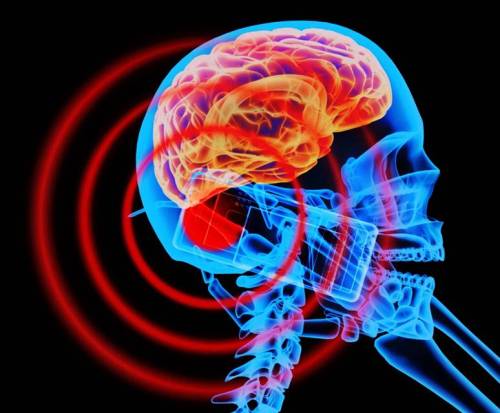
For adults and children alike, the process by which wireless radiation may cause cancer remains uncertain, but it is thought to be indirect. Wireless radiation has been shown to damage the blood-brain barrier, a vital defense mechanism that shields the brain from carcinogenic chemicals elsewhere in the body (resulting, for example, from second-hand cigarette smoke). Wireless radiation has also been shown to interfere with DNA replication, a proven progenitor of cancer. In each of these cases, the risks are higher for children: Their skulls, being smaller, absorb more radiation than adults’ skulls do, while children’s longer life span increases their cumulative exposure.
The wireless industry has sought to downplay concerns about cell phones’ safety, and the Federal Communications Commission has followed its example. In 1996, the FCC established cell-phone safety levels based on “specific absorption rate,” or SAR. Phones were required to have a SAR of 1.6 watts or less per kilogram of body weight. In 2013, the American Academy of Pediatrics advised the FCC that its guidelines “do not account for the unique vulnerability and use patterns specific to pregnant women and children.” Nevertheless, the FCC has declined to update its standards.
 The FCC has granted the industry’s wishes so often that it qualifies as a “captured agency,” argued journalist Norm Alster in a report that Harvard University’s Edmond J. Safra Center for Ethics published in 2015. The FCC allows cell-phone manufacturers to self-report SAR levels, and does not independently test industry claims or require manufacturers to display the SAR level on a phone’s packaging. “Industry controls the FCC through a soup-to-nuts stranglehold that extends from its well-placed campaign spending in Congress through its control of the FCC’s congressional oversight committees to its persistent agency lobbying,” Alster wrote. He also quoted the CTIA website praising the FCC for “its light regulatory touch.”
The revolving-door syndrome that characterizes so many industries and federal agencies reinforces the close relationship between the wireless industry and the FCC. Just as Tom Wheeler went from running the CTIA (1992– 2004) to chairing the FCC (2013–2017), Meredith Atwell Baker went from FCC commissioner (2009–2011) to the presidency of the CTIA (2014 through today). To ensure its access on Capitol Hill, the wireless industry made $26 million in campaign contributions in 2016, according to the Center for Responsive Politics, and spent $87 million on lobbying in 2017.
Neutralizing the safety issue has been an ongoing imperative because the research keeps coming, much of it from outside the United States. But the industry’s European and Asian branches have, like their US counterpart, zealously war-gamed the science, spun the news coverage, and thereby warped the public perception of their products’ safety.
The WHO began to study the health effects of electric- and magnetic-field radiation (EMF) in 1996 under the direction of Michael Repacholi, an Australian biophysicist. Although Repacholi claimed on disclosure forms that he was “independent” of corporate influence, in fact Motorola had funded his research: While Repacholi was director of the WHO’s EMF program, Motorola paid $50,000 a year to his former employer, the Royal Adelaide Hospital, which then transferred the money to the WHO program. When journalists exposed the payments, Repacholi denied that there was anything untoward about them because Motorola had not paid him personally. Eventually, Motorola’s payments were bundled with other industry contributions and funneled through the Mobile and Wireless Forum, a trade association that gave the WHO’s program $150,000 annually. In 1999, Repacholi helped engineer a WHO statement that “EMF exposures below the limits recommended in international guidelines do not appear to have any known consequence on health.”
Two wireless trade associations contributed $4.7 million to the Interphone study launched by the WHO’s International Agency for Cancer Research in 2000. That $4.7 million represented 20 percent of the $24 million budget for the Interphone study, which convened 21 scientists from 13 countries to explore possible links between cell phones and two common types of brain tumor: glioma and meningioma. The money was channeled through a “firewall” mechanism intended to prevent corporate influence on the IACR’s findings, but whether such firewalls work is debatable. “Industry sponsors know [which scientists] receive funding; sponsored scientists know who provides funding,” Dariusz Leszczynski, an adjunct professor of biochemistry at the University of Helsinki, has explained.
The FCC grants the wireless industry’s wishes so often that it qualifies as a “captured agency.”
To be sure, the industry could not have been pleased with some of the Interphone study’s conclusions. The study found that the heaviest cell-phone users were 80 percent more likely to develop glioma. (The initial finding of 40 percent was increased to 80 to correct for selection bias.) The Interphone study also concluded that individuals who had owned a cell phone for 10 years or longer saw their risk of glioma increase by nearly 120 percent. However, the study did not find any increased risk for individuals who used their cell phones less frequently; nor was there evidence of any connection with meningioma.
When the Interphone conclusions were released in 2010, industry spokespeople blunted their impact by deploying what experts on lying call “creative truth-telling.” “Interphone’s conclusion of no overall increased risk of brain cancer is consistent with conclusions reached in an already large body of scientific research on this subject,” John Walls, the vice president for public affairs at the CTIA, told reporters. The wiggle word here is “overall”: Since some of the Interphone studies did not find increased brain-cancer rates, stipulating “overall” allowed Walls to ignore those that did. The misleading spin confused enough news organizations that their coverage of the Interphone study was essentially reassuring to the industry’s customers. The Wall Street Journal announced “Cell Phone Study Sends Fuzzy Signal on Cancer Risk,” while the BBC’s headline declared: “No Proof of Mobile Cancer Risk.”
The industry’s $4.7 million contribution to the WHO appears to have had its most telling effect in May 2011, when the WHO convened scientists in Lyon, France, to discuss how to classify the cancer risk posed by cell phones. The industry not only secured “observer” status at Lyon for three of its trade associations; it placed two industry-funded experts on the working group that would debate the classification, as well as additional experts among the “invited specialists” who advised the group.
Niels Kuster, a Swiss engineer, initially filed a conflict-of-interest statement affirming only that his research group had taken money from “various governments, scientific institutions and corporations.” But after Kuster co-authored a summary of the WHO’s findings in The Lancet Oncology, the medical journal issued a correction expanding on Kuster’s conflict-of-interest statement, noting payments from the Mobile Manufacturers Forum, Motorola, Ericsson, Nokia, Samsung, Sony, GSMA, and Deutsche Telekom. Nevertheless, Kuster participated in the entire 10 days of deliberations.
The industry also mounted a campaign to discredit Lennart Hardell, a Swedish professor of oncology serving on the working group. Hardell’s studies, which found an increase in gliomas and acoustic neuromas in long-term cell-phone users, were some of the strongest evidence that the group was considering.
Hardell had already attracted the industry’s displeasure back in 2002, when he began arguing that children shouldn’t use cell phones. Two scientists with industry ties quickly published a report with the Swedish Radiation Authority dismissing Hardell’s research. His detractors were John D. Boice and Joseph K. McLaughlin of the International Epidemiology Institute, a company that provided “Litigation Support” and “Corporate Counseling” to various industries, according to its website. Indeed, at the very time Boice and McLaughlin were denigrating Hardell’s work, the institute was providing expert-witness services to Motorola in a brain-tumor lawsuit against the company.
The wireless industry didn’t get the outcome that it wanted at Lyon, but it did limit the damage. A number of the working group’s scientists had favored increasing the classification of cell phones to Category 2A, a “probable” carcinogen; but in the end, the group could only agree on an increase to 2B, a “possible” carcinogen.
That result enabled the industry to continue proclaiming that there was no scientifically established proof that cell phones are dangerous. Jack Rowley of the GSMA trade association said that “interpretation should be based on the overall balance of the evidence.” Once again, the slippery word “overall” downplayed the significance of scientific research that the industry didn’t like.
 Industry-funded scientists had been pressuring their colleagues for a decade by then, according to Leszczynski, another member of the Lyon working group. Leszczynski was an assistant professor at Harvard Medical School when he first experienced such pressure, in 1999. He had wanted to investigate the effects of radiation levels higher than the SAR levels permitted by government, hypothesizing that this might better conform to real-world practices. But when he proposed the idea at scientific meetings, Leszczynski said, it was shouted down by Mays Swicord, Joe Elder, and C.K. Chou—scientists who worked for Motorola. As Leszczynski recalled, “It was a normal occurrence at scientific meetings—and I attended really a lot of them—that whenever [a] scientist reported biological effects at SAR over [government-approved levels], the above-mentioned industry scientists, singularly or as a group, jumped up to the microphone to condemn and to discredit the results.”
Years later, a study that Leszczynski described as a “game changer” discovered that even phones meeting government standards, which in Europe were a SAR of 2.0 watts per kilogram, could deliver exponentially higher peak radiation levels to certain skin and blood cells. (SAR levels reached a staggering 40 watts per kilogram—20 times higher than officially permitted.) In other words, the official safety levels masked dramatically higher exposures in hot spots, but industry-funded scientists obstructed research on the health impacts.
“Everyone knows that if your research results show that radiation has effects, the funding flow dries up.” —Dariusz Leszczynski, adjunct professor of biochemistry at the University of Helsinki
“Everyone knows that if your research results show that radiation has effects, the funding flow dries up,” Leszczynski said in an interview in 2011. Sure enough, the Radiation and Nuclear Safety Authority of Finland, where Leszczynski had a long career, discontinued research on the biological effects of cell phones and discharged him a year later.
According to scientists involved in the process, the WHO may decide later this year to reconsider its categorization of the cancer risk posed by cell phones; the WHO itself told The Nation that before making any such decision, it will review the final report of the National Toxicology Program, a US government initiative. The results reported by the NTP in 2016 seem to strengthen the case for increasing the assessment of cell-phone radiation to a “probable” or even a “known” carcinogen. Whereas the WHO’s Interphone study compared the cell-phone usage of people who had contracted cancer with that of people who hadn’t, the NTP study exposed rats and mice to cell-phone radiation and observed whether the animals got sick.
“There is a carcinogenic effect,” announced Ron Melnick, the designer of the study. Male rats exposed to cell-phone radiation developed cancer at a substantially higher rate, though the same effect was not seen in female rats. Rats exposed to radiation also had lower birth rates, higher infant mortality, and more heart problems than those in the control group. The cancer effect occurred in only a small percentage of the rats, but that small percentage could translate into a massive amount of human cancers. “Given the extremely large number of people who use wireless communications devices, even a very small increase in the incidence of disease…could have broad implications for public health,” the NTP’s draft report explained.
 But this was not the message that media coverage of the NTP study conveyed, as the industry blanketed reporters with its usual “more research is needed” spin. “Seriously, stop with the irresponsible reporting on cell phones and cancer,” demanded a Vox headline. “Don’t Believe the Hype,” urged The Washington Post. Newsweek, for its part, stated the NTP’s findings in a single paragraph, then devoted the rest of the article to an argument for why they should be ignored.
The NTP study was to be peer-reviewed at a meeting on March 26–28, amid signs that the program’s leadership is pivoting to downplay its findings. The NTP had issued a public-health warning when the study’s early results were released in 2016. But when the NTP released essentially the same data in February 2018, John Bucher, the senior scientist who directed the study, announced in a telephone press conference that “I don’t think this is a high-risk situation at all,” partly because the study had exposed the rats and mice to higher levels of radiation than a typical cell-phone user experienced.
Microwave News’s Slesin speculated on potential explanations for the NTP’s apparent backtracking: new leadership within the program, where a former drug-company executive, Brian Berridge, now runs the day-to-day operations; pressure from business-friendly Republicans on Capitol Hill and from the US military, whose weapons systems rely on wireless radiation; and the anti-science ideology of the Trump White House. The question now: Will the scientists doing the peer review endorse the NTP’s newly ambivalent perspective, or challenge it?
The scientific evidence that cell phones and wireless technologies in general can cause cancer and genetic damage is not definitive, but it is abundant and has been increasing over time. Contrary to the impression that most news coverage has given the public, 90 percent of the 200 existing studies included in the National Institutes of Health’s PubMed database on the oxidative effects of wireless radiation—its tendency to cause cells to shed electrons, which can lead to cancer and other diseases—have found a significant impact, according to a survey of the scientific literature conducted by Henry Lai. Seventy-two percent of neurological studies and 64 percent of DNA studies have also found effects.
The wireless industry’s determination to bring about the Internet of Things, despite the massive increase in radiation exposure this would unleash, raises the stakes exponentially. Because 5G radiation can only travel short distances, antennas roughly the size of a pizza box will have to be installed approximately every 250 feet to ensure connectivity. “Industry is going to need hundreds of thousands, maybe millions, of new antenna sites in the United States alone,” said Moskowitz, the UC Berkeley researcher. “So people will be bathed in a smog of radiation 24/7.”
There is an alternative approach, rooted in what some scientists and ethicists call the “precautionary principle,” which holds that society doesn’t need absolute proof of hazard to place limits on a given technology. If the evidence is sufficiently solid and the risks sufficiently great, the precautionary principle calls for delaying the deployment of that technology until further research clarifies its impacts. The scientists’ petition discussed earlier urges government regulators to apply the precautionary principle to 5G technology. Current safety guidelines “protect industry—not health,” contends the petition, which “recommend[s] a moratorium on the roll-out of [5G]…until potential hazards for human health and the environment have been fully investigated by scientists independent from industry.”
No scientist can say with certainty how many wireless-technology users are likely to contract cancer, but that is precisely the point: We simply don’t know. Nevertheless, we are proceeding as if we do know the risk, and that the risk is vanishingly small. Meanwhile, more and more people around the world, including countless children and adolescents, are getting addicted to cell phones every day, and the shift to radiation-heavy 5G technology is regarded as a fait accompli. Which is just how Big Wireless likes it.
Subscribe to:
Posts (Atom)