Showing posts with label Self-Driving Cars. Show all posts

Friday, July 26, 2019

The Dream of Self-Driving Cars is Running Out of Gas

For years, automakers wildly overpromised on self-driving cars and electric vehicles—what now?


Tech execs and auto company leaders are becoming increasingly pessimistic about the future of AVs—and they are far less sanguine about electric vehicles (EVs) as well—because the raft of rosy projections in recent years have not even remotely come true.

Just before Uber’s IPO in May, court documents were unsealed relating to a lawsuit filed against the ride-sharing company in 2017 by Waymo, Google’s self-driving car unit. In these documents and in testimony during the case, which was settled in 2018, a rare candid view into what auto and tech industry insiders actually believe about autonomous vehicle (AV) development emerged.
Simply put, Uber—and, as it turns out, many other automobile manufacturers—have been wildly overpromising.
Starting around May 2016, Uber projected in public and private presentations that it would manufacture 13,000 autonomous vehicles by 2019, only to change that forecast four months later to over 75,000 units. The company also said that human safety drivers, who take over the wheel when an AV needs help, would not be required on its cars by 2020. And in 2022, the company declared, tens of thousands of fully self-driving Uber taxis would be in 13 of the largest cities.
As it turns out, even Uber didn’t have any faith in these claims. According to the released court files, nobody at Uber vetted its AV deployment figures, which Eric Meyhofer, head of Uber’s Advanced Technologies Group, described as nothing but “hypothetical scenarios.” He added, “They are assumptions and estimates. I don’t think anything in this document would be described as accurate. It’s a set of knobs you turn to try to understand parameters that you need to try to meet.” Perhaps more damning, the Uber employee responsible for the forecasts said that while she was designing them, executives had asked her “to think about a way” to show accelerated Uber AV development.
These unflattering glimpses into Uber’s AV program—which surfaced in connection with Waymo’s allegations in court that a former engineer stole technical secrets and used them to launch Otto, a self-driving truck startup acquired by Uber in 2016—embarrassed Uber. (Waymo ultimately settled for 0.34 percent of Uber’s equity, or about $250 million). And that was before Uber was implicated in the first ever pedestrian fatality involving a self-driving car when one of its Volvos hit a woman who stepped out of the darkness into the road in Tempe, Arizona, last year. The result of all this? Uber is more cautious now in its autonomous vehicle pronouncements. So much so that just this week, the company’s CEO Dara Khosrowshahi said at an Economic Club meeting in Washington, DC, that it will take more than 50 years for all Uber cars to be driverless, a lifetime away.
But if Uber is crowing less, its diffidence reflects a bristling sentiment among big and small auto manufacturers: company executives are becoming increasingly pessimistic about the future of AVs—and they are far less sanguine about electric vehicles (EVs) as well. They have grudgingly reached these dour conclusions chiefly because to their dismay, the raft of rosy projections imagining by 2020 streets full of EVs and at least a flurry of AVs have not even remotely come true.
One example among many from the electric vehicle realm: in 2010, J.D. Power and Associates predicted that within a decade, global hybrid and EV annual sales would top five million units. The EV segment is nowhere near that goal and, if anything, is retrenching. In the first quarter of this year, about 92,000 plug-in cars were sold in the U.S., down from over 100,000 in the prior quarter. Tesla, the number-one player in the EV market, saw its global unit sales fall more than 30 percent, and the company is rapidly burning through cash, drowning in debt, laying off workers, and struggling to survive.
In the U.S. plug-in hybrid segment, sales of market leader Toyota Prius Prime were a lowly 4,026 in the first quarter, a 40 percent decrease from the prior quarter. And GM’s once ballyhooed Chevrolet Volt went out of production. All told, fully battery operated and hybrid EVs are barely a niche market, accounting for about 2 percent of vehicle sales in the U.S.—and that’s with government-backed incentives to encourage buyers. And in China, up until recently a bright spot for EV manufacturers, sales of electric vehicles were only up 1.8% in May compared with a year earlier. That’s the slowest growth rate in about 18 months.
It’s easy to discern why EV sales are so anemic. For one thing, electric vehicles are overwhelmingly sedans, which have not been a consumer favorite for years. Moreover, most EVs still do not match the performance and reliability of internal combustion engine cars and the lack of charging infrastructure makes them unattractive for anything more than short hops.
Meanwhile, the autonomous vehicle market is, of course, nonexistent at this point. Yet, only three years ago, then Renault-Nissan CEO Carlos Ghosn promised hands-free urban driving in his company’s cars by 2020 when “you’re going to have what we call a totally autonomous-driven car—hopefully totally in line with the regulation.”
Nobody talks like this anymore. Instead, top executives in the auto and tech industries, like Uber’s Khosrowshahi, are nervously tamping down expectations. In November, Waymo’s CEO John Krafcik told a tech conference that it will be decades before autonomous cars are widespread on the roads, and they may always need human assistance to drive in multifaceted environments, such as bad weather or areas crowded with construction or emergency equipment. In April, Ford’s CEO echoed those remarks in an appearance before the Detroit Economic Club. “We overestimated the arrival of autonomous vehicles,” Jim Hackett said. While he claimed that Ford would have a driverless vehicle ready by 2021, “its applications will be narrow, what we call geo-fenced, because the problem is so complex.”
The languid EV and AV rollouts are creating a mixture of confusion and desperation in the auto industry and among the tech companies that have staked their claims in it. No one doubts that the automobile is in the midst of a 100-year sea change—electric and autonomous vehicles in some form will eventually be commonplace. But there is a growing suspicion from inside the industry that the way auto companies are navigating this incipient revolution—primarily by wildly investing hundreds of millions of dollars a month in often-redundant research and development efforts whose returns on capital seem to be slipping further away—is foolhardy and lacks imagination. The problem is, a few top executives in the industry privately concede, the auto companies are slapping fresh ideas on old chassis, when the real outcome may be unlike anything that we envision today. Last year, one CEO described the expensive hunt for EVs and AVs as a “down payment on nothing.”
And more recently, another CEO echoed those sentiments: “I don’t know what is going to happen with new styles and powertrains. And I certainly don’t know when it is going to happen. And yet we are all at great expense chasing the same uncertain result, which so far looks a lot like the cars we already make.”
Or, put more pointedly, expenditures on EV and AV development are leaving some automakers—startups and incumbents—in such a deep hole that they won’t survive to place their nameplates on these vehicles when they are finally perfected. A recent study by industry analysts AlixPartners found that by 2023, global auto companies will have earmarked more than $250 billion for R&D and capital costs related to producing electric vehicles. By then, auto companies will have launched some 200-plus EVs and virtually all of them will be unprofitable as the oversaturated market will almost certainly demand elevated incentives in order to sell the cars. Making matters worse, the vehicles will lack the advantages of scale gained from manufacturing at high volume.
The same report found that an additional $61 billion has been earmarked for self-driving car technologies—and that’s just counting the early investments. Uber’s AV unit runs through about $20 million a month, and Waymo has already spent over $1 billion on R&D, while GM acquired AV startup Cruise for about $500 million and since then has attracted funding of well over $1 billion from Honda and venture firms. Still, according to a separate AlixPartners consumer survey, car buyers say they would be willing to pay only $2,300 extra for self-driving functions, about a tenth of the cost of installing self-driving features available today.
Assessing the impact of EV and AV investments, auto specialists at consulting firm Strategy& calculated that at current expense levels, operating margins in the auto industry will fall by half in five years to a woeful 3 percent from an already anemic 6.2 percent today. And return on invested capital will dip under 2 percent from 4.6 percent, well below the cost of capital and trailing other industries, including consumer products (11 percent), aerospace and defense (10 percent), and software (7 percent). John Hoffecker, global vice chairman at AlixPartners, called this untenable financial situation “a pile-up of epic proportions. Auto companies believe that they have the chance of benefitting from first-mover advantages, but they face the possibility of going broke in the process.”
This dire message seems to be getting through to some former EV and AV flag-wavers. A recent flurry of new partnerships and downsizing of business units working on these cars appear to be directed at conserving resources even as these companies are skittish about losing their relevance when electric and autonomous vehicles finally arrive. To that end, GM and Honda are collaborating on battery development; BMW, Volkswagen, and Daimler are in talks to share R&D efforts for autonomous vehicles; and Ford and VW, which had each previously budgeted billions for solo EV and AV projects, are discussing a joint arrangement. Even Apple, which had designs on building a self-driving car, has fired 200 people from this campaign and is focusing instead on new mobility software.
These events do not reflect a strategic plan as much as fear that in the auto industry the center of gravity—the flow of money—is moving away from the big manufacturers and toward companies that are designing the individual components critical to the success of the next iteration of automobiles. The most probable future scenario transforms the auto industry from today’s top-down sector with large automakers in commanding heights above a network of suppliers, dealers, lenders, and service centers—each of whom is figuratively and often literally in debt to the manufacturer—into an ecosystem of interrelated but relatively equal companies. “It is likely that the real automobile revolution we should be paying attention to is not in the vehicles but in the automobile industry itself,” the auto CEO said. “A business model with dozens of auto companies all making the same car will not be viable much longer. Companies need to figure out their most profitable place in the ecosystem and base their business models on that decision.”
Perhaps the most obvious illustration of the ecosystem model is the smartphone arena, in which brand-name handset providers are in essence assemblers of parts and components made by other companies, and the phone is a skeleton on which third-party revenue generating apps and content are placed. Translated to the EV and AV platform, much of the value of these vehicles will reside in parts of the car that traditional automobile manufacturers have little expertise in: sensors, batteries, propulsion software, artificial intelligence systems, route mapping platforms and databases, GPS hardware, and infotainment and connectivity programs. Auto manufacturers will be primarily making the handsets into which these advanced technologies will be placed.
Through that lens, the electric and autonomous vehicle landscape takes on the contours of a series of innovative mobility ideas in which automobiles serve as handmaidens and not as the main attraction, as they are seen today. Among the blueprints gaining currency was posited recently by Larry Burns, former head of research and development at General Motors and the author of Autonomy: The Quest to Build the Driverless Car—And How It Will Reshape Our World. Burns envisions car ownership being a subscription service, in which for a monthly fee customers have self-driving vehicles of their choice on demand. Rather than sitting unused after, for instance, dropping a passenger at a suburban train station, the AV might go back home for additional trips, run errands for the family, serve a one-off passenger, or even take itself in for maintenance, recharging, and upgrading.
That’s just one thought among many. Also viewed as viable is the possibility of massive convoys of AV trucks riding their own lanes on interstates, like trains but more efficient and more flexible in their routes. Or retrofitting highways to wirelessly charge car batteries. Or hydrogen-carrying trucks that deliver fuel to AVs that signal they are low and in between jobs, overcoming the distribution challenges standing in the way of fuel cell vehicles.
Of course, it is more likely that these musings are just hints and bits and pieces of what the next few decades really hold. But the common denominator is that a cluster of companies will be needed to manage the scheduling, logistics, refueling, maintaining, manufacturing, designing, and software engineering to keep EVs and AVs on the road.
Bob Lutz, the former top executive at GM, Ford, and Chrysler, who has become something of a black sheep for claiming “the end of the automotive era” and saying that automakers should “kiss the good times goodbye,” believes that his colleagues have been unimaginative in safeguarding their own survival. “Right now the trends that everybody can understand,” Lutz says, “is trend number one, vehicles are becoming more and more autonomous. Trend number two, electrification is gradually increasing. Those two trend lines they can understand. But they can only understand them for the next two or three years. And beyond that, let’s just say people have great difficulty envisioning further out.”

Source

Monday, July 01, 2019

Will Driverless Cars Cause DNA Damage and Cancer?

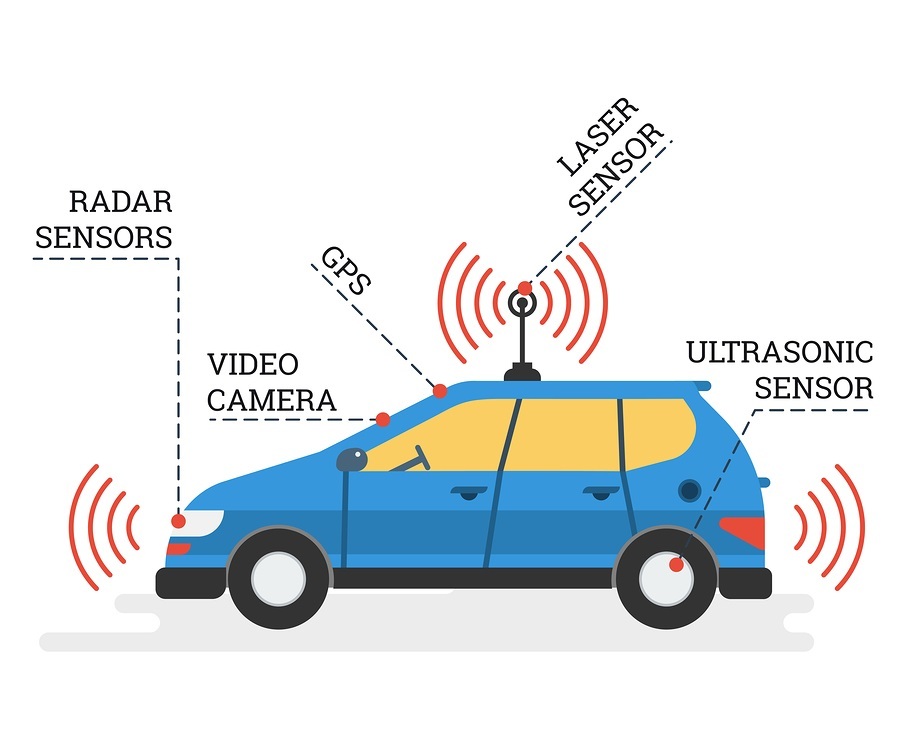
Autonomous Car image with microwave transmissions
by John P. Thomas
Health Impact News
Driverless cars are seen as the next big market potential for the automotive industry.
But before we get too excited about these driverless cars, we need to carefully consider the many levels of health risks involved with this technology, as well as the loss of privacy. Vehicle crashes and fatalities are minor concerns compared to potential human DNA damage and increased risks of cancer.
Now that the fifth generation (5G) of small microwave cell towers is being rolled out by telecom companies, their 5G press releases keep reminding us how their new technology will give us instantaneous internet downloads and will permit us to use driverless cars. [1, 2, 16]
Of course, these press releases never mention the potential health risks.
Driverless cars are already on the road in very small numbers as part of ongoing research and tests. But it is projected that within seven years, we will see a proliferation of driverless cars traveling down our roads.
There will also be very large numbers of cars with Driver Assist Systems (DAS), which supposedly help drivers avoid accidents. [3, 4]

DAS Technology: Computers Take Over – Privacy Gone

DAS equipped cars warn drivers when they start migrating out of their lane or get to close to another vehicle. DAS active cruise control can slow the car or speed it up depending on proximity to other vehicles on the road, and DAS cars can even take total control over the car to handle the sometimes-difficult process of parallel parking. [4]
Both DAS and driverless cars will require on-board computers and multiple on-board microwave radar systems. They will be tied into the 4G and 5G cell tower system through hotspot technology built into the car. The combination of vehicle hotspot antennas and 5G cell towers will allow vehicles to communicate with one another to avoid accidents. [3]
Eventually, this technology will even permit a central traffic control computer to manage traffic flow. These central computers could even be used to slow or speed up vehicles and even stop them if needed. This system will track the activity of every car on the road and even record information about who is driving the vehicles. [3]

From DAS to Driverless Cars – More Microwave Exposure

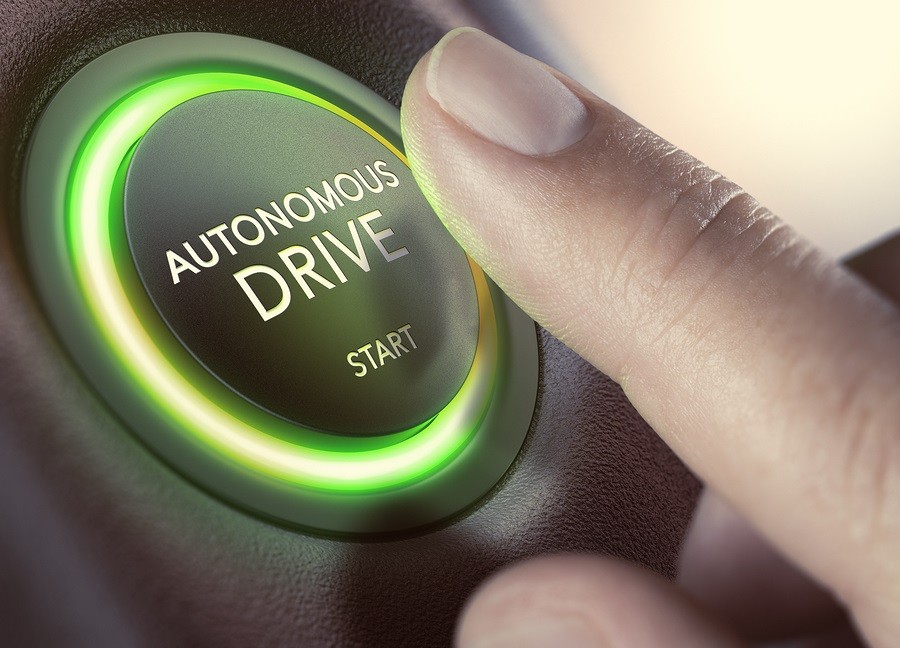
Finger pressing a push button to start a self-driving car.
The main difference between driverless cars and DAS cars lies in the amount of technology that will be used.
Driverless cars will use much more technology. These cars will have visual scanning cameras, laser sensors, and lots of microwave radar systems. Self-driving cars may have up to 10 microwave radar systems using very high frequency radiation, but DAS cars also use microwave radar.
Each radar system will use a different frequency of microwaves in the Gigahertz spectrum and will broadcast that radiation in a specific direction. Multiple radar systems will be located in the front grill of the cars and will project microwave radiation in front of the vehicle.
The forward-facing radar systems will focus on detecting objects at various distances. Other microwave radar systems will focus on activity behind and beside the vehicle. [3]
Self-driving cars will transmit more microwave radar radiation than DAS cars, but both have radiation risks. Both will broadcast microwaves into the environment and microwaves will be reflected back toward vehicles. Microwaves pass through glass and enter vehicles.
Thus, passengers will constantly be irradiated by microwave radiation coming at them from their own vehicle and from other vehicles on the road. [3]
Whenever two cars with microwave radar come toward each other on a two-lane road, both vehicles will directly irradiate the people in the other vehicle.
When two vehicles with radar are following one another at a modest safe distance, the people in both vehicles will experience constant microwave radiation exposure from the forward looking or backward-looking radar beams.
This means that passengers in vehicles will be frequently exposed to microwave radar radiation from all directions unless they happen to be driving on a deserted road.
Even when they might be on an empty road, they will still have constant microwave radiation exposure from the hotspot antennas on their own vehicle in addition to their own on-board microwave Wi-Fi system.
If anyone in the car is using the Wi-Fi on their smart phone, tablet, or laptop, then they will constantly be bombarded by the microwaves coming from these devices.
Of course, let us not forget the constant level of background microwave radiation that enters cars from 3G, 4G, and 5G cell towers, and the microwave radiation from smart meter relay towers and from smart meters attached to homes near the road.

Cars Trap “Microwave Smog”

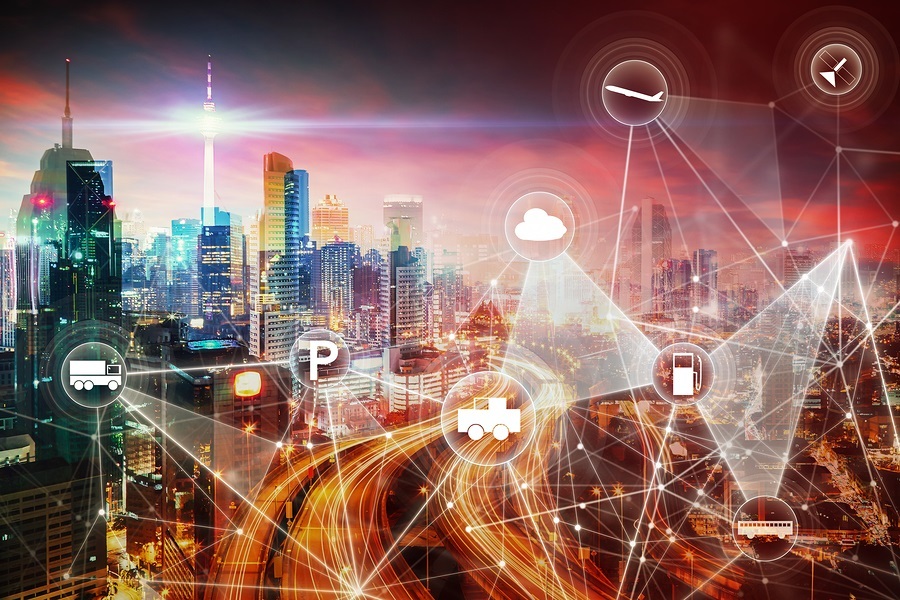
Modern transportation network intelligent vehicle and smart transportation connection concept image
Cars are metal boxes, which encapsulate microwaves. Microwave signals are reflected off surfaces and bounce around inside vehicles. They are easily absorbed by human tissue.
So, even if you aren’t holding a smart phone close to your body, you are still being saturated with microwave radiation as your technology uses Wi-Fi to communicate with the cars hotspot transmitter. [3]
Microwaves that radiate from smart phones and other devices are like second-hand tobacco smoke. It is not only the person who is smoking or using the smart phone that is affected by the smoke or the microwaves, but everyone in the nearby environment is contaminated with the carcinogenic smoke or microwave smog. [3]

Microwave Smog Affects Bicyclists and Pedestrians

The microwave radar systems used in DAS and driverless cars can project microwave radiation for more than 750 feet in front of the vehicle and a similar distance behind the vehicle. They use a combination of short-range, medium-range, and long-range microwave radar systems at very high frequencies.
Each radar system uses different Gigahertz microwave frequencies much higher than current generation cell phones and Wi-Fi.
These frequencies have not been tested to prove they are safe for humans. No safety studies have been done to determine the dangers of constant exposure to multiple microwave frequencies.
This radiation penetrates glass in other vehicles and in nearby homes. It also penetrates the bodies of people in cars and on sidewalks. [3]
Every time a radar equipped vehicle moves along a street, it will irradiate people, animals, plants, and buildings. At a busy traffic intersection, the radiation of the environment will be constant.

Microwave Smog Penetrates Homes, Storefront Businesses, and Offices

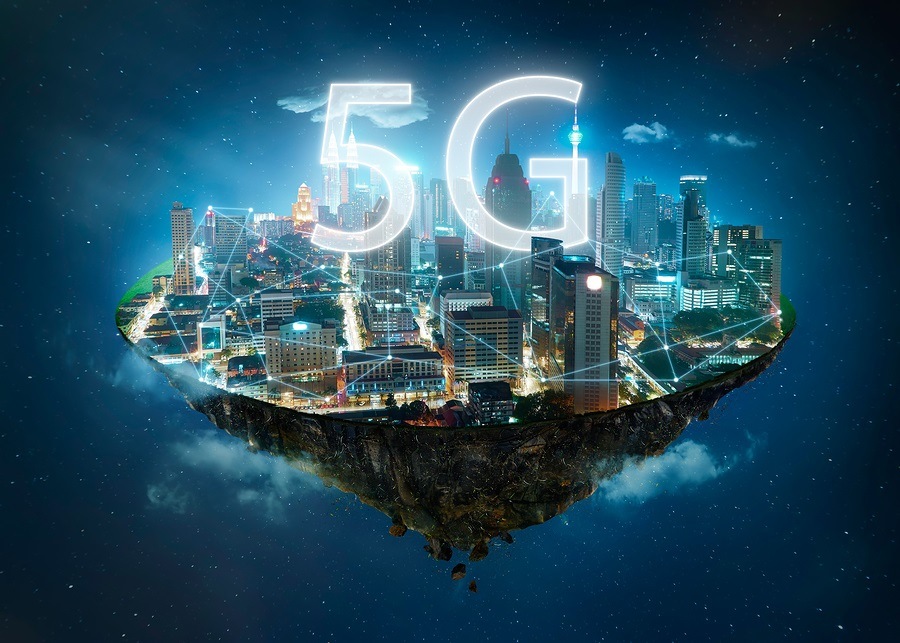
Fantasy island floating in the air with 5G network wireless systems and internet of things , Smart city and communication network concept
When a car equipped with microwave radars systems passes by the average home, apartment building or ground level office or storefront, the buildings and the people in and around them are subject to being irradiated. These microwaves will strike us when we are in our yards and can easily pass through window glass and enter our homes.
As the 5G system continues to be expanded into our cities, these vehicles will have greater freedom to travel in densely populated areas and will expose hundreds if not thousands of people to microwave radiation during every mile of their journey.
The combination of all this microwave technology will damage human DNA and cause many cases of cancer in addition to numerous other forms of severe illness. In my previous article, I presented the long list of illnesses and symptoms of injury that are linked to microwave exposure.

5G Technology is Coming – Linked to Cancer, Heart Disease, Diabetes, Alzheimer’s, and Death

Prototypes of Self Driving Cars Still Use Human Safety Attendants – But Accidents Still Occurring

Researchers are developing computer algorithms for the on-board computers in driverless cars so that they can detect dangerous situations and make correct choices about how to avoid accidents.
While this testing is occurring, human drivers are required to sit behind the wheel and pay attention to the task of driving. They must be ready to take over if the system doesn’t perform properly.
Even with safety attendants sitting behind the wheel, several deaths and numerous accidents have now been attributed to these cars and their semi-passive drivers. [5, 6, 7]
Despite the imperfections in the current auto driving technology, we are told that when 5G gets rolled out, then things should get really safe and the prices for driverless cars will become affordable for many car buyers.
It is estimated that cars equipped with optional driverless packages could be available for purchase in 2025. [8]

New Government Mandate for Vehicle to Vehicle Wireless Communication on the Back Burner

Based on a November 2017 news report [9] it appears that the proposed federal mandate for the Vehicle to Vehicle (V2V) microwave communication system is no longer being pushed forward by the Trump Administration.
This system would have required all car manufacturers to install a microwave communication system called Directed Short Range Communication (DSRC), so that vehicles could use microwaves to send warnings to other vehicles about dangerous situations. This would have been in addition to the microwave systems used by DAS and self-driving cars.
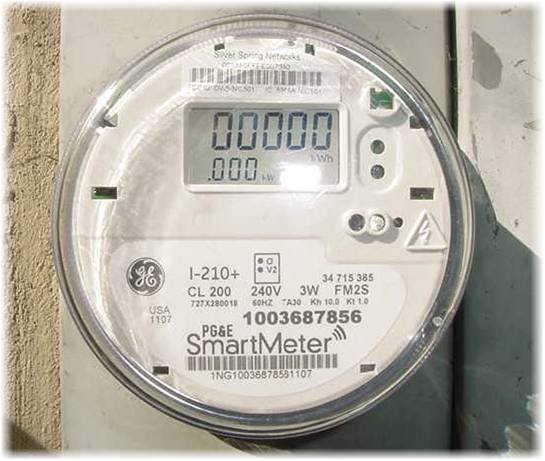
smartmeter
The V2V DSRC system would have produced harmful health effects that would have been equal to or even more dangerous than those produced by utility company smart meters.
The DSRC would have broadcast microwaves in a 360-degree field around light duty vehicles such as cars, trucks, motorcycles, and buses. The microwaves would have radiated in all directions for up to 500 meters – more than 1,500 feet. Each DSRC unit would have sent out bursts of microwave communication 10 times per second.
This means that everyone within 1,500 feet of these vehicles would have been bombarded by intense bursts of high frequency microwaves hundreds of times per second from all the vehicles moving around them. [10, 11, 12]
We should not assume the V2V DSRC system is dead, because it could be easily moved to the front burner again by a future administration in the name of public safety.
The serious health risk of microwave exposure from smart meters was discussed extensively in one of my previous articles.

Smart Meters: Countdown to a National Crisis of Illness and Death

Recommendations When Buying a Car

If you really want to protect your health and the health of your family, then don’t buy a car with a DAS system.
Unfortunately, DAS is becoming standard equipment on many vehicles.
You will even find the US governments proposed V2V DSRC system on certain models from Mercedes-Benz and on Cadillac CTS. [9]
  • If you are buying a car that is already equipped with DAS and/or DSRC, then do everything you can to get these systems disabled.
  • If the model you have selected cannot be purchased without DAS and/or DSRC, and it cannot be disabled, then choose a different model or manufacturer.
  • Otherwise keep your older car that doesn’t have all the microwave technology or shop for a used vehicle that hasn’t been equipped with DAS.

Conclusion: Driverless Cars do NOT Lead to More Freedom and Healthier Lives – They Lead to More Health Risks and Loss of Privacy

Everything associated with DAS cars, driverless cars, and the proposed V2V systems is being promoted in the name of preventing accidents, saving lives, and giving us that level of true freedom that the masters of marketing want us to believe we need.
These vehicles will expose us to a tremendous amount of microwave radiation at frequencies such as 10 Gigahertz, 76-79 Gigahertz, and 140 gigahertz. Safety has not been established for these frequencies or any of the others that saturate our environment today. [3, 14]
Even though microwave radiation is known to be extremely dangerous [3, 13, 14], telecom companies and now car manufacturers are employing the technology as if it is completely harmless. They don’t have to prove safety since the FCC has given the green light to microwave technology based on long outdated research from 1996.
These new sources of microwave radiation will produce extensive harm when combined with all the other sources of background microwave radiation in the environment from Wi-Fi, cell towers, smart meters, cell phones, etc.
Will we be able to enjoy the convenience of driverless cars if we will be suffering from illnesses caused by the microwave radiation they produce?
If the cost of DAS and driverless technology includes more cancer [3, 13], heart disease, and diabetes and dozens of other illnesses [14], then will this technology really benefit us?
If these technologies cause damage to the lenses and retinas of the eyes, cause glaucoma, and can lead to blindness, then do we need it? [3, 15]
Do we need it if the price includes damage to DNA and sperm? [3]
Will we all be safer if this microwave technology leads to infertility, and the death of babies in the womb? [3]
Do we really want our driving habits, including everywhere we travel, recorded with the auto industry and their service providers?
Are DAS equipped cars and driverless cars really worth the potential destruction of our health and loss of privacy?

About the Author

John P. Thomas is a health writer for Health Impact News. He holds a B.A. in Psychology from the University of Michigan, and a Master of Science in Public Health (M.S.P.H.) from the School of Public Health, Department of Health Administration, at the University of North Carolina at Chapel Hill.
References
[1] Verizon to launch 5G residential broadband services in up to 5 markets in 2018, Bob Varettoni. http://www.verizon.com/about/news/verizon-launch-5g-residential-broadband-services-5-markets-2018
[2] AT&T to Introduce 5G Wireless Service in 12 U.S. Cities in 2018, 2/21/2018. http://www.eweek.com/mobile/at-t-to-implement-first-5g-service-in-12-u.s.-cities-by-end-of-2018
[3] Wi-Cancer (home page), Retrieved 3/20/2018. http://www.wi-cancer.info/home.aspx
[4] The Best Driver-Assist Cars, Doug Newcomb and Alex Colon, PCMag.com, 1/18/2017. https://www.pcmag.com/article2/0,2817,2485278,00.asp
[5] Why Ubers Self-Driving Crash Is Confusing for Humans, Aarian Marshall, WIRED, 3/31/2018. https://www.wired.com/story/uber-self-driving-crash-explanation-lidar-sensors/
[6] Tesla’s Autopilot Was Involved in Another Deadly Car Crash, Jack Stewart, WIRED, 3/30/2018. https://www.wired.com/story/tesla-autopilot-self-driving-crash-california/
[7] Mishaps: A grief history of driverless car crashes, Nilesh Christopher, The Economic Times, ET Bureau, 1/13/2017. https://economictimes.indiatimes.com/small-biz/security-tech/technology/driverless-crashes/articleshow/56510821.cms
[8] How 5G will drive the adoption of self-driving cars, Jonathan Camhi, Business Insider, 12/15/2017. http://www.businessinsider.com/how-5g-will-drive-the-adoption-of-self-driving-cars-2017-12
[9] US set to drop proposed vehicle-to-vehicle communications mandate, Zac Estrada, The Verge, 11/1/2017. https://www.theverge.com/2017/11/1/16592704/vehicle-to-vehicle-communications-mandate-trump
[10] Vehicle-to-Vehicle Communication, NHTSA, Retrieved 4/6/2018. https://www.nhtsa.gov/technology-innovation/vehicle-vehicle-communication
[11] DSRC or 5G? #innovationandimpact, YouTube. https://www.youtube.com/watch?v=bw8xrQKoX8Q
[12] 2016 Fall Seminar #8: Dedicated Short Range Communications (DSRC): What, Why, and How? YouTube. https://www.youtube.com/watch?v=aqy7Fk1kOrw
[13] Antenna Sickness, Wi-Cancer.com. http://www.wi-cancer.info/antenna_sickness.aspx
[14] 5G Technology is Coming Linked to Cancer, Heart Disease, Diabetes, Alzheimers, and Death, John P. Thomas, 3/21/2018. http://healthimpactnews.com/2018/5g-technology-is-coming-linked-to-cancer-heart-disease-diabetes-alzheimers-and-death/
[15] Wi-Eyes, Wi-Cancer. http://www.wi-cancer.info/wieyes.aspx
[16] SK Telecom says 5G will be key for autonomous cars development, Juan Pedro Tomás, 3/1/2018. https://www.rcrwireless.com/20180301/5g/sk-telecom-5g-autonomous-cars-tag17

Tuesday, June 25, 2019

4G+ / 5G SMALL CELL PILOT PROJECT FOR LONDON CANADA


"This means, at current data consumption levels, 66 autonomous vehicles running 8 hours a day would produce and consume approximately the same volume of data as the daily personal data usage for the entire population of the City of London.There is a coming surge of data consumption demand driven by this next generation of connected technologies. "

Read full document here

Thursday, May 23, 2019

Watch out for Tesla’s autonomous cars and drunk drivers

From EMFactsConsultancy
One of the prime reasons for the 5G rollout is its supposed ability to make autonomous vehicles a reality by removing the imperfect human element.Well, so far, Tesla’s efforts to create the perfect driverless car are not going so well, according to Consumer reports. It seems that Tesla’s Autopilot artificial intelligence is on a par with a drunk driver way over the limit….
Don
****************************
From Consumer Reports

Tesla’s Navigate on Autopilot Requires Significant Driver Intervention, CR finds that latest version of Tesla’s automatic lane-changing feature is far less competent than a human driver


Excerpt:
Tesla recently updated its Autopilot software to allow certain cars to automatically change lanes. The automaker says it’s an attempt to make driving “more seamless.” But Consumer Reports observed the opposite in its own tests of the feature, finding that it doesn’t work very well and could create potential safety risks for drivers.
Tesla added the update to its Navigate on Autopilot feature last month as part of a promised upgrade to its package of driver assist features. To use it, a driver must first turn it on, essentially giving the car permission to make its own lane changes. A driver can cancel an automated lane change that’s in progress at any time by using the turn-signal stalk, braking, or holding the steering wheel in place.
In practice, we found that Navigate on Autopilot lagged far behind a human driver’s skill set: The feature cut off cars without leaving enough space and even passed other cars in ways that violate state laws, according to several law enforcement representatives CR interviewed for this report. As a result, the driver often had to prevent the system from making poor decisions…SNIP

Tuesday, May 21, 2019

Tesla Shares Plummet Following Fatal Autopilot Crash


CNBC reports that shares in Tesla Inc. plummeted last week after one of the firm’s cars was involved in a fatal car crash while in autopilot mode. Shares dropped below eight percent to their lowest close since December 2016 last week after the National Transportation Safety Board (NTSB) said that Tesla’s autopilot driver assistance technology was active during a fatal crash.
Tesla CEO Elon Musk has been praising the company’s autopilot system for some time, claiming that the company will have 1 million automated robotaxis on the road by next year. Others, however, have claimed that Tesla vehicles are nowhere close to fully self-driving and claim that Musk is giving drivers false faith in the vehicles autopilot system, which is similar to advanced cruise control.
The latest Tesla crash involved a Model 3 vehicle and took place in Delray Beach, Florida, appearing to be the third crash of its kind in the U.S. alone. The NTSB stated that a Model 3 vehicle struck a truck connected to a semitrailer on March 1st. According to the report, the roof of the Model 3 vehicle “was sheared off as the vehicle underrode the semitrailer” and the 50-year-old driver was killed.
The NTSB report states:
Preliminary data from the vehicle show that the Tesla’s Autopilot system — an advanced driver assistance system (ADAS) that provides both longitudinal and lateral control over vehicle motion — was active at the time of the crash. The driver engaged the Autopilot about 10 seconds before the collision. From less than 8 seconds before the crash to the time of impact, the vehicle did not detect the driver’s hands on the steering wheel.
A Tesla spokesperson stated that according to the company’s logs, the driver engaged Autopilot just 10 seconds before the accident and “immediately removed his hands from the wheel.” The spokesperson added that “we are deeply saddened by this accident and our thoughts are with everyone affected by this tragedy. Our data shows that, when used properly by an attentive driver who is prepared to take control at all times, drivers supported by Autopilot are safer than those operating without assistance.”
Tesla stock has been on the decline since the company faced a fraud lawsuit filed by the SEC, announced job cuts and the closure of Tesla stores nationwide, and has seen its cash position deteriorate rapidly. Tesla’s stock price sits around $204.56 at the time of the writing of this article, a far cry from the $420 figure Musk stated that he would take the company private at.