Microwave - and other forms of electromagnetic - radiation are major (but conveniently disregarded, ignored, and overlooked) factors in many modern unexplained disease states. Insomnia, anxiety, vision problems, swollen lymph, headaches, extreme thirst, night sweats, fatigue, memory and concentration problems, muscle pain, weakened immunity, allergies, heart problems, and intestinal disturbances are all symptoms found in a disease process the Russians described in the 70's as Microwave Sickness.
Motorola Solutions Inc. (NYSE:MSI) Intraday Stock Chart
Today : Monday 23 November 2015
(FROM THE WALL STREET JOURNAL 11/23/15)
By Ryan Knutson
Alicia Mitchell was 15 years old when her father sued Motorola Inc., alleging the company's cellphones caused his brain tumor. She'll turn 30 in February and the lawsuit is still winding its way through court.
In the years since the lawsuit was filed, other plaintiffs have brought more than two dozen similar cases, the most recent one in October. Defendants include almost all the major cellphone and wireless companies, including AT&T Inc., Verizon Communications Inc., Apple Inc. and Samsung Electronics Co.
Representatives for Motorola and the other defendants referred questions to the CTIA, the wireless industry trade group, which said in a statement that "peer-reviewed scientific evidence has overwhelmingly indicated that wireless devices do not pose a public health risk for adults or children."
So far, the cases have mostly been a battle over legal procedure, not science. Ms. Mitchell's father's lawsuit, Murray v. Motorola, faces another testTuesday when the sides argue over what legal standard should be applied when evaluating evidence brought by scientists.
The case is being closely watched, as it would have ramifications not only for what evidence could be admitted in other cellphone cases, but it could also set a new precedent in the Superior Court of the District of Columbia. Ms. Mitchell's father, Michael Murray, was diagnosed with a brain tumor in 1999, after spending several years working at Motorola as a handset technician. He and his wife sued Motorola in 2001. He died in 2003.
Jeffrey Morganroth, a lawyer representing the Murrays, has brought several other cases against Motorola and other defendants. A total of 13 cases have been consolidated into the Murray case, and the plaintiffs are seeking more than $1.9 billion in damages combined.
In filings with the Securities and Exchange Commission, cellphone manufacturers and wireless carriers specifically acknowledge the risk posed by health-related lawsuits. "We may incur significant expenses in defending these lawsuits," Verizon wrote in its 2015 annual filing. "In addition, we may be required to pay significant awards or settlements."
Through the years, the Murray case has withstood several motions to dismiss and an effort to transfer it to federal court.In August 2014, Judge Frederick H. Weisberg of the Superior Court of the District of Columbia ruled that testimony from five scientists could be admitted to the trial.
The defendants appealed, arguing the court should have used a different legal standard, known as Daubert, when deciding whether to admit the testimony from scientists. Judge Weisberg relied on a evidentiary standard known as Frye. On Tuesday, a panel of judges at the District of Columbia Court of Appeals is expected to hear oral arguments on the matter. Under the Frye standard, the court may only look at the methodology researchers use to determine whether their testimony can be admitted. Under the Daubert standard, judges have more discretion to consider other factors.
"This is a marathon," said Mr. Morganroth, the lawyer for the Murrays. Eight of the plaintiffs in other cases have died while the lawsuits have been pending, he said. A decision in favor of Motorola and the other defendants, which are pushing for the Daubert standard, would send ripples beyond the Murray lawsuit. Seventeen of the other cellphone-health cases are stayed pending a ruling in this case.
Judge Weisberg wrote in his August 2014 decision that testimony from the scientists he found admissible under Frye would "almost certainly be excluded under Daubert."
"The consensus throughout the scientific community is that the present state of science does not permit any definitive answer to the question of whether cellphone, [radio-frequency] radiation causes cancer or any other adverse health effects," Judge Weisberg wrote in that decision.
If the plaintiffs prevail, discovery will begin on the broad issue of whether cellphones can cause brain tumors, specifically, glioma and acoustic neuroma. In addition, the plaintiffs would need to prove cellphones caused the cancer in their specific cases.
One in 161 Americans will get brain or cancer of the central nervous system in their lifetime
One in 161 Americans (0.62%) will be diagnosed with brain or other central nervous system (CNS) cancer during their lifetime according to the Central Brain Tumor Registry of the United States. The risk is greater for males (1 in 144 or 0.69%) than females (1 in 182 or 0.55%): About three out of four people (74%) who develop brain or CNS cancer will die from this disease.
The risk of being diagnosed with a non-malignant (i.e., non-cancerous) brain or CNS tumor is about twice as great (14.75 vs. 7.23 per 100,000 per year).
NaturalHealth365) After water, gas, and electricity,wireless has become the fourth utility. Everything is being ‘wified’ to death. Phones, watches, TVs, iPads, DVD players, coffee machines, refrigerators, you name it!
Even schools, hospitals, businesses and coffee shops have WiFi – it’s literally everywhere. In fact, some would say, ‘we can’t live without it.’ But what if wireless was not as safe as we are led to believe?
Do you know what the experts say about wireless technology and your health?
Wireless devices emit radio frequency radiation or microwave radiation at the rate of billions of cycles per second. Thousands of peer-reviewed studies point to the link between these exposures and a long list of adverse biological health effects and very serious diseases, including brain tumors, cancer and cardiovascular disease.
Of course there are safety guidelines, but do these guidelines protect us? Absolutely not! You see, that’s because scientists and engineers are being relied upon to set exposure limitsnot biologists or medically qualified professionals.
In the United States the safety guidelines for wireless are set by the Federal Communications Commission (FCC). The FCC has various responsibilities. They oversee the allotment of broadcast frequencies across the spectrum, they mediate competition between service providers, they maintain communications in emergencies and they punish celebrities and other people who swear on the radio or take their clothes off on TV.
But the FCC was never supposed to look after your health; it’s not their job. The FCC relies on scientists, engineers and organizations (including the IEEE) to set its ‘proper exposure limits’ – and the doctors are never given an opportunity to offer an opinion.
Current ‘safety’ guidelines don’t take into account the adverse biological effects of EMF exposures
The current FCC guidelines only take into account the thermal effects of these wireless exposures they fail to take into account the adverse biological effects. What this means is that if the exposures aren’t cooking you, they are safe. But the studies detail thousands of adverse biological effects which occur at levels well below that required to heat tissue.
Here’s the blunt truth: EMF exposure guidelines are based on outdated science.
The FCC requires that all wireless communications devices sold in the United States meet its minimum guidelines for safe human exposure to radio frequency (RF) energy. These guidelines are backed up by the Telecommunications Act (TCA) of 1996 – which is nearly 20 years old.
In terms of advances in digital technology, 20 years is a very long time ago. There has been no review of the matter by the FCC despite massive changes in technology and consumer behavior.
As Amy O’Hair of StopSmartMeters.org explains, “established in the 1970s based on 1950s science, and firmed up in the Telecommunications Act (TCA) of 1996, (just as cellular networks were going up), the guidelines have not been reviewed since then – even as usage patterns have changed drastically”.
Accumulated radiation exposure levels may be more than 100 times higher than official exposure limits
The current guidelines specify exposure limits for hand-held wireless devices in terms of the Specific Absorption Rate (SAR). The SAR is a measure of the rate that radio frequency (RF) radiation is absorbed by the body.
For exposure to RF radiation from wireless devices, the allowable FCC SAR limit is 1.6 watts per kilogram (W/kg), as averaged over one gram of tissue. All wireless devices sold in the U.S. have to be approved by the FCC to ensure that they do not exceed the maximum allowable SAR level when operating at the device’s highest possible power level.
In truth this guideline does very little to protect us because it fails to take into account that most people today are exposed to multiple wireless radiation exposures.
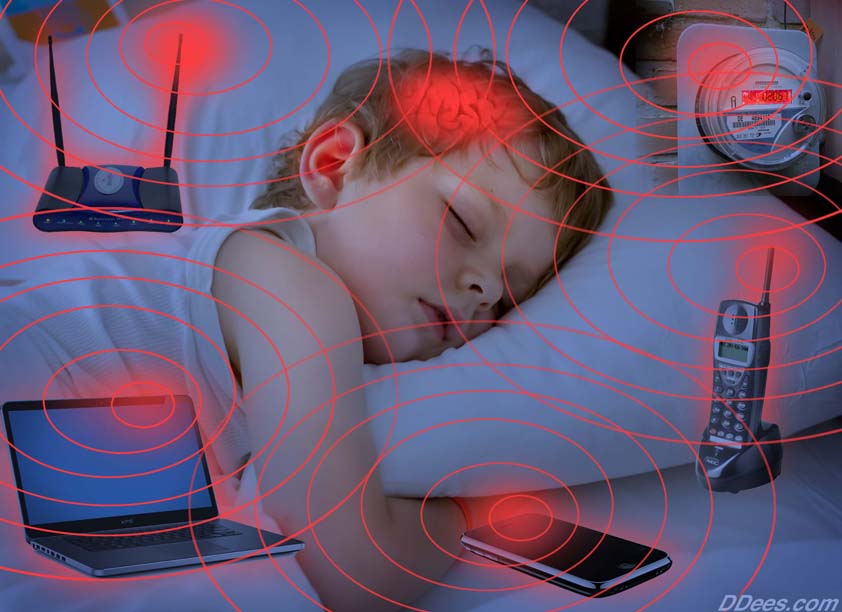
Let’s get real: Many people now have wireless connectivity with not only their phone but also their laptop, watch and tablet, to name a few. In addition, many people live in proximity to a very large number of actively transmitting WiFi routers, smart meters and other wireless devices.
So, in reality, accumulated radiation exposure levels may be more than 100 times higher than official exposure limits – particularly in places like schools and offices.
Tips on how to take action and safeguard your health
Here are some simple steps you can take to safeguard your health from wireless radiation and other electromagnetic field exposures:
Replace your wireless devices with wired versions – replace wireless DECT phones and wireless modems with wired versions.
Practice safe cell phone use – distance is your friend, avoid using your cell phone next to your ear.
Create a low EMF sleep sanctuary where you sleep – rid your bedroom of all electrical devices.
Measure the EMF readings in your home with a simple to use EMF meter. Here is a review of an EMF meter that measures radio frequency radiation and magnetic fields.
Time for change: The FCC guidelines need updating now
Clearly the FCC guidelines need updating, here are some suggestions:
1. The regulations need to take into account the biological effects of these exposures not just the heating effect. 2. FCC regulations should be based on the maximum power of each transmitting wireless device based on the number of wireless devices in proximity. 3. In places such as schools and businesses all wireless devices should have automatic maximum power reduction based capability based on the number of wireless devices in proximity.
We need to spread the word about these issues because, ultimately, if the public remains unaware – nothing can improve.
About the author: Lloyd Burrell is the founder of ElectricSense.com. His website offers solutions to the growing number of people whose health is being compromised by exposure to wireless and similar technologies. Download his free EMF Health Report today!
Finally, there’s documented medical proof that electromagnetic hypersensitivity is a real-time health issue that actually can be verified using standard medical procedures and testing capabilities.
So, the million-dollar-question has to be, “When will utility companies get up to speed on the latest in microwave technology damage to the human body?” Also, “When will public utility commissions nationwide institute proper procedures to protect consumers from such damage?”
Pennsylvanians currently are being bombarded by non-thermal health problems from public utility companies’ electric, natural gas and water Smart Meters, which operate using microwave technology.
Furthermore, the PA House Consumer Affairs Committee Chair Robert Godshall sits on Opt-Out Bills that will permit electrosensitive consumers and others to keep safe analog meters, which have been in use for decades.
Below is the Press Release Pennsylvania Smart Meter Awareness (PASMA) released November 19, 2015, which discusses pertinent issues to EHS and Smart Meters.
MEDICAL STUDIES CONFIRM ELECTROMAGNETIC HYPERSENSITIVITY: ARE UTILITY SMART METERS CAUSING HEALTH PROBLEMS FOR PENNSYLVANIANS?
Electromagnetic hypersensitivity, or electrosensitivity (EHS), is a condition affecting more and more individuals who are exposed to electromagnetic fields (EMFs) and radiofrequencies (RFs) from radios, televisions, Wi-Fi, “dirty electricity” coming over household wires from utility companies smart meters (SMs), microwaves, photocopiers, plus cell phones and towers. Worldwide, the numbers of people affected by EMFs and RFs increase exponentially, and add to other environmentally sensitivity-related illnesses such as multiple chemical sensitivity (MCS), chronic fatigue syndrome (CFS), sick building syndrome, Persian Gulf War veteran syndrome, and amalgam disease.
In Pennsylvania, children’s and adults’ health is being harmed by electric, natural gas, and water utility companies’ smart meters!
The World Health Organization (WHO), in a December 2005 Background paper, stated:
EHS is characterized by a variety of non-specific symptoms that differ from individual to individual. The symptoms are certainly real and can vary widely in their severity. Whatever its cause, EHS can be a disabling problem for the affected individual. [….] For EHS individuals with long lasting symptoms and severe handicaps, therapy should be directed principally at reducing symptoms and functional handicaps. This should be done in close co-operation with a qualified medical specialist (to address the medical and psychological aspects of the symptoms) and a hygienist (to identify and, if necessary, control factors in the environment that are known to have adverse health effects of relevance to the patient).
Treatment should aim to establish an effective physician-patient relationship, help develop strategies for coping with the situation and encourage patients to return to work and lead a normal social life. WHO published online information about that workshop on electromagnetic hypersensitivity in 2004 here.
PASMA wants to remind the Pennsylvania state legislature and the PA Public Utility Commission (PUC) that EHS is a harmful health—and even-life-threatening—issue for those affected, which utility companies are remiss about, in understanding that harm, by denying that such effects are medically proven and that SM-caused EHS cannot—and will not—be mediated by replacing AMI SMs with EMF-free analog meters, which were used safely for decades, and which other states’ utility companies are allowing. The control factor in the environment relevant to many EHS problems is traceable to the installation of smart meters on home properties.
PASMA further wants to point out what the WHO stated at the EMF workshop, which utilities, the PA legislature and PA PUC need to implement: help develop strategies for coping with the situation and encourage patients to return to work and lead a normal social life.
For those EHS individuals impacted by SMs, legal opt-outs from SMs are a necessary ethical and medical exception to PA 129, and must be granted. SM-induced health issues are serious matters, which need to be addressed intelligently by state officials, and very soon, as too many Pennsylvanians cannot lead normal lives due to Smart Meters.
PASMA respectfully directs PA legislators and the PA PUC to clinical studies in the journal Mediators of Inflammation Volume 2014, Article ID 924184, where researchers published their results regarding EHS.
In their clinical study “Metabolic and Genetic Screening of Electromagnetic Hypersensitive Subjects as a Feasible Tool for Diagnostics and Intervention” published as an open access article, they say,
Till now, no causal relationship between electromagnetic fields exposure and onset of clinical symptoms has been clearly proven. [….]
“The profiles of metabolic parameters’ alteration observed in EHS subjects were comparable to those of the “pure MCS” group, though generally less pronounced (Figures 5–8). Similarly to those MCS patients self-reportedly nonelectrosensitive, the EHS cohort showed a highly significant-versus-control decrease in the erythrocyte GST activity and an increase in GPX activity levels (Figure 5), coupled with a marked decrease of GSH levels (Figure 6). [….]
A second parameter proved to be significantly different () between EHS and MCS groups that is the ratio omega-6/omega-3 polyunsaturated fatty acids in the erythrocyte membrane phospholipid fraction (Figure 7(c)). [….]
Further developments must necessarily include a more objective and standardized classification of individual electromagnetic sensitivity scores, to conclusively assess the proposed parameters as a distinctive and specific panel of disease biomarkers for EHS. Our findings will hopefully contribute, in combination with the so-far putative genetic-risk factors, a better molecular definition of environmental-borne sensitivity-related illnesses and a tool to discriminate single SRI comorbidities, based on sufficiently proven molecular evidences able to gain clinical consensus.
Smart Meter technology is based on microwaves, which is damaging the health of Pennsylvanians; has to be corrected by the PA legislature and PA PUC, since it’s counter to and, undoubtedly, violates the Nuremberg Code, including the Third Amendment to the U.S. Constitution, which states: “The right of the people to be secure in their persons…shall not be violated.”
Certainly, Pennsylvania’s children’s and adults’ health status is being compromised and violated 24/7/365 from EMFs, RFs, and the dirty electricity produced by Smart Meters.
Catherine J Frompovich (website) is a retired natural nutritionist who earned advanced degrees in Nutrition and Holistic Health Sciences, Certification in Orthomolecular Theory and Practice plus Paralegal Studies. Her work has been published in national and airline magazines since the early 1980s. Catherine authored numerous books on health issues along with co-authoring papers and monographs with physicians, nurses, and holistic healthcare professionals. She has been a consumer healthcare researcher 35 years and counting.
Teen found hanged in woods may have been making a 'cry for help'
UPDATED
BYANNABEL HOWARD
Jennifer Fry's body was found by her mum after she received a call to say she hadn't arrived at school
INS
Tragedy: Jennifer Fry, 15, was found hanged after failing to cope with the suicide of a classmate
A 15-year-old schoolgirl who was found hanged may have been making a "cry for help", an inquest has heard.
Jennifer Fry was still wearing her school uniform when she was found in a children's play area by her devastated mum.
A coroner heard that Jenny had written her first suicide note six months before taking her own life and a month after police converged on her family home because she made suicidal threats over social media websites.
But her mum Debbie said she did not take her daughter to a GP despite police advice because she was worried Jenny would be admitted to a mental hospital, or given medication which had not worked for her friend Tom Boomer, who had leapt to his death from a multi-storey car park after becoming depressed when he moved schools.
Both of her parents also argued that Jenny's suicidal ideation was the result of radiation poisoning because of wi-fi in the home and at school.
Debbie said her daughter had "classic" symptoms of being sensitive to electromagnetic fields but was unable produce any medical evidence that her daughter had suffered.
INS
Jennifer (pictured as a child) was found by her mum in woodland after failing to arrive at school
The inquest in Oxford was told that concerned staff at Jenny's secondary school had contacted her family on the morning of June 11 when she did not arrive at school.
Her mum, who said she had an "instinctive feeling" something was wrong, went looking for her daughter and made the tragic discovery at about 4.30pm.
Detectives called to Brooke Forest in Chadlington, Oxfordshire found the teenager's mobile phone and schoolbag at the foot of the tree.
Inside they found a knife and a suicide note which made reference to another note on her computer.
Officers later discovered she had written the digital suicide note six months earlier, on December 19.
The inquest in Oxford heard that officers also found Jenny had sent two suicidal texts to school mates telling them of her plans to harm herself in the woods.
After Jenny's body was found ambulance crews attended and confirmed her death and an initial police report said that there were no suspicious circumstances.
Her mum said that she had an "instinctive feeling" that something was wrong when Jenny left the house that morning.
She added: "I had a mother's instinct. Then I had two voicemails from the school later that day saying that she had not turned up to school.
"I found out she had sent two texts saying she wanted to hurt herself and the last time she was seen was by her sister Emma, running into the woods.
"When I saw her I thought she was still alive. I tried talking to her and when I moved around her I could see what had happened," said Mrs Fry.
Google Maps
Jennifer left her home in Chadlington, Oxfordshire, (pictured) but did not show up at school that morning in June this year
In November 2014 concerned friends had contacted Thames Valley Police because of Jenny's suicidal messages on social media.
Officers left the schoolgirl in the care of her parents with the advice that they should contact either the family's GP or the children and young adult mental health service .
Coroner Darren Salter said he was very surprised that neither of her parents took up the advice and there was no evidence by her GP that she had been feeling low or depressed.
He recorded a verdict of suicide but minutes later retracted it because the family argued that Jenny had sent texts telling friends her location so that she could be found and stopped.
Instead giving a narrative verdict, Mr Salter acknowledged the teenager had taken her own life but could not be sure of her intentions.
He said: "I am not entirely convinced that it was a cry for attention or help but I cannot rule it out. I am not going to return a verdict of suicide.
PA
Police were called to the scene after Jenny's mum found her body
"My narrative conclusion is that on June 11 she hanged herself from a tree.
"She sent texts warning of her proposed actions and gave her location.
"It cannot be demonstrated to the required standard of proof that she intended to take her own life."
Jenny's friend Tom Boomer, who also went to Chipping Norton School, killed himself just 10 days after being prescribed anti-depressants because he was struggling to cope with depression after moving schools.
Despite a reported improvement in his mood in the days before his death, the boy jumped from a car park in the early hours of March 31, shortly after being reported missing from his family home.
Earlier that same day the 14-year-old had sent a text message to a friend saying: "I am constantly contemplating suicide."
Tom's body was found by a passer-by who alerted emergency services.
Despite the best efforts of trauma teams at hospital, the schoolboy could not be saved and died from severe head injuries.
At the inquest into his death his father, Doug Boomer, questioned the decision to put his son on anti-depressants and why the family was not more involved in the decision.
The teenager was prescribed Prozac to combat his depression but the hearing in Oxford was told that the mental health team at the hospital trust had discussed the move before then.
Six EMF papers in Journal of Biomedical Physics & Engineering
A Challenging Issue in the Etiology of Speech Problems: The Effect of Maternal Exposure to Electromagnetic Fields on Speech Problems in the Offspring
Zarei S1, Mortazavi SM2, Mehdizadeh AR3, Jalalipour M1, Borzou S1, Taeb S4, Haghani M5, Mortazavi SA6, Shojaei-Fard MB5, Nematollahi S7, Alighanbari N8,Jarideh S5. A Challenging Issue in the Etiology of Speech Problems: The Effect of Maternal Exposure to Electromagnetic Fields on Speech Problems in the Offspring. J Biomed Phys Eng. 2015 Sep 1;5(3):151-4. eCollection 2015. Abstract
BACKGROUND: Nowadays, mothers are continuously exposed to different sources of electromagnetic fields before and even during pregnancy. It has recently been shown that exposure to mobile phone radiation during pregnancy may lead to adverse effects on the brain development in offspring and cause hyperactivity. Researchers have shown that behavioral problems in laboratory animals which have a similar appearance to ADHD are caused by intrauterine exposure to mobile phones.
OBJECTIVE: The purpose of this study was to investigate whether the maternal exposure to different sources of electromagnetic fields affect on the rate and severity of speech problems in their offspring.
METHODS: In this study, mothers of 35 healthy 3-5 year old children (control group) and 77 children and diagnosed with speech problems who had been referred to a speech treatment center in Shiraz, Iran were interviewed. These mothers were asked whether they had exposure to different sources of electromagnetic fields such as mobile phones, mobile base stations, Wi-Fi, cordless phones, laptops and power lines.
RESULTS: We found a significant association between either the call time (P=0.002) or history of mobile phone use (months used) and speech problems in the offspring (P=0.003). However, other exposures had no effect on the occurrence of speech problems. To the best of our knowledge, this is the first study to investigate a possible association between maternal exposure to electromagnetic field and speech problems in the offspring. Although a major limitation in our study is the relatively small sample size, this study indicates that the maternal exposure to common sources of electromagnetic fields such as mobile phones can affect the occurrence of speech problems in the offspring.
-- Survey of the Effects of Exposure to 900 MHz Radiofrequency Radiation Emitted by a GSM Mobile Phone on the Pattern of Muscle Contractions in an Animal Model
Mortazavi SM1, Rahimi S2, Talebi A2, Soleimani A3, Rafati A4. Survey of the Effects of Exposure to 900 MHz Radiofrequency Radiation Emitted by a GSM Mobile Phone on the Pattern of Muscle Contractions in an Animal Model. J Biomed Phys Eng. 2015 Sep 1;5(3):121-32. eCollection 2015. Abstract
BACKGROUND: The rapid development of wireless telecommunication technologies over the past decades, has led to significant changes in the exposure of the general public to electromagnetic fields. Nowadays, people are continuously exposed to different sources of electromagnetic fields such as mobile phones, mobile base stations, cordless phones, Wi-Fi routers, and power lines. Therefore, the last decade witnessed a rapidly growing concern about the possible health effects of exposure to electromagnetic fields emitted by these sources.
MATERIALS AND METHODS: In this study that was aimed at investigating the effects of exposure to radiofrequency (RF) radiation emitted by a GSM mobile phone on the pattern of contraction in frog's isolated gastrocnemius muscle after stimulation with single square pulses of 1V (1 Hz), pulse height of contractions, the time interval between two subsequent contractions and the latency period were measured.
RESULTS: Our findings showed that the pulse height of contractions muscle could be affected by the exposure to electromagnetic fields. Especially, the latency period was effectively altered in RF-exposed samples. However, none of the experiments could show an alteration in the time interval between two subsequent contractions after exposure to electromagnetic fields.
CONCLUSION: These findings support early reports which indicated a wide variety of non-thermal effects of electromagnetic radiation on amphibians including the effects on the pattern of muscle extractions.
-- Effect of 900 MHz Electromagnetic Radiation on the Induction of ROS in Human Peripheral Blood Mononuclear Cells
Kazemi E1, Mortazavi SM2, Ali-Ghanbari A3, Sharifzadeh S4, Ranjbaran R4, Mostafavi-Pour Z5, Zal F5, Haghani M6. Effect of 900 MHz Electromagnetic Radiation on the Induction of ROS in Human Peripheral Blood Mononuclear Cells. J Biomed Phys Eng. 2015 Sep 1;5(3):105-14. eCollection 2015.
Abstract
BACKGROUND: Despite numerous studies over a decade, it still remains controversial about the biological effects of RF EMF emitted by mobile phone telephony.
OBJECTIVE: Here we investigated the effect of 900 MHz GSM on the induction of oxidative stress and the level of intracellular reactive oxygen species (ROS) in human mononuclear cells, monocytes and lymphocytes as defence system cells.
METHOD: 6 ml Peripheral Blood samples were obtained from 13 healthy volunteers (21-30 year-old). Each sample was divided into 2 groups: one was exposed RF radiation emitted from a mobile phone simulator for 2 hour and the other used as control group which was not exposed to any fields. After that, mononuclear cells were isolated from peripheral blood by density gradient centrifugation in Ficoll-Paque. The intracellular ROS content in monocytes and lymphocytes was measured by the CM-H2DCFDA fluorescence probe using flow cytometry technique.
RESULTS: Our results showed significant increase in ROS production after exposure in population rich in monocytes. This effect was not significant in population rich in lymphocytes in comparison with non exposed cells.
CONCLUSION: The results obtained in this study clearly showed the oxidative stress induction capability of RF electromagnetic field in the portion of PBMCs mostly in monocytes, like the case of exposure to micro organisms, although the advantages or disadvantages of this effect should be evaluated.
Exposure to Radiofrequency Radiation Emitted from Common Mobile Phone Jammers Alters the Pattern of Muscle Contractions: an Animal Model Study
Rafati A1, Rahimi S2, Talebi A2, Soleimani A3, Haghani M4, Mortazavi SM5.Exposure to Radiofrequency Radiation Emitted from Common Mobile Phone Jammers Alters the Pattern of Muscle Contractions: an Animal Model Study. J Biomed Phys Eng. 2015 Sep 1;5(3):133-42. eCollection 2015. Abstract
INTRODUCTION: The rapid growth of wireless communication technologies has caused public concerns regarding the biological effects of electromagnetic radiations on human health. Some early reports indicated a wide variety of non-thermal effects of electromagnetic radiation on amphibians such as the alterations of the pattern of muscle extractions. This study is aimed at investigating the effects of exposure to radiofrequency (RF) radiation emitted from mobile phone jammers on the pulse height of contractions, the time interval between two subsequent contractions and the latency period of frog's isolated gastrocnemius muscle after stimulation with single square pulses of 1V (1 Hz).
MATERIALS AND METHODS: Frogs were kept in plastic containers in a room. Animals in the jammer group were exposed to radiofrequency (RF)radiation emitted from a common Jammer at a distance of 1m from the jammer's antenna for 2 hours while the control frogs were only sham exposed. Then animals were sacrificed and isolated gastrocnemius muscles were exposed to on/off jammer radiation for 3 subsequent 10 minute intervals. Isolated gastrocnemius muscles were attached to the force transducer with a string. Using a PowerLab device (26-T), the pattern of muscular contractions was monitored after applying single square pulses of 1V (1 Hz) as stimuli.
RESULTS: The findings of this study showed that the pulse height of muscle contractions could not be affected by the exposure to electromagnetic fields. However, the latency period was effectively altered in RF-exposed samples. However, none of the experiments could show an alteration in the time interval between two subsequent contractions after exposure to electromagnetic fields.
CONCLUSION: These findings support early reports which indicated a wide variety of non-thermal effects of electromagnetic radiation on amphibians including the effects on the pattern of muscle extractions.
Does Occupational Exposure of Shahid Dastghieb International Airport Workers to Radiofrequency Radiation Affect Their Short Term Memory and Reaction Time? Jarideh S1, Taeb S1, Pishva SM2, Haghani M1, Sina S3, Mortazavi SA4, Hosseini MA1, Nematollahi S5, Shokrpour N6, Hassan Shahi M1, Mortazavi SM7.Does Occupational Exposure of Shahid Dastghieb International Airport Workers to Radiofrequency Radiation Affect Their Short Term Memory and Reaction Time? J Biomed Phys Eng. 2015 Sep 1;5(3):143-50. eCollection 2015. Abstract
BACKGROUND: Airport workers are continuously exposed to different levels of radiofrequency microwave (RF/MW) radiation emitted by radar equipments. Radars are extensively used in military and aviation industries. Over the past several years, our lab has focused on the health effects of exposure to different sources of electromagnetic fields such as cellular phones, mobile base stations, mobile phone jammers, laptop computers, radars, dentistry cavitrons and MRI. The main goal of this study was to investigate if occupational exposure of Shahid Dastghieb international airport workers to radiofrequency radiation affects their short term memory and reaction time.
METHODS: Thirty two airport workers involved in duties at control and approach tower (21 males and 11 females), with the age range of 27-67 years old (mean age of 37.38), participated voluntary in this study. On the other hand, 29 workers (13 males, and 16 females) whose offices were in the city with no exposure history to radar systems were also participated in this study as the control group. The employees' reaction time and short term memory were analyzed using a standard visual reaction time (VRT) test software and the modified Wechsler memory scale test, respectively.
RESULTS: The mean± SD values for the reaction times of the airport employees (N=32) and the control group (N=29) were 0.45±0.12 sec and 0.46±0.17 sec, respectively. Moreover, in the four subset tests; i.e. paired words, forward digit span, backward digit span and word recognition, the following points were obtained for the airport employees and the control group, respectively: (i) pair words test: 28.00±13.13 and 32.07±11.65, (ii) forward digit span: 8.38±1.40 and 9.03±1.32, (iii) backward digit span: 5.54±1.87 and 6.31±1.46, and (iv) word recognition: 5.73±2.36 and 6.50±1.93. These differences were not statistically significant.
CONCLUSION: The occupational exposure of the employees to the RF radiation in Shahid Dastghieb international airport does not have any significant detrimental effect on their reaction time as well as short term memory.
-- New Horizons in Enhancing the Proliferation and Differentiation of Neural Stem Cells Using Stimulatory Effects of the Short Time Exposure to Radiofrequency Radiation
Eghlidospour M1, Mortazavi SM2, Yousefi F3, Mortazavi SA4. New Horizons in Enhancing the Proliferation and Differentiation of Neural Stem Cells Using Stimulatory Effects of the Short Time Exposure to Radiofrequency Radiation. J Biomed Phys Eng. 2015 Sep 1;5(3):95-104. eCollection 2015. Abstract
Mobile phone use and wireless communication technology have grown explosively over the past decades. This rapid growth has caused widespread global concern about the potential detrimental effects of this technology on human health. Stem cells generate specialized cell types of the tissue in which they reside through normal differentiation pathways. Considering the undeniable importance of stem cells in modern medicine, numerous studies have been performed on the effects of ionizing and non-ionizing radiation on cellular processes such as: proliferation, differentiation, cell cycle and DNA repair processes. We have conducted extensive studies on beneficial (stimulatory) or detrimental biological effects of exposure to different sources of electromagnetic fields such as mobile phones, mobile phone base stations, mobile phone jammers, radar systems, magnetic resonance imaging (MRI) systems and dentistry cavitrons over the past years. In this article, recent studies on the biological effects of non-ionizing electromagnetic radiation in the range of radiofrequency (RF) on some important features of stem cells such as their proliferation and differentiation are reviewed. Studies reviewed in this paper indicate that the stimulatory or inhibitory effects of RF radiation on the proliferation and differentiation of stem cells depend on various factors such as the biological systems, experiment conditions, the frequency and intensity of RF and the duration of exposure.
qualified medical specialist (to address the medical and psychological aspects of the symptoms) and a hygienist (to identify and, if necessary, control factors in the environment that are known to have adverse health effects of relevance to the patient).
Treatment should aim to establish an effective physician-patient relationship, help


