Thursday, November 06, 2014

Leszczynski lecturing in Australia: Program of the November 2014 visit


Leszczynski lecturing in Australia: Program of the November 2014 visit

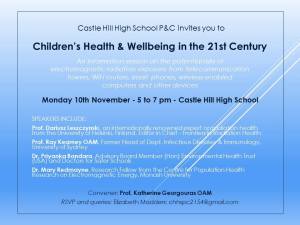
During my forthcoming November 2014 visit to Australia I will have 4 lectures at various universities and two in other locations (see listing below). All of the lectures are freely available for general public. There might be some differences in content between the lectures. I will also participate, as listener, in two events at the Wollongong University, co-organized by ICNIRP, ACEBR and ARPANSA.
The general theme of my lectures will be as follows:
Cell Phone Radiation, Health Hazard and Precaution
We, the cell phone users, are seriously misled when buying a cell phone. We assume that this radiation-emitting product has been tested for human health safety before it was put on the market. We assume that cell phones are safe to use. However, this might be a wrong assumption.
Cell phones were not tested for their human health safety before they were put on market years ago. It is the first time in the history of the human kind when we put the microwave radiation-emitting device directly to our head and expose our organs, including the brain.
Engineers and dosimetry experts are convincing us that the cell phone-emitted microwave radiation causes only thermal effects and that any potential health danger caused by thermal effects is prevented by the 1998 ICNIRP safety standards.
The 2011 IARC classification of cell phone radiation invalidates the protective claims of the current safety standards.
In three separate epidemiological case-control studies, adult participants used regular, off-the-shelf, cell phones. These cell phones were built to fulfil ICNIRP safety standards. However, avid use of such “safe” phones, for a period of over 10 years, led to an increased risk of developing brain cancer.
This means that the current safety standards do not protect sufficiently users of cell phones. This situation of scientific uncertainty calls for an action – implementation of the Precautionary Principle.
Schedule of the lectures
Nov. 10, 2014 (Monday)
  • 17:00 – 19:00, Castle Hill High School, Sydney
  • Castle Hill High School, Sydney
Nov. 11, 2014 (Tuesday)
Nov. 12, 2014 (Wednesday)
Nov. 17, 2014 (Monday)
Nov. 18, 2014 (Tuesday)
Nov. 20, 2014 (Thursday)
  • 13:00 – 14:00, Queensland University, Brisbane
  • Queensland University event
WELCOME!

Baroness Susan Greenfield on IT's impacts on children

Baroness Susan Greenfield on IT's impacts on children


Notice from Chandra Easton

This coming Monday, 10 November (in Australia) on the ABC Q&A program, presenter Tony Jones hosts a number of panelists. One in particular is internationally known neuroscientist, writer and broadcaster, Baroness Susan Greenfield.

For a foretaste of what might be discussed on the Q&A program see one of her earlier talks here https://www.youtube.com/watch?v=ri4_CW9P41s&feature=youtu.be&t=10m6s&noredirect=1
The first part of her presentation deals with how the brain develops and the second part about children and overuse of IT and its impact of their ability to learn and also diminishing interpersonal skills. Points in the presentation include:

SNIP

Read the post here.

Raucous protesters shout down Navy presentation on war games

Raucous protesters shout down Navy presentation on war games

Published:  Nov 6, 2014 at 9:53 PM PST Last Updated: Nov 6, 2014 at 11:29 PM PST

Raucous protesters shout down Navy presentation on war games»PLAY VIDEO

PORT ANGELES, Wash. -- Democracy and discord went well together in the jammed Port Angeles City Hall Thursday night.

"No public input," shouted demonstrators and protesters, aiming their vitriol toward Navy and U.S. Forest Service members sitting on the council dias.

The two hour question-and-answer session focused on public response to a plan to install and expand electromagnetic emitter systems in the Olympic National Forest. The systems are designed for war games and testing for the military.

"With all sincerity, these signal transmitters have gone under close scrutiny on what they would be doing and where they would be doing it and it poses no threat to people or wildlife," said the Navy's John Mosher.

As he finished his comment, he was hit with a rain of boos and yelled comments.

Neighbors said they fear what the signal emitters and mobile units could do to the environment of the massive forest. The military said it would take a serious concentration of electromagnetic radiation in close proximity to do anything negative.

Many disagreed.

"Irradiated vegetation and wildlife and possibly irradiated people who live or work near these mobile emitters for decades to come and the science behind this is shakier than the San Andreas fault," said Dr. Beverly Goldie.

The Forest Service said the project it is still in the environmental study process and Thursday night's meeting was only the public comment portion. Written comments can be given until the end of the month.

Tanzania: Need to Protect Oneself When Using Cell Phone

Tanzania: Need to Protect Oneself When Using Cell Phone

6 NOVEMBER 2014

Cell phone use is popular. However, users must take precautions.
IN the recent past, Tanzania has experienced a boom in mobile phone users, especially over the past one decade. This technology not only affects day-to-day life and communication, but has the potential to boost economic development directly and indirectly.
In creating jobs, for instance, mobile phone technology has contributed towards the reduction of poverty, but more important are its indirect effects on the economy such as the increased connectivity of firms and microenterprises which increases their access to information, facilitating the movement of money through mobile transfers.
This contributes to increased productivity and encourages diversification into new activities which are all good for an economy. According to the 2011 World Bank report, Tanzania has seen an impressive increase in mobile phone use over the last few years.
In 2011, says the report, Tanzania had 56 mobile phone subscriptions per 100 inhabitants which was almost threefold increase within four years.
Mobile phone access in Tanzania is higher than in Mozambique and Malawi and just above the sub-Saharan Africa on average. What is even more encouraging is that mobile phones are no longer confined to urban areas, but have helped remote or forgotten rural areas by providing them with virtual connectivity.
In 2010 more than one third of rural households in Tanzania owned a cell phone, up from a mere 17 per cent in 2007. There have not been more studies about cell phone usage since that particular period.
The good news is that with about half of subscribers using their phones to send or receive money, Tanzanians have been among the fastest users of mobile money services in the world.
In agriculture, a growing number of agricultural information service providers offer technical advice and market information to farmers through bulk sms, call centres or specialised applications.
Despite such successes in using cell phones, do our people know how to handle their mobile phones properly, so that they are not affected health wise?
According the Director General of Tanzania Atomic Energy Commission (TAEC), Mr Idy Mkilaha, peer-reviewed studies consisting of 31 scientists from 14 different countries have found evidence for an increase in some brain cancers (glioma and acoustic neuroma), cancers that take a while to develop and the scientists fear that long-term usage could result in more of these types of cancer.
This is according to the announcement made by the World Health Organisation (WHO) on May 31, 2011. Mr Mkilaha says that cell phones communicate using signals in the microwave spectrum.
According to him, the invisible stream of RF (radio frequency) signals penetrate our bodies when the device is held close and as well as the long-term potential for cancer, there is also the potential to impact cognitive memory functions and to cause disorientation and dizziness.
"Ample studies show that there may be side effects to cell phone usage, many studies refuting the health impacts, causing a large level of uncertainty and misunderstanding.
It is human nature to keep using something that works for us unless proven hazardous," he insists. He adds that a massive human experiment proves that, with more than 2-4 billion people in the world experience 70 to 80 per cent of the cell phone's en.ergy penetrating the skull, with unknown longterm outcomes.
Mr Mkilaha says that when weighing up this convenient tool with the questionable health impact control, caution and measures must be taken to reduce one's exposure from radio frequency (RF) emissions from the cell phone to prevent health hazards.
TAEC said in a recent report that return to the cord phone or land-line phone makes a large effort to take calls that we know will last a long time on a corded phone for our dayto- day communications. According to the report, there is no need to substitute a landline with a cordless phone for long conversations as these have their own health impacts.
For example, digital cordless phones radiate continuously even when they're not in use. TAEC advises mobile phone users to limit length of their phone calls conservation to avoid the associated hazards.
He says that a prolonged talk increases one's exposure to the radiated signals from his/her device, even a two minute call has been shown to alter your brain's natural electrical activity for up to an hour afterward. "Use a hands-free device or wireless headset to increase the distance between the phone and your head.
This is the best approach, it creates distance between you and the radiating phone. When speaking, place the phone on speakerphone to allow you to hold the phone away as you speak. Prefer texting than talking to keep the cell phone away from the head. Keep phone away from you when dialing.
Phones use more radiation during connection time," says the report. Stay still when using a cell phone, the advises, one should not move around, because as one walks, more radiation is emitted because the phone needs to keep track and it continues to scan to keep up with the changes in position.
TAEC reports says that there is a need to turn the cell phone off when not in use, because a cell phone that is in standby mode is still emitting radiation and when it is off, the radiation ceases to function. "Don't carry the cell phone next to your body, next to your groin; instead, keep it in a bag.
Research has shown that men wearing cell phones next to their groin have up to a 30 per cent reduction in sperm count. Keep it away from all vital organs like heart and liver," the report says.
One of the important issues in the TAEC report is the need to consider either not giving cell phones to children or limiting their usage to emergency circumstances.
We should keep in mind that children are more susceptible to the radiation emitted from the cell phone and their skulls are thinner and their brains are less developed. Moreover, since they are growing, their cells divide at a much faster rate, which means that the impact of radiation can be a lot worse.
We should also look for products designed to shield us as a cell phone user. There are several devices on the market offering their own claims. Read the information accompanying the products and decide what is likely to work better for you, says TAEC report. Some of the possibilities include a cell phone EMF protective device.
These are small chips or buttons that are adhered to the phone reducing the impact of the transmitter signals, a screen type shield.
This is a screen placed over the phone's earpieces or buttons that are adhered to the phone, reducing the impact of the transmitter signals, which may guarantee you good protection and save you from contracting deceases caused by your cell phone.

Diversity Outbred mice better predict potential human responses to chemical exposures

For Immediate Release: Thursday, November 6, 2014

Diversity Outbred mice better predict potential human responses to chemical exposures

A genetically diverse mouse model is able to predict the range of response to chemical exposures that might be observed in human populations, researchers from the National Institutes of Health have found. Like humans, each Diversity Outbred mouse is genetically unique, and the extent of genetic variability among these mice is similar to the genetic variation seen among humans. 
Using these mice, researchers from the National Toxicology Program (NTP), an interagency program headquartered at the National Institute of Environmental Health Sciences (NIEHS), were able to identify specific genes or chromosomal regions that make some mice more susceptible, and others more resistant, to the toxic effects of benzene. Benzene is a common air pollutant and human carcinogen found in crude oil, gasoline, and cigarette smoke, and naturally produced by wildfires and volcanoes. 
The scientists found that, like humans, each Diversity Outbred mouse developed at The Jackson Laboratory, Bar Harbor, Maine, responded to the effects of the chemical exposure differently. Exposure responses were assessed by measuring the frequency of micronucleated red blood cells, a biological marker of chromosomal damage, which is a hallmark of benzene exposure. The researchers measured the levels of this biomarker in each mouse before and after exposure.
Some mice demonstrated extraordinary sensitivity to the exposure, while others showed no response. The range of response from lowest to highest was approximately 5-fold. Since the researchers knew the genetic makeup of each mouse, they could pinpoint the regions involved in susceptibility or resistance to the chemical exposure, and then look for related genetic regions in human chromosomes.
A graph showing how mice react to benzene exposure.
Because each mouse is genetically different, each responds uniquely to benzene exposure.
“This paper points out the significant genetic differences that are found throughout every population that must to be taken into account when extrapolating data from animals to humans,” said Linda Birnbaum, Ph.D., director of NTP and NIEHS. “The Diversity Outbred mouse is a useful model for predicting the range of response that might be observed in humans following exposure to a chemical.” 
Benzene was selected by NTP as a case study for testing the mouse model, because there is an abundance of animal and human toxicity data for comparison. Benzene can affect people differently, depending on the level and duration of exposure, making it important to accurately estimate the levels at which it may cause harm to the most susceptible individuals. 
“These genetically diverse mice provided a reproducible response to benzene exposure across two independently exposed groups, suggesting that each group of genetically unique mice demonstrated the same range of differential susceptibility, much like what you would find in human epidemiology studies,” said Jef French, Ph.D., lead author on the paper. “It’s important to be able to accurately measure the impact of exposure and to develop appropriate permissible safety levels for toxic compounds. This model can help us do that with greater accuracy.”
These results may lead to further research to better understand genetically regulated responses to toxicity in humans, as well as mechanisms of susceptibility and resistance to environmental exposures as they relate to disease. “In addition to informing the design of human epidemiology studies evaluating associations between chemical exposures and biological effects in diverse populations, the Diversity Outbred mouse model may also provide valuable data for use by regulators and manufacturers conducting chemical risk assessments,” said co-author Kristine Witt of NTP. 
The paper is available online in the journal Environmental Health Perspectives. In addition to NIEHS and NTP, researchers from The Jackson Laboratory, ILS Inc., and Alion Science and Technology Corporation also collaborated in the research effort. The National Institute of General Medical Sciences, part of NIH, also helped support the study (grants P50GM076468 and R01GM070683). 
Next spring, the NIEHS Division of Extramural Research and Training plans to hold a meeting to look at the Diversity Outbred mouse model and other population-based rodent models that can be used to advance the field of environmental health sciences.  
Reference: French JE, Gatti DM, Morgan DL, Kissling GE, Shockley KR, Knudsen GA, Shepard KG, Price HC, King D, Witt KL, Pedersen LC, Munger SC, Svenson KL, Churchill GA. 2014. Diversity Outbred mice identify population based exposure thresholds and genetic factors that influence benzene-induced genotoxicity. Environ Health Perspect: doi: 10.1289/ehp.1408202. 
NIEHS supports research to understand the effects of the environment on human health and is part of NIH. For more information on environmental health topics, visit http://www.niehs.nih.gov. Subscribe to one or more of the  NIEHS news list to stay current on NIEHS news, press releases, grant opportunities, training, events, and publications.
NTP is a federal, interagency program, headquartered at the NIEHS, whose goal is to safeguard the public by identifying substances in the environment that may affect human health. For more information about NTP and its programs, visit http://ntp.niehs.nih.gov
About the National Institutes of Health (NIH): NIH, the nation's medical research agency, includes 27 Institutes and Centers and is a component of the U.S. Department of Health and Human Services. NIH is the primary federal agency conducting and supporting basic, clinical, and translational medical research, and is investigating the causes, treatments, and cures for both common and rare diseases. For more information about NIH and its programs, visit www.nih.gov.
NIH...Turning Discovery Into Health®

Reference

French JE, Gatti DM, Morgan DL, Kissling GE, Shockley KR, Knudsen GA, Shepard KG, Price HC, King D, Witt KL, Pedersen LC, Munger SC, Svenson KL, Churchill GA. 2014. Diversity Outbred mice identify population based exposure thresholds and genetic factors that influence benzene-induced genotoxicity. Environ Health Perspect: doi: 10.1289/ehp.1408202.

http://www.nih.gov/news/health/nov2014/niehs-06.htm

Wednesday, November 05, 2014

Heavy mobile usage may cause cancer of salivary glands: Study

Heavy mobile usage may cause cancer of salivary glands: Study

NAGPUR: Several organizations and experts have warned about the harmful effects radiations can have on the health of human beings. While acknowledging that wireless phones can cause  cancerin brain and auditory canal, salivary glands have been overlooked by most researchers. Study by a city-based researcher, however, has shown that prolonged mobile phone use can be potential indicator of cancer of the parotid glands.

Dr Stuti Bhargava, an assistant professor in the department of oral medicine and radiology in VSPM Dental College and Research Centre, has done the study in three phases over the last three years. Consisting of over 300 subjects, the research led to the conclusion that several functional changes and an increase in the size of the parotid glands are observed in people with longer exposure to the radio frequency radiation (RFR) emerging from hand-held phones. These effects could range from migraine to potential indicator of cancer of the parotids.

"Previous researchers had spoken about the dangers to organs like brain and auditory canal. While these are protected by the skull, the parotid glands are not. They are also at a closer proximity to mobile phones when the devices are in use. This made me believe that they would be potentially at greater risk of adverse effects from phone use," said Dr Bhargava, explaining the reason for the study.

The glands are located in front of the ear, beneath the skin of the face, the area most in contact with a cellphone. Radiations emitted by the phone when it is being used can be directly absorbed by the glands through the skin. This makes parotid glands especially vulnerable to changes, if any, resulting from mobile phone heat and radiation.

Based on this hypothesis, people using mobile phones for longer durations in a day were observed. It was seen that they showed a marginal increase in protein content in the glands, increase in their size, increase in amount of  saliva generated (salivary flow rate), and increased blood flow rate in the glands. "All these changes are indicative of possible neoplastic changes in a heavy user in the near future. These people also had other minor complaints including tingling sensation of skin, heating of skin and many of them suffered from migraine," said Dr Bhargava.

The study has won much acclaim having been published in multiple international journals. The first phase of the study was even awarded the best paper award at a national symposium. After completion, it was presented at Asia Pacific Dental Congress Dubai 2014 for which the travel grant was sanctioned by Maharashtra University of Health Sciences.

Other than Dr Bhargava, several people from VSPM Dental College were associated with the study including Dr Mukta Motwani and the late Dr Vinod Patni as the guides, Dr Arpita S and Dr Amit S as contributors. Dean Dr Usha Radke and vice-dean of Dr Ramakrishna Shenoi also contributed.

    Tuesday, November 04, 2014

    Europe starts to take EHS / ES seriously

    Europe starts to take EHS / ES seriously

    04/11/2014 - 


    Please note that this story has had several updates over a period of a couple of days.
    The European Economic and Social Committee (EESC) has held a public hearing on electromagnetic hypersensitivity (EHS/ES) on 4th November 2014, attended by about 50 people, followed by a working group meeting in the afternoon to decide on how best to move forward on the EHS issue. The idea of the hearing was apparently their own, submitted by Bernardo Hernández Bataller. The group think the European Commission should pay more attention to this issue.

    Who are the EESC?
    It is an EU advisory body acting as a bridge between Europe and organized civil society. "The European Parliament, the Council and the Commission shall be assisted by an Economic and Social Committee and a Committee of the Regions acting in an advisory capacity." (Treaty on European Union, Article 13.4). It is an assembly of 353 members representing civil society from the 28 Member States of the EU. Members are appointed for a renewable five-year term by the Council of Ministers on the basis of lists drawn up by the national governments. It sends its opinions to the EU Parliament, the EC and Consilium.

    What they are saying so far:
    Electromagnetic hypersensitivity (EHS) is causing distress and loss of quality of life to a growing number of Europeans. The most common sources of Electromagnetic Radiation (EMR) pollution are mobile phone masts, cordless phones and Wi-Fi routers installed in the homes. All these emit microwaves permanently (24/7) in the places where they are installed.

    Each day the number of EHS sufferers increases, and they often have to deal with the scepticism of doctors and misdiagnoses. According to new estimates, between 3% and 5% of the population are electro-sensitive, meaning that some 13 million Europeans may suffer from this syndrome, which has various names (electro-sensitivity, Wi-Fi syndrome, microwave syndrome, electromagnetic hypersensitivity, etc.).

    Ever since the adoption of its opinion on the EU GSM Directive (TEN/308) in 2008, the EESC has been concerned with the ongoing protection of the public against electromagnetic radiation from electronic communications, such as internet usage, and other household equipment that forms part of the information society.

    As part of the opinion work, local authorities, transport services, as well as cultural, sports and leisure centres will be consulted on their practices to install wireless internet connections. In recent technological developments, WiMAX environments (similar to Wi-Fi but longer-range), have started to emit constant electromagnetic pollution. The opinion might also advocate enhanced efforts at EU, Member State, regional and local level to identify, minimise and prevent exposure both at home and in the workplace, allowing citizens to live in places free from electromagnetic pollution, so-called white areas. The EESC can act as trusted adviser towards these stakeholders.

    What is the time-scale?
    4-Nov-2014: Working Document
    5-Dec-2014: Preliminary Draft Opinion
    7-Jan-2015: Draft Opinion
    21-22-Jan-2015: Plenary Opinion
    Powerwatch CommentsWe are pleased at this initiative to take EHS issues seriously across the EU. Powerwatch and other EMF and EHS organisations were taken by surprise, hearing about this meeting only 9 days before it happened. That led to a large number of emails, Skype and telephone calls to find out who had the time (etc) to attend and present information to the hearing. Somehow the organisation had failed to invite any of the many EHS/ES groups across Europe. We believe this was a genuine administration error rather than an effort to keep us away!

    Short presentations, by the following people, were made on why the EU should deal with EHS, and the best approach to use.
    • Susana Galera Rodrigo, Professor of Administrative Law, King Juan Carlos University Madrid
    • Isaac Jamieson, Member of the group of stakeholders on electromagnetic fields for DG SANCO
    • Olle Johansson, Professor of Neuroscience, The Experimental Dermatology Unit, Karolinska Institute, Stockholm
    • Marc Cendrier, Robin des Toits (Association Nationale pour la Securité Sanitaire dans les Technologies sans fil), France
    • Inés Ayala Sender, Member of the European Parliament
    The presentations were followed by a debate with the audience and the rapporteur's notes taken to the afternoon meeting of the EESC study group on electromagnetic hypersensitivity.

    Isaac Jamieson gave a very informative presentation which showed that that whilst many studies indicate impacts as a result of exposure, there were others that showed no impact or were neutral/inconclusive. This included the results of the review of 919 studies by Rahmani et al (2011) documenting the percentages of EMF studies that revealed either impact, no impact or were neutral/inconclusive. He also mentioned Cucurachi et al (2013) obtaining similar results in their review of 113 studies, with the majority revealing impacts as a result of exposure. He discussed the potential costs that may arise if individuals are detrimentally affected by EMFs and best practice measures that could be applied to reduce risk.

    Olle Johansson concentrated on the difference between treating EHS as a functional impairment, as in Sweden, as opposed to as a disease, and he was really quite eloquent and made some good points, not really about EMFs as such but about societal attitudes to disability and equality - which is the angle the EESC is going for - i.e. to prevent social exclusion due to the almost universal electrosmog now present around us.

    Marc Cendrier gave a good presentation and he also presented a formal statement on behalf of the EHS of Europe [2]. Electrosensibles Derecho Salud and UneTerrePourLesEHS had rushed to prepare this joint statement for submission to the EESC TEN study group on EHS by presentation at the meeting.

    Many people there were asserting the "there is plenty enough evidence to conclude that EMFs cause EHS" position, but the debate felt less heated than is often the case. However, at the end two people from the mobile industry's MMF accused one pro-precaution speaker of misrepresentation but also ridiculously claimed that there is no point in reducing exposure because existing exposure levels are already 100% safe. One said that you can't apply the precautionary principle because there is already no risk, and you can't label equipment with emission values because they are all already "safe" and you can't have "safer than safe" (a direct quote). That, predictably and understandably, provoked some reaction from other people, but the meeting was running out of time by then so the argument didn't really develop.

    So, for most of the time, the main issues in play were exploring appropriate measures to take, and doing so in a fairly constructive way, barring a few extremes. There was some arcane but probably quite important discussion about what the various articles of the various treaties allow the EU to do; broadly, the Commission or Commission-aligned voices were arguing that the responsibility lies with member states, but other people were saying there is more that the EU can do, for example using single-market rules to require common provisions for equipment, or requiring public consultation, and which it has done in other areas.
    There seems some hope that the Committee might well come up with something reasonably balanced, in that they seem to be aware both of the amount of public concern and the seriousness of the issue for sufferers, and also of the need for proportionality and for a sense of the realistic; but one person's "proportionality" is another person's "disgraceful failure to take sufficient action" and another person's "throwing the science away on a tide of hysterical emotion", so we'll have to see what they actually say in their published Opinion which is due in January.
    However, the European Commission will take quite a lot of persuading to take any new action unless their own processes (primarily SCENIHR) give them a justification or a push, which is unlikely. However, the current signs at the EESC are suggesting that their opinion will support a more precautionary stance to help EHS people from being excluded from being able to take part in modern public life.

    Links

    1. Full details: EESC EHS web-page
    2. Letter defending the rights of EHS people of the EU to the EESC EHS letter
    http://www.powerwatch.org.uk/news/2014-11-04-eesc-ehs.asp